The Girl with the Pearl Earring – Vermeer’s Masterpiece & Pearl Aesthetics
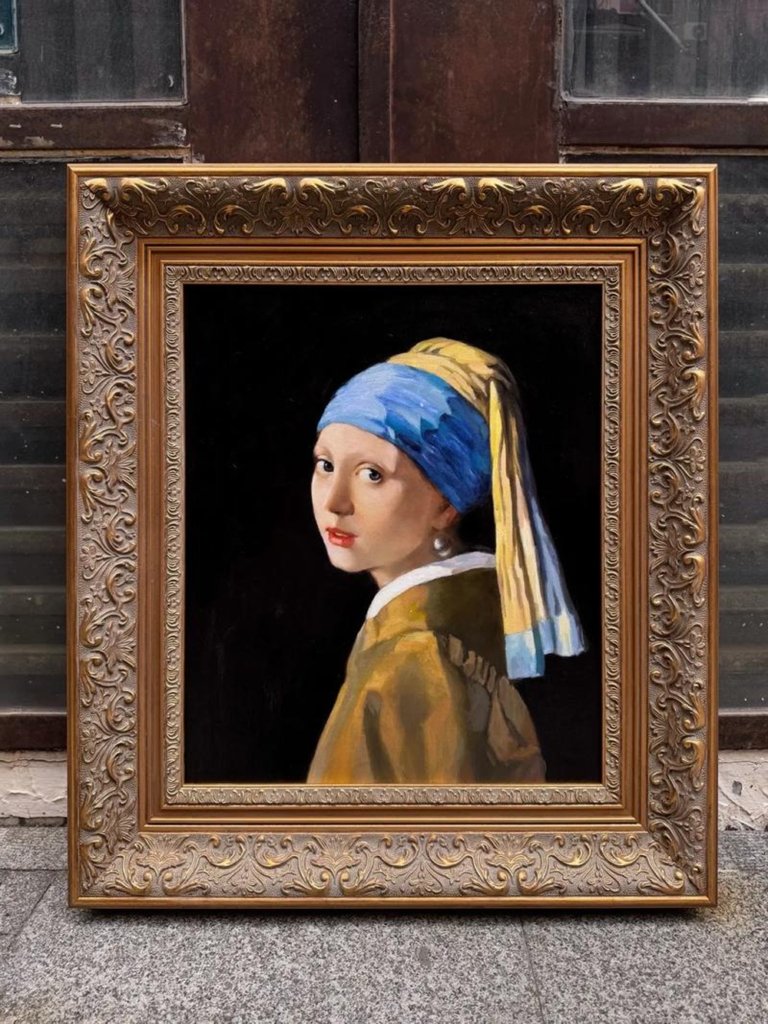
The Girl with the Pearl Earring ranks among the most stunning and enigmatic artworks across the globe. Adored by art critics, travelers, and design lovers, this iconic Dutch masterpiece continues to inspire modern fashion, jewelry creation, and classic art appreciation. Many art enthusiasts explore the story behind the painting, including its creator, background, current home, and the unique techniques that make it one of a kind.
- Who Painted The Girl with the Pearl Earring? – The Dutch Master Johannes Vermeer
- The Story of the Girl with a Pearl Earring – Mystery, History & Provenance
- Vermeer’s Painting Techniques – Light, Shadow & the Optical Illusion of the Pearl
- Where Is The Girl with the Pearl Earring Today? – The Mauritshuis & Global Tours
- The Pearl Earring in Art & Fashion – Symbolism That Endures
- Why This Masterpiece Endures – Mystery, Simplicity & Cultural Influence
Who Painted The Girl with the Pearl Earring? – The Dutch Master Johannes Vermeer
If you have ever wondered who painted the girl with the pearl earring, the answer points to Johannes Vermeer, one of the greatest talents of the Dutch Golden Age. A prominent 17th-century Dutch artist, Vermeer earned fame for his masterful control of natural light, soft color transitions, and tranquil portrayals of human figures. Unlike peers known for bold brushwork and dramatic styles, he excelled at subtlety, peaceful atmospheres, and lifelike realism.

Completed around 1665, this piece is not a formal portrait of a real individual. It falls into the category of a tronie—an artwork focusing on facial expressions, poses, and stylized looks. In daily conversations and online searches, people often refer to this timeless creation as the woman with pearl earring, highlighting its elegant charm. Vermeer marked the canvas with his signature “IVMeer” (with ligatured IVM) in the upper-left area, yet he never added a date. Historians date the work to around 1665, the peak period of his career. In total, only 36 authentic paintings by Vermeer survive today, making every single piece incredibly rare.
The Story of the Girl with a Pearl Earring – Mystery, History & Provenance
The girl with a pearl earring painting carries a mysterious past that has boosted its worldwide reputation for centuries. Art historians have never confirmed the identity of the model who posed for this work. Experts debate whether the figure was Vermeer’s daughter, a local young resident, or purely an imagined character for artistic study. This unsolved mystery lends the painting endless romantic appeal.
The Girl with the Pearl Earring – Vermeer, History & Pearl Jewelry
Some scholars suggest the figure may represent a Sibyl or a biblical character, while others link her to Vermeer’s eldest daughter Maria—a theory most professionals rule out. The turban worn in the piece does not match authentic Turkish costumes from the 1600s, which further proves this is a fictional character rather than a real sitter. As the Mauritshuis notes, tronies served as character studies instead of formal portraits, a genre popularized by Rembrandt starting in the 1630s.
This artwork changed hands many times through private collectors, art dealers, and noble families before settling at its current gallery. It also endured risks of being lost or stolen over hundreds of years, adding dramatic touches to its legacy. In a Hague auction held in 1881, this masterpiece sold for merely two guilders plus a small 30-cent fee, equivalent to roughly €24 in 2015. The buyer, collector Arnoldus Andries des Tombe, found the painting covered in dirt, with details including Vermeer’s signature hidden beneath grime. He later donated the piece to the Mauritshuis in 1902. Early records show the work first belonged to Pieter van Ruijven, Vermeer’s most loyal patron. It passed down to his family members and eventually appeared in an Amsterdam art sale in 1696, priced at 17 guilders.
Vermeer’s Painting Techniques – Light, Shadow & the Optical Illusion of the Pearl
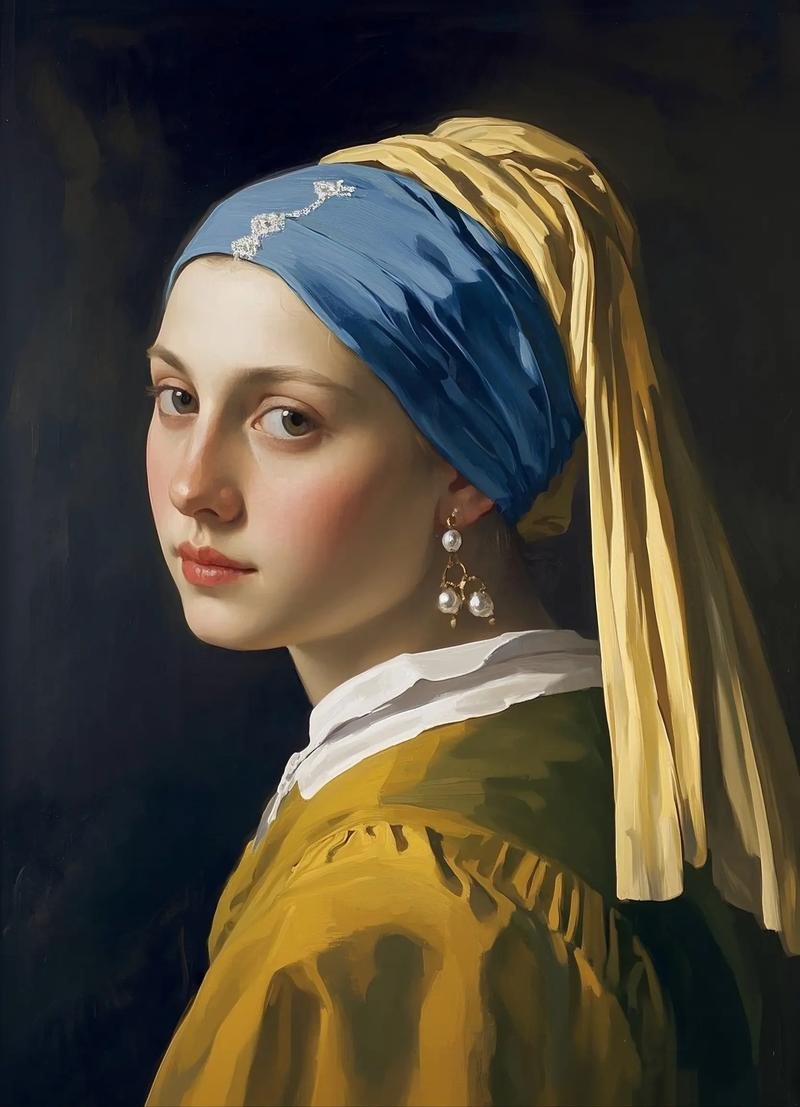
Vermeer’s extraordinary command of light and shadow is what makes The Girl with the Pearl Earring so visually captivating. He adopted classic chiaroscuro techniques, pairing deep shadowed backgrounds with gentle warm light that caresses the figure’s face, turban, and earring. His precise rendering makes the pearl look three-dimensional and luminous, just like a high-quality natural pearl catching soft daylight.
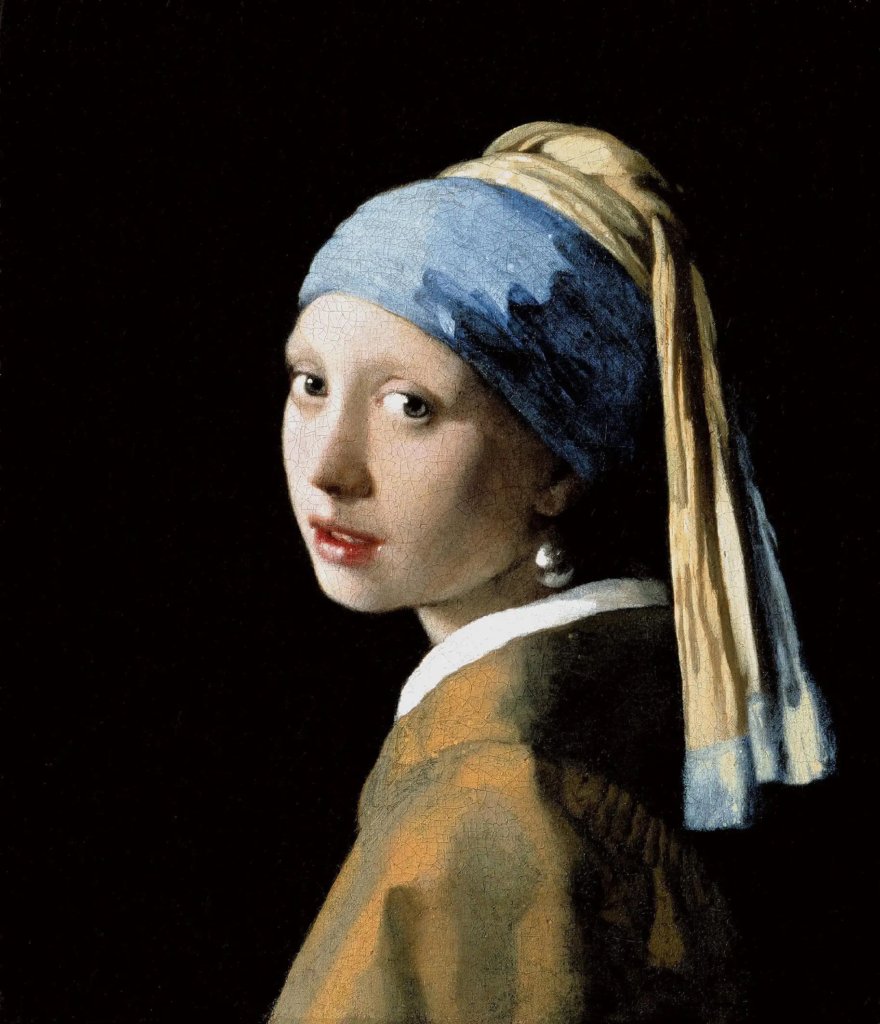
Researchers believe Vermeer used a camera obscura, an early optical tool, to capture accurate proportions and soft focus effects. This innovative method for his era creates the painting’s dreamy, almost photographic quality. Original analysis from the Mauritshuis reveals the dark backdrop was once a rich, glossy green fabric curtain. Fading pigments over centuries turned the surface into the dark tone we see today. A full restoration in 1994 uncovered faint folds and diagonal lines that prove the original design.
The vibrant blue of the turban comes from ultramarine pigment made of crushed lapis lazuli imported from Afghanistan. It was the costliest pigment in the 17th century, and Vermeer kept using it even amid financial struggles, largely thanks to support from his patron Pieter van Ruijven. Advanced scanning technology including macro X-ray and 3D microscopy shows Vermeer applied paint directly onto the prepared canvas with no preliminary sketch. He built up layers gradually to shape hair and clothing.
The artist used nearly invisible brushstrokes on the girl’s face for smooth tone shifts. In contrast, he applied thick impasto paint on her white collar, creating a clear texture difference from the dry paint on the turban. During the 1994 restoration work, conservators discovered one tiny highlight on the pearl was actually a loose paint flake. After careful removal, the pearl’s natural glow became much cleaner and more vivid.
Where Is The Girl with the Pearl Earring Today? – The Mauritshuis & Global Tours
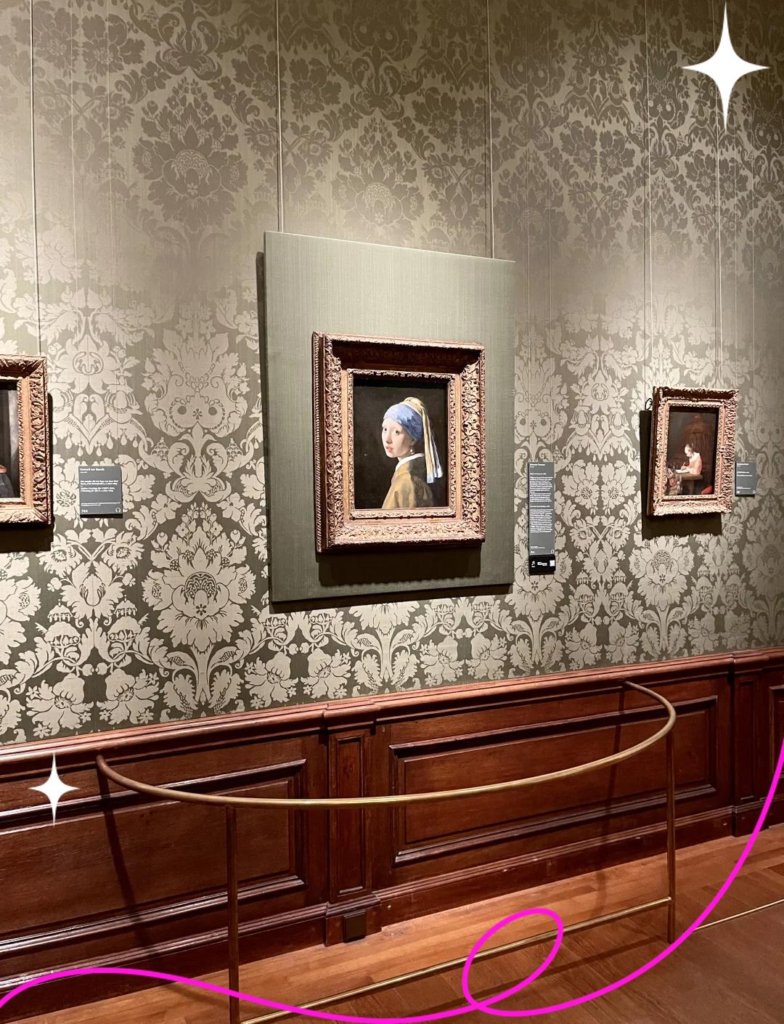
A top question among art lovers is where is the girl with the pearl earring exhibited to this day. The painting has a permanent home at the Mauritshuis Royal Picture Gallery in The Hague, Netherlands. The museum houses a remarkable collection of Dutch Golden Age art, and this iconic piece remains its most popular exhibit, favored by visitors from around the world.

Art lovers travel across the globe to view the original work in person, as digital copies can never fully reproduce the subtle light changes and delicate texture of the pearl. It officially joined the Mauritshuis collection in 1902, listed under inventory number 670 and displayed permanently in Room 15. In 2006, Dutch citizens voted it the most beautiful painting in the country. During World War II, staff moved the artwork to a bomb-proof bunker and later to the St. Pietersberg caves to protect it from Nazi looting.
While the Mauritshuis underwent major renovations, the masterpiece went on international tours. It was showcased at The Frick Collection in New York from October 22, 2013, to January 19, 2014, marking its first appearance in New York since 1984. For this special show, it was displayed alone inside the museum’s Oval Room.
The Pearl Earring in Art & Fashion – Symbolism That Endures
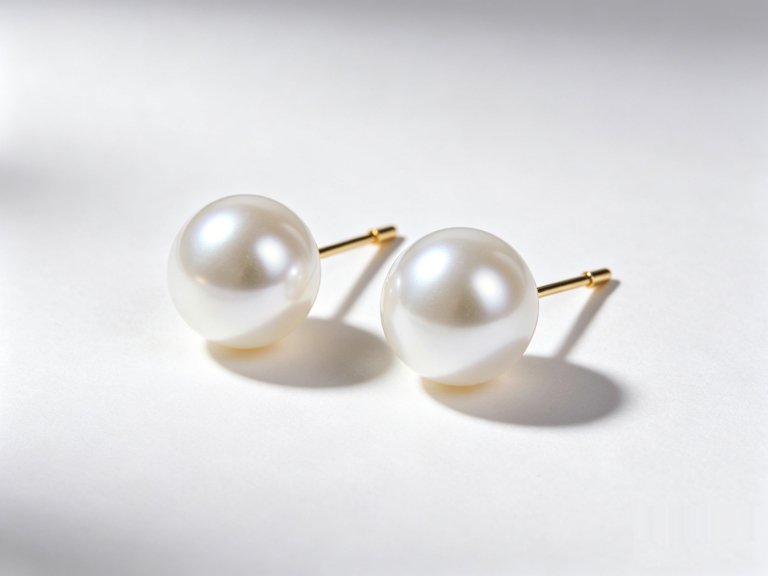
The oversized pearl earring in the painting is far more than a decorative accessory. It stands for timeless elegance, purity, and understated luxury. Back in the 17th century, pearls were symbols of nobility and refined taste. Unlike brilliant diamonds that deliver bold sparkle, pearls give off soft, gentle radiance, which matches the modest and calm temperament of the young figure.
This iconic design continues to influence modern jewelry making. Countless minimalist single pearl drop earrings and classic pearl accessories draw inspiration from this artwork. It explains why pearl jewelry has stayed a staple choice for elegant styles across generations.
Art experts point out the earring cannot be a genuine natural pearl from the 1600s. Its extreme size and unnatural light reflection prove it is most likely a Venetian glass pearl coated with varnish, or simply a creative design imagined by Vermeer. Surprisingly, Vermeer formed the entire pearl shape with just two brushstrokes: one bright white highlight on the top, and a soft reflection of the collar at the bottom. He added no extra details such as metal hooks.
Pearls, both real and imitation pieces, were a mainstream fashion element in Dutch art between 1650 and 1680, seen widely in works by Metsu, Mieris, and ter Borch. Vermeer featured pearls in eight of his paintings in total. The Frick Collection holds another Vermeer piece with pearl details, Mistress and Maid, allowing art fans to compare how this master portrayed pearls in different works.
Why This Masterpiece Endures – Mystery, Simplicity & Cultural Influence
The Girl with the Pearl Earring has maintained its legendary status for more than 350 years for three core reasons.
First lies in its mysterious expression. The figure’s soft gaze and slightly parted lips leave room for personal interpretation, letting every viewer feel a unique emotional connection. Second, it strikes a perfect balance between simplicity and luxury. The plain background and single pearl accessory draw all attention to pure beauty, breaking away from the over-decorated styles typical of Baroque art. Third, it boasts profound cultural influence. The well-known image of the woman with pearl earring has inspired novels, films, fashion editorials, and countless reproductions, securing its place in pop culture and fine art.
The painting’s official Dutch title is Meisje met de parel. It inspired the 2003 hit film starring Scarlett Johansson, along with numerous songs and creative works. A 2014 CNN survey ranked it among the most recognizable paintings worldwide. During its 2013–2014 run at The Frick Collection, the painting attracted record crowds. Many visitors commented that natural window light inside the Oval Room complemented the artwork perfectly, making the figure feel vivid and alive.
Quick Facts
- Official Dutch name of the artwork: Meisje met de parel
- Created around 1665, one of only 36 surviving works by Vermeer
- The iconic earring is likely a Venetian glass pearl, not a natural pearl
- The original background was a green curtain, faded to black over centuries
- The painting was hidden in caves during WWII to avoid damage and theft
- It traveled to The Frick Collection in New York for exhibition from 2013 to 2014
Final Thoughts
The Girl with the Pearl Earring is more than a classic antique painting. It represents timeless grace, natural beauty, and pearl-related aesthetics that still guide today’s jewelry and fashion trends. Whether one seeks to learn who painted the girl with the pearl earring, discover where the girl with the pearl earring is kept, or appreciate the artistic charm of this Vermeer masterpiece, it always presents the subtle and enduring beauty of pearls. Explore our pearl earrings collection to bring this timeless artistic elegance into your everyday style.