Oval Diamond Engagement Ring Setting Styles – Complete Bridal Guide
Oval diamond engagement rings remain a top choice for modern couples. Their elongated silhouette flatters most finger shapes and creates the visual effect of a larger carat size.
Unlike round brilliants, oval cuts have unique optical traits—sensitivity to length-to-width ratio, and a natural bowtie effect. These characteristics make setting selection far more critical for oval stones. Your choice of setting reshapes the ring’s look, security, light performance, and wearability. A poorly matched setting can reduce sparkle, amplify bowtie shadows, or cause the stone to tilt out of place.
This guide covers all popular oval diamond settings, with oval-specific pros, cons, and wear scenarios.
Classic Settings – Prong & Solitaire
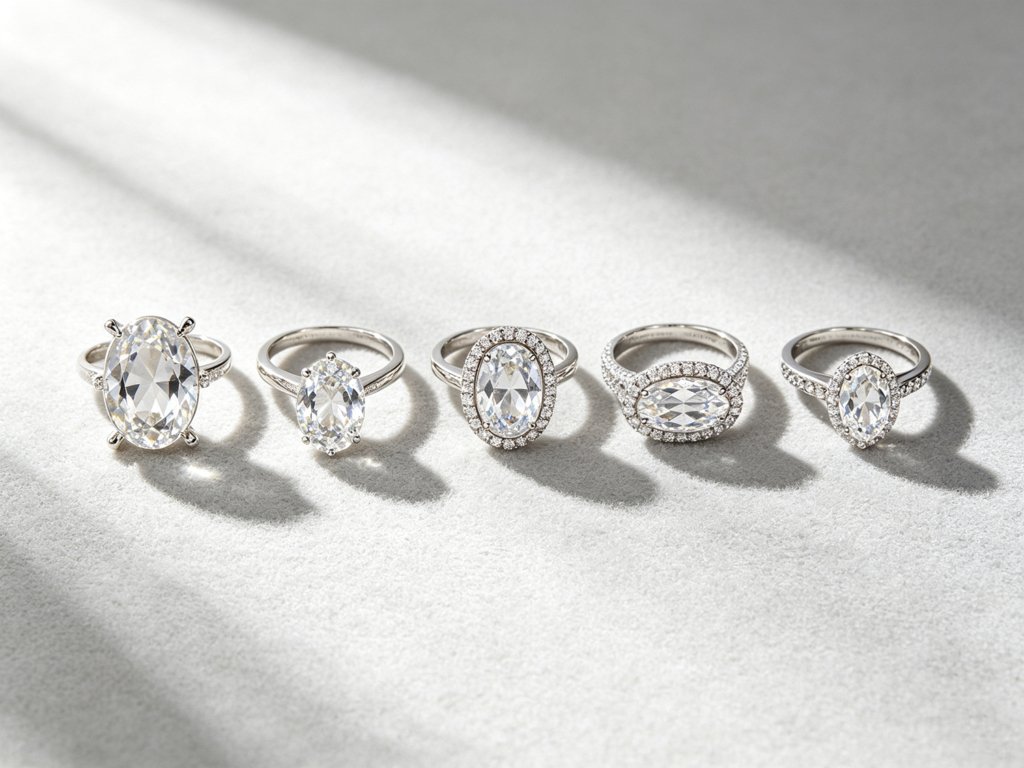
Prong settings are the most traditional and sparkle-friendly option for oval diamonds. Minimal metal coverage allows maximum light to pass through the entire oval surface.
For oval diamonds, 4-prong settings are the industry standard over 6-prong styles. Four prongs secure the stone at four key points, leaving the delicate girdle and elongated sides fully exposed to preserve optimal brilliance. Six-prong designs deliver extra security but may cover light-reflecting facets along the curved edges—this can lower overall brightness and accentuate shadowed areas.
Oval diamond tips are more vulnerable than the edges of round diamonds. High-quality 4-prong settings use slightly widened, rounded prong heads at both ends. This prevents chipping without blocking incoming light. A 6-prong layout works well only when custom engineered for oval geometry, such as two prongs at each end and two on the sides. Improper 6-prong placement can pinch the stone and disrupt its natural symmetry. A well-aligned 4-prong setting centers the stone’s optical axis, which naturally softens mild bowtie shadows.
Best for: maximizing sparkle, minimalist bridal styles, oval stones with elongated ratios, formal proposals
Avoid for: highly active wearers, oval diamonds with shallow girdles prone to chipping
SYMARA prong-set oval rings adopt precision stone alignment to prevent tilting and rotation, maintaining consistent brilliance for daily and bridal wear.
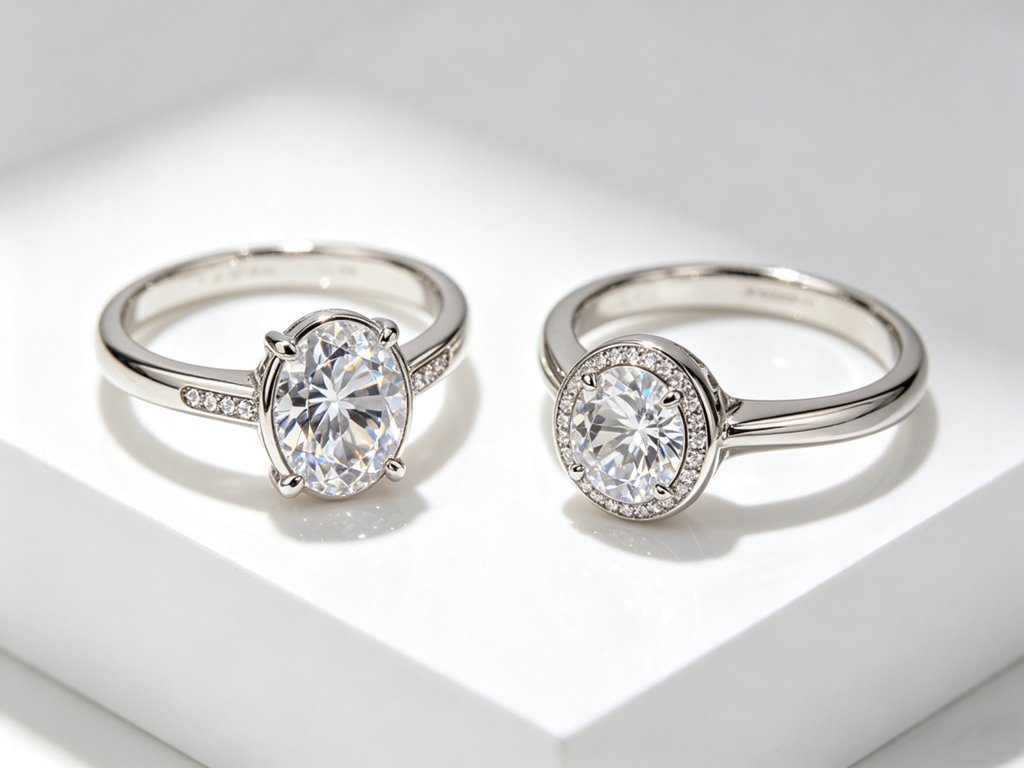
Solitaire settings feature a single center oval diamond paired with a plain polished band. This distraction-free design puts full focus on the stone’s elegant elongated shape.
Oval solitaires excel at creating the appearance of a larger carat weight. Thanks to their wider table and surface spread, oval diamonds look 8–12% bigger than round diamonds of the same carat size. A thin shank oval solitaire amplifies this effect the most. It lets a 1-carat oval appear equivalent to a 1.1 to 1.15-carat stone without upgrading the actual diamond.
This style works seamlessly for bridal stacking. Plain solitaire shanks sit flush with most straight and contoured wedding bands to form cohesive bridal ring sets.
Hand shape match: Ideal for short fingers and wide palms, as the vertical oval silhouette creates a slimming visual effect.
The main drawback of oval solitaires is limited protective coverage. The exposed girdle requires careful wear during strenuous daily activities.
SYMARA solitaire oval rings are crafted with durable S925 sterling silver and premium 18K gold, built to last for years of bridal wear.
Halo Settings & Bowtie Concealment
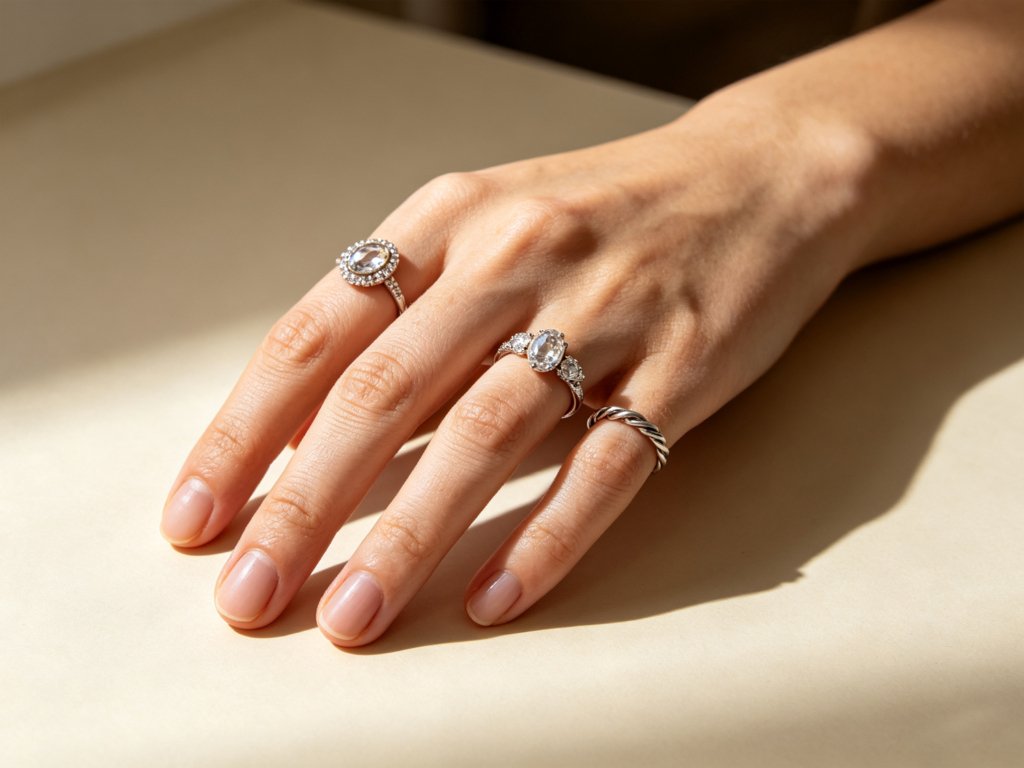
Halo settings surround the center oval diamond with micro accent diamonds, boosting overall sparkle and perceived stone size significantly.
Halo designs rank among the best choices to minimize the appearance of a bowtie effect. The surrounding shimmer draws the eye away from central shadows and balances uneven light performance.
Two popular halo variations suit oval diamonds well. A standard single halo adds subtle glow while retaining the stone’s natural shape. Double halos deliver bold luxury, perfect for engagement reveals and wedding photography.
An oval-shaped halo frame is generally preferable to a round halo for oval center stones. It follows the diamond’s outline, avoids distorted corners, and maintains natural proportions. The hidden halo is another popular modern variation. It features micro-pave diamonds underneath the stone, presenting a clean solitaire look from the top while adding extra sparkle from the sides.
Halo structures also add physical protection to delicate oval girdles. The micro-pave frame cushions minor impacts and lowers the risk of chipping.
Best for: ovals with moderate to prominent bowtie effects, smaller center stones, romantic bridal aesthetics
Style note: Oval-shaped halo frames maintain better proportions than round halos for elongated diamonds.
The bowtie effect is an inherent optical shadow formed by the facet structure of elongated diamond cuts. No setting can eliminate it completely, but certain styles greatly reduce its visibility. Bowtie intensity is closely linked to an oval’s proportions: stones with a 1.35–1.50 length-to-width ratio, 62–66% depth, and 54–62% table size tend to show more obvious bowtie effects. Settings cannot fix poorly proportioned diamonds, yet they can mask visual flaws.
Top bowtie-friendly settings:
• Halo settings, especially custom oval halos
• Elevated 4-prong designs with an open gallery
• Pavé bands with evenly distributed sparkle
Avoid for strong bowtie stones: full bezel mounts, heavy 6-prong settings, and wide solid shanks, all of which deepen shadow contrast.
Pavé Settings – Delicate Sparkle Across the Band
Pavé settings hold tiny accent diamonds along the ring shank, creating continuous, even sparkle without overshadowing the center oval diamond. Micro pavé detailing offers subtle all-day shine and elevates simple oval designs into high-end bridal jewelry.
The width of a pavé band should match the oval diamond’s length-to-width ratio for balanced aesthetics. Slim ovals with a 1.35–1.45 ratio pair well with 1.2–1.5mm thin pavé bands. Elongated ovals with a ratio above 1.50 work best with 1.8–2.2mm medium pavé bands. This combination prevents the ring from looking top-heavy.
Pavé bands do not interfere with the center stone’s optics, so they fully preserve the oval’s natural light pattern. They pair beautifully with both solitaire and halo center designs.
Wear tip: Full pavé bands require occasional professional maintenance to retighten small stones after long-term daily wear.
Split Shank Settings – Unique Modern Design
Split shank bands divide into two or three strands near the center stone. This architectural style frames oval diamonds and creates a dramatic, upscale bridal look.
The split band draws vertical focus toward the center stone and enhances the oval’s lengthening effect. It is one of the most flattering styles for short fingers and full hand shapes.
Split shank settings deliver improved structural stability around the stone. They reduce oval diamond rotation more effectively than standard single-shank solitaires. This style matches best with oval diamonds that have a moderate 1.40–1.50 length-to-width ratio. An overly elongated oval paired with a split shank will look unnaturally stretched, while a compact oval loses its elegant vertical lines.
Split shanks work perfectly with clean 4-prong center settings. Combining split shanks with halo details creates red-carpet worthy bridal luxury.
Best for: modern brides, anniversary ring upgrades, non-traditional engagement rings
Bezel & East-West Settings
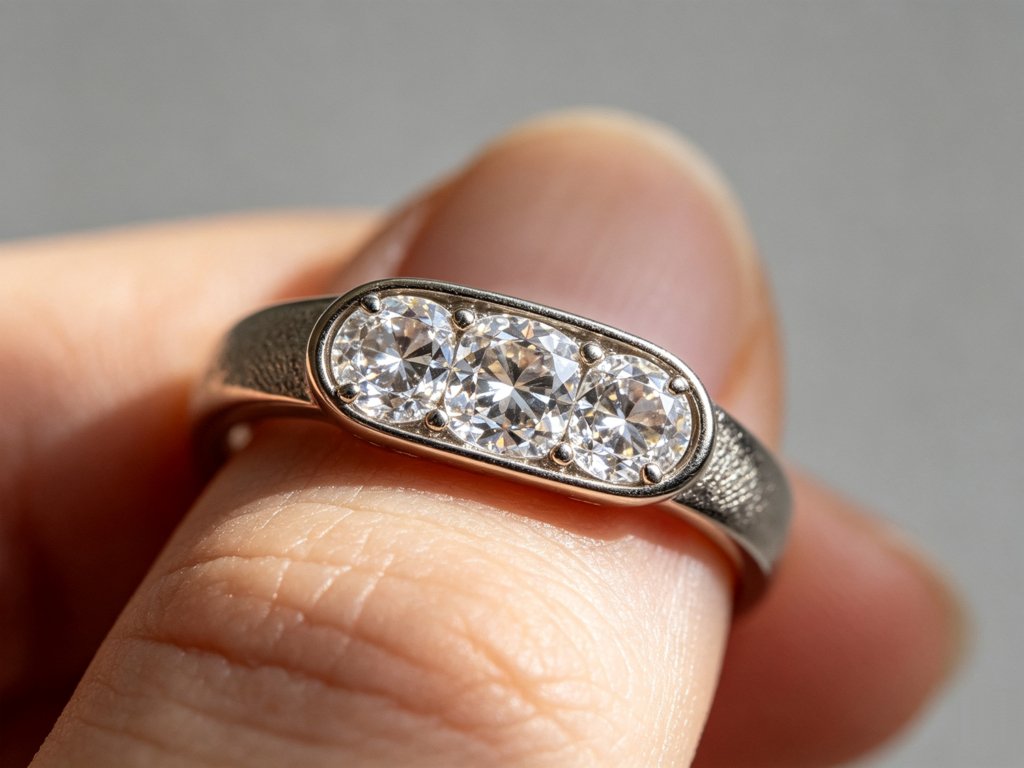
Full bezel settings encase the entire oval diamond girdle within a polished metal rim, delivering maximum protection against scratches and impact damage.
Bezel styles are the safest pick for active wearers, including educators, healthcare workers, and parents. The solid metal frame eliminates risks of chipping, loosening, and stone rotation. Full metal coverage slightly reduces a diamond’s brilliance, but it conceals minor flaws and uneven edges along the girdle.
Bezel settings are the top choice for east-west horizontal oval designs. Setting an oval diamond horizontally across the finger, known as east-west style, has become a major jewelry trend in recent years. Popularized by celebrities, this design has seen rapid growth in search demand from 2025 to 2026. East-west ovals work best with bezel settings or slim 4-prong mounts. These styles stabilize the horizontal stone and deliver distinct visual charm. This non-traditional look breaks away from classic engagement ring designs and suits those who pursue personalized style.
Partial bezel settings strike an ideal balance. They reinforce high-stress points of the stone while leaving side facets exposed to retain better sparkle.
Bowtie effect note: Bezel settings can deepen central shadows. They are recommended primarily for well-cut ovals with minimal bowtie visibility.
Best for: modern fashion-forward brides, short fingers
Avoid for: extremely long and slender fingers, as this style can overly widen hand proportions
Tension Settings – Contemporary Bold Aesthetic
Tension settings hold oval diamonds in place via calibrated metal pressure, creating a floating stone effect with no visible prongs or metal borders. This ultra-minimal style showcases the oval’s pure, symmetrical silhouette and appeals to couples with modern fashion tastes.
Tension-set ovals allow unobstructed light flow for outstanding fire and brilliance. However, this design demands precise craftsmanship to sustain stable metal pressure over time. Many jewelers advise against tension settings for oval diamonds due to tip fragility. Poorly crafted tension mounts may cause slippage or cracking at the pointed ends. If you choose this style, work with an experienced jeweler.
Best for: low-activity wearers, fashion-forward brides, high-clarity oval center stones
Three-Stone Settings – Symbolic Past, Present, Future
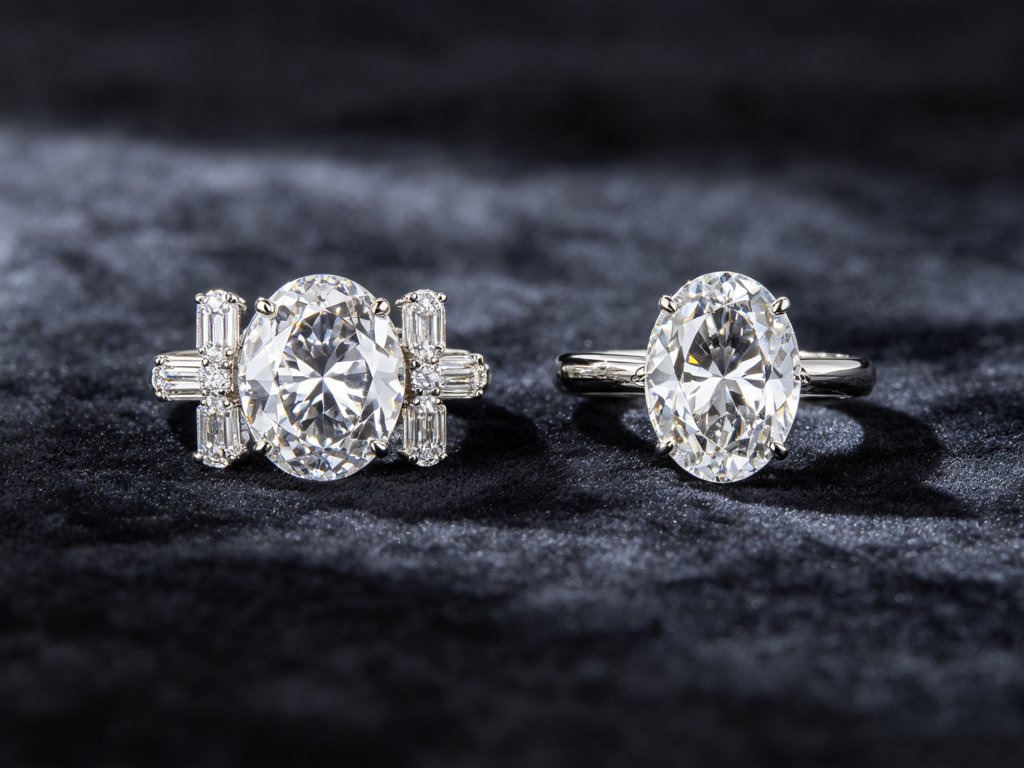
Three-stone settings feature one central oval diamond flanked by two accent stones. This timeless design symbolizes a couple’s past, present, and future, carrying deep sentimental value for bridal jewelry.
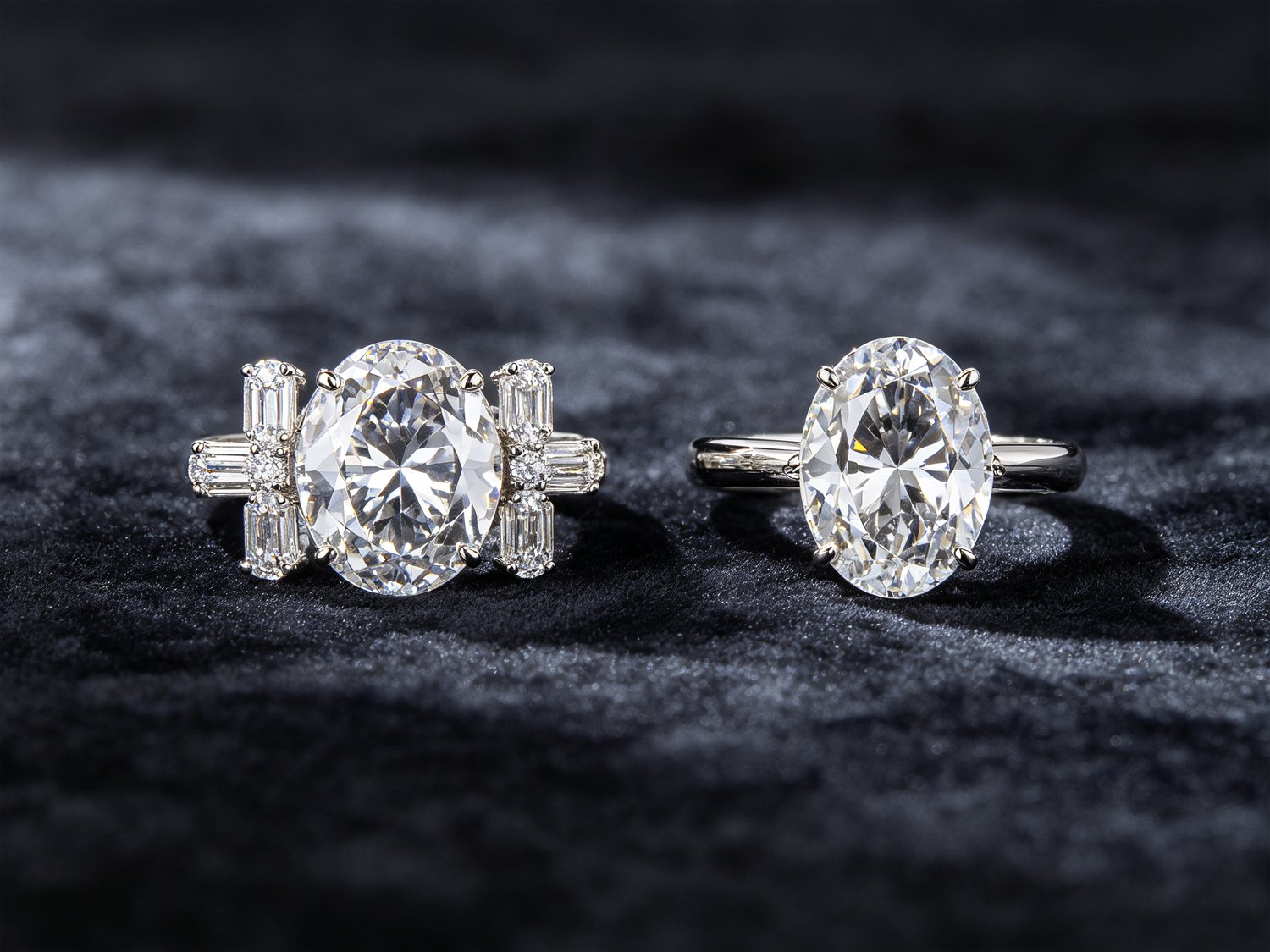
Tapered baguette side stones complement oval diamonds better than round brilliants. They follow the stone’s linear flow and make the entire ring appear longer and slimmer on the finger. Three-stone layouts naturally stabilize elongated ovals. The framework of side stones prevents tilting and creates balanced coverage across the finger.
This style is a heartfelt choice for proposals, milestone anniversaries, and bridal gift collections.
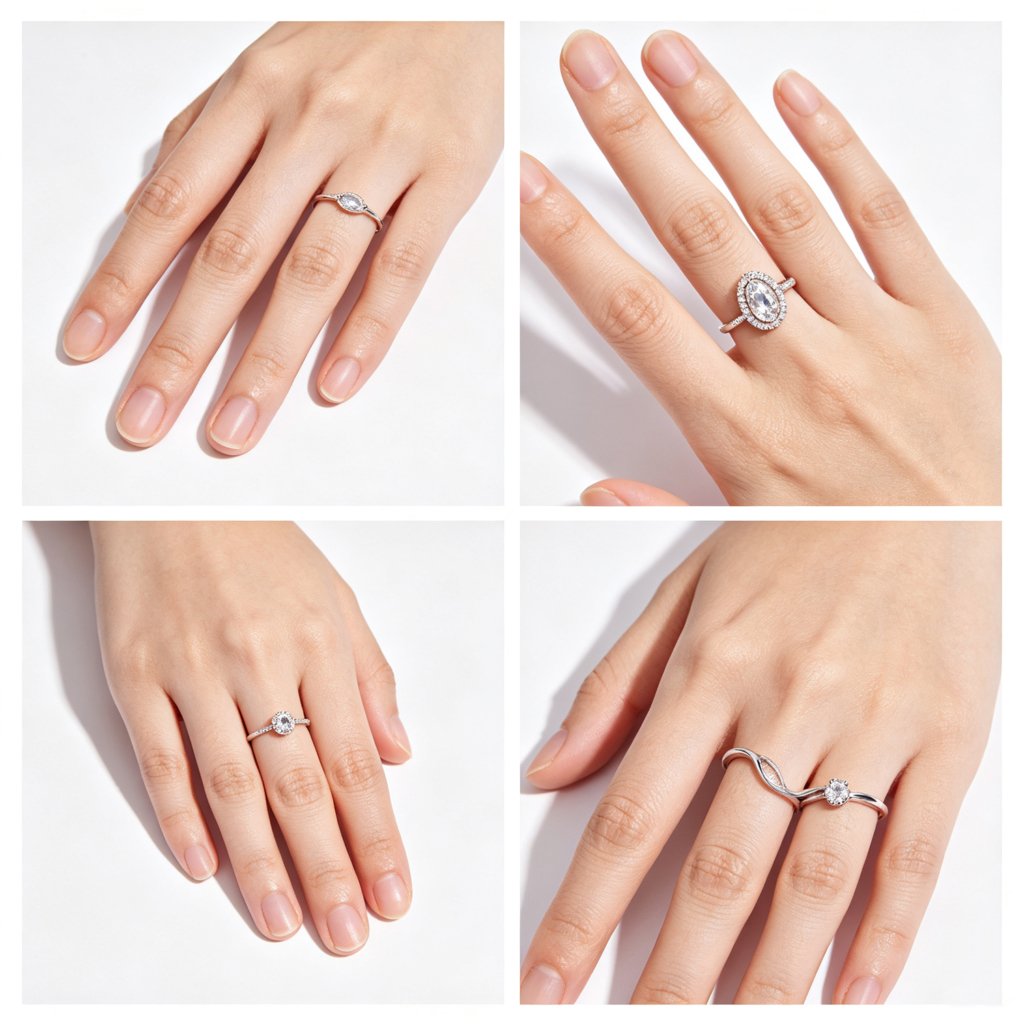
Choosing the Right Setting for Your Hand & Style
The right setting maximizes an oval diamond’s ability to flatter different hand and finger shapes.
• Short fingers / wide hands: Split shanks and slim vertical solitaires extend the visual line of fingers
• Long slender fingers: Halo, three-stone, and wide pavé bands add balanced width
• Small petite hands: Thin-shank solitaires and mini halos avoid a bulky look
• Large hands / broad palms: Double halos and split shanks deliver proportional presence
East-west bezel set ovals are the most flattering option for short, wide hands. Thin vertical solitaires remain the top pick for long, slender fingers.
Use this scenario-based guide to select your ideal setting quickly:
• Max sparkle and fire: 4-prong solitaire
• Maximum security for daily wear: Full or partial bezel
• Hide bowtie effects and boost glamour: Single or double halo
• Easy stacking for bridal sets: Thin-shank solitaire
• Unique modern style: Split shank or east-west bezel
• Sentimental gifts: Three-stone style
Match the metal tone to your lifestyle and preference. 18K gold offers warm luxury for bridal occasions, while S925 sterling silver provides durable everyday wear.
Final Thoughts
An oval diamond engagement ring’s overall look depends heavily on its setting. Each style balances sparkle, security, aesthetics, and bowtie performance differently. Unlike round diamonds, oval cuts require specialized craftsmanship to prevent rotation, exaggerated shadows, or loss of brilliance. A well-chosen setting keeps your oval ring beautiful, durable, and flattering for proposals, weddings, and lifelong daily wear.
Explore SYMARA’s oval engagement rings and bridal ring sets to find your ideal style. For stacking options, browse our stackable rings collection.