The Complete Guide to Diamond 4Cs: Cut, Color, Clarity, Carat
At SYMARA, we hear the same thing from clients all the time: “I want a good diamond, but I don’t even know where to start.”
And honestly? That’s fair. There’s a lot of information out there, and not all of it is helpful. Terms like “eye-clean” and “hearts and arrows” get thrown around. People get hung up on D color when they should be focused on cut. They fall in love with a carat weight without understanding how it actually looks on the finger.
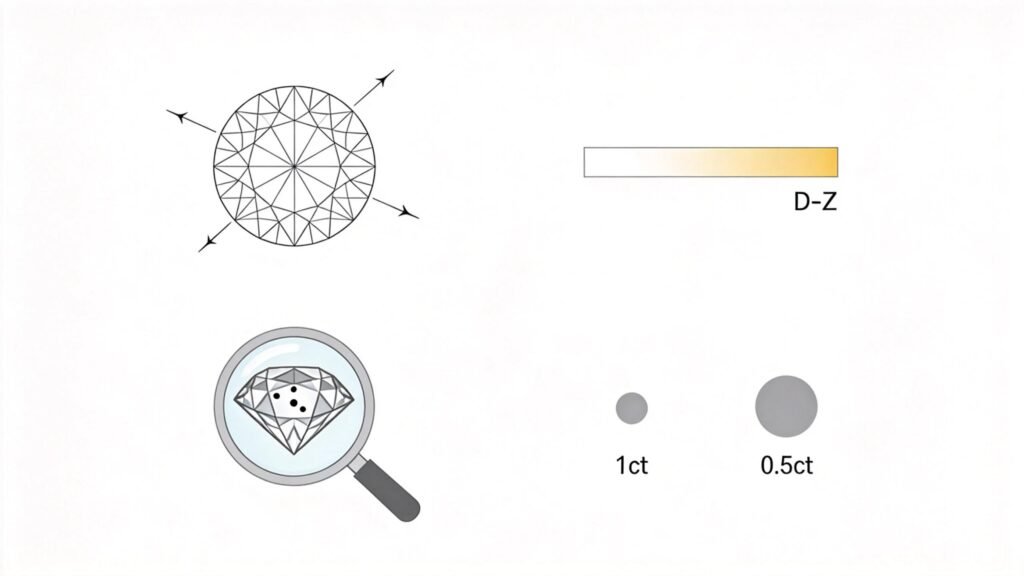
So let’s start at the beginning. The 4Cs.
They were created by the GIA (Gemological Institute of America) back in the 1950s, and they’re still the global language for describing diamond quality. Cut, Color, Clarity, Carat. Once you understand these four things, you’ll never feel lost in a jewelry store again.
Here’s what you actually need to know.
Cut: The One That Actually Makes It Sparkle
Here’s a truth we don’t say enough: cut is the most important C.
You can have a diamond with perfect color and flawless clarity, but if the cut is poor, it’ll look dull. Lifeless. Like a piece of glass. And nobody wants that.
What cut actually means.
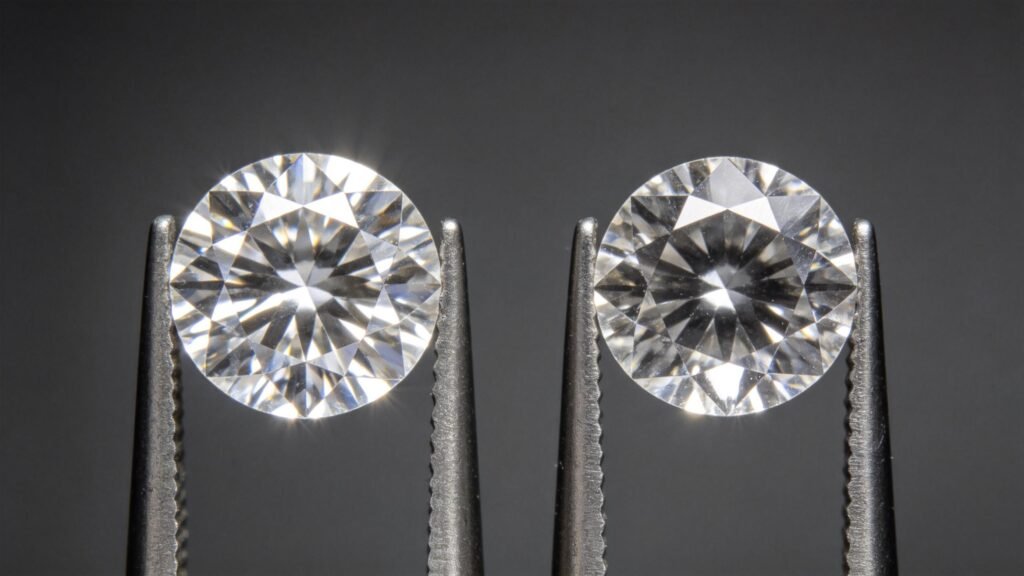
It’s not about the shape (round, pear, etc.). Cut refers to how well the diamond’s facets interact with light. The proportions, the symmetry, the polish. A well-cut diamond takes light in through the top, bounces it around inside, and sends it back out as sparkle.
The grades.
GIA rates cut from Excellent to Poor. For round brilliant diamonds, they give a full cut grade. For fancy shapes (like oval or pear), they grade polish and symmetry instead.
What we tell our clients.
Don’t compromise on cut. Ever. If your budget is tight, go for a slightly lower color or clarity before you drop from Excellent to Very Good. You’ll see the difference. We’ve had clients bring in two diamonds side by side—one Excellent cut, one Very Good—and every single time, they pick the Excellent. It just pops more.
Insider Tip:
Look for “hearts and arrows” in round diamonds. It’s a sign of ideal symmetry. Not essential, but nice if you can find it.
Color: How White Is White?
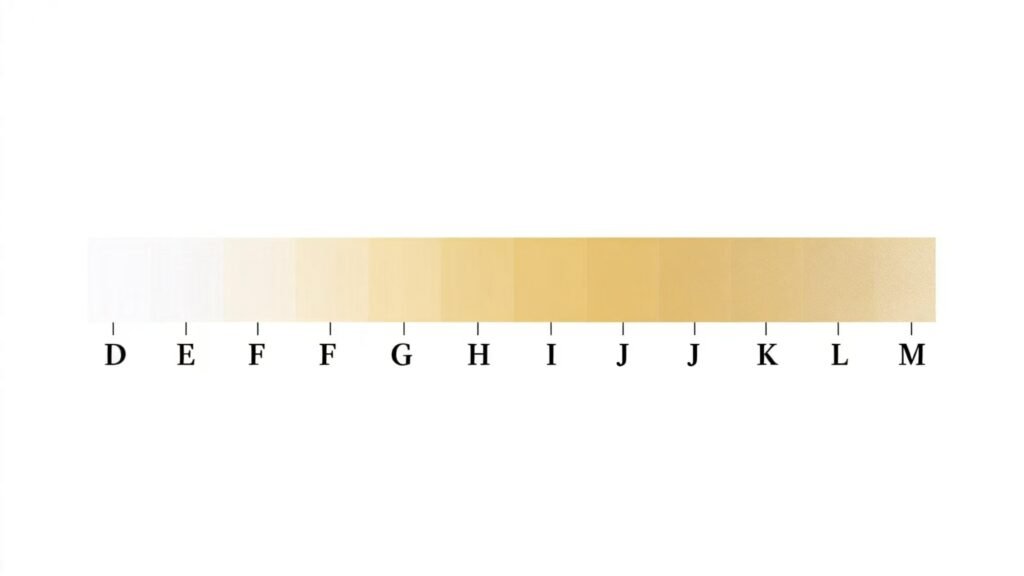
Diamonds come in a range of colors, from completely colorless to light yellow or brown. The scale runs from D (totally colorless) to Z (noticeable color).
The grades broken down.
· D-F: Colorless. Rare and expensive. D is the top, but honestly? Most people can’t tell D from F without a side-by-side comparison.
· G-J: Near colorless. The sweet spot for value. To the naked eye, they look white. In platinum or white gold, they’re stunning.
· K-M: Faint color. You’ll start to see warmth here, especially next to higher-grade diamonds. Can look beautiful in yellow gold.
· N-Z: Light color. Usually not used for engagement rings unless it’s a fancy color diamond (which is a whole different thing).
What we tell our clients.
If you’re setting the diamond in platinum or white gold, stick to G-H color. In yellow gold, you can go down to I-J and the metal will mask any warmth. We’ve done rings with K color in vintage-style yellow gold settings, and they look incredible—warm and romantic. (For more on how metal color affects diamond appearance, check out our metal guide.)
Insider Tip:
The diamond’s cut affects how color appears. A well-cut diamond reflects so much light that it can appear whiter than its grade.
Clarity: The Birthmarks Inside
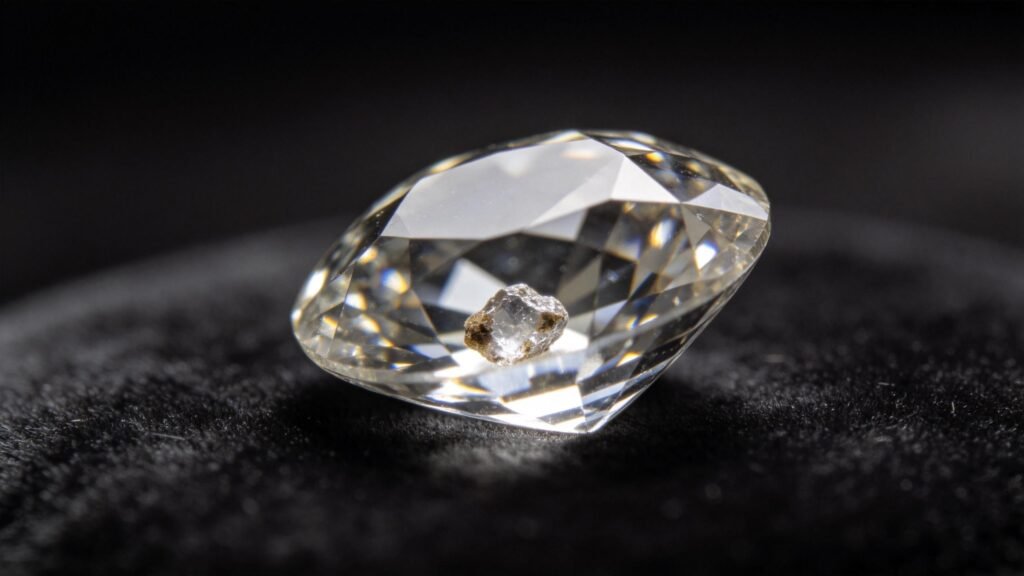
Clarity measures the tiny imperfections inside a diamond—called inclusions—and on its surface—called blemishes. Almost all diamonds have them. They’re like birthmarks. Unique, natural, and usually invisible to the naked eye.
The grades.
· FL/IF: Flawless/Internally Flawless. No inclusions under 10x magnification. Extremely rare and expensive.
· VVS1/VVS2: Very Very Slightly Included. Minute inclusions so tiny that even a trained eye struggles to find them under magnification.
· VS1/VS2: Very Slightly Included. Small inclusions visible under 10x but difficult to see without training.
· SI1/SI2: Slightly Included. Inclusions visible under magnification. In SI1, they’re usually hard to see with the naked eye; in SI2, you might spot them if you look closely.
· I1/I2/I3: Included. Inclusions visible to the naked eye. Usually not recommended for engagement rings.
What we tell our clients.
For most people, VS2 or SI1 is the sweet spot. They’re eye-clean—meaning you can’t see anything without a loupe—and they save you significant money compared to VVS. We’ve sold countless SI1 diamonds that look perfect to anyone who isn’t holding a microscope.
Insider Tip:
Look at where the inclusion is. If it’s near the edge, a prong can cover it. If it’s in the middle of the table (the big flat top), you’ll see it. We always check placement before recommending a stone. Different ring settings can also help hide inclusions or protect vulnerable areas.
Carat: The Size Question
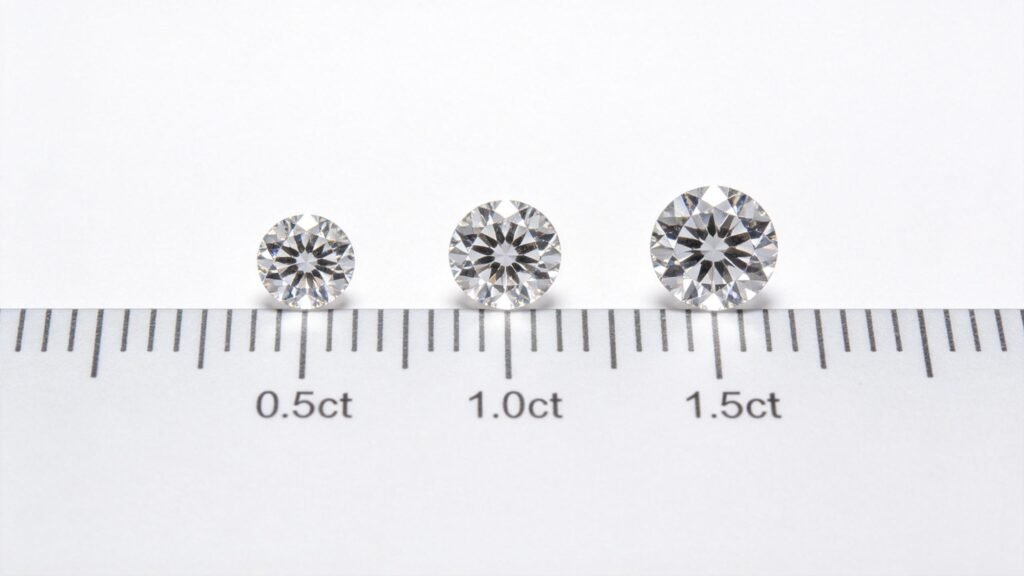
Carat is weight, not size. But weight generally correlates with size—just not perfectly.
What you need to know.
Two 1-carat diamonds can look different sizes depending on their cut. A well-cut diamond with ideal proportions will face up larger than a deep-cut diamond that hides weight in the bottom.
The magic numbers.
There’s something called “magic sizes”—0.50, 0.75, 1.00, 1.50, 2.00 carats. Prices jump at these thresholds. A 0.90-carat diamond can look almost identical to a 1.00-carat but cost significantly less.
What we tell our clients.
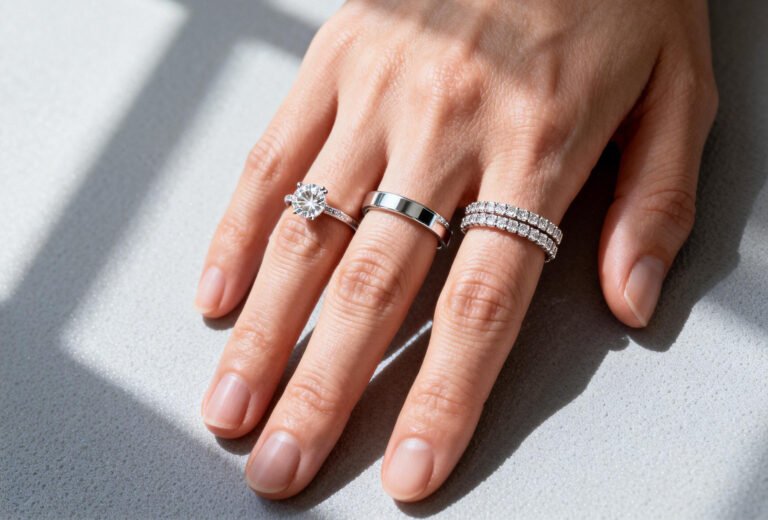
Think about how the diamond will be worn. If she has small fingers, a well-cut 0.80 can look like a 1.00. If she has larger hands, you might want to push the weight up. And remember—settings can make diamonds look bigger. A thin pave band or a halo can add visual size without adding carat weight. (Browse our custom engagement rings to see how setting design affects presence.)
Insider Tip:
Ask to see the diamond’s dimensions, not just the weight. A 1.00 carat round should be about 6.3-6.5mm in diameter. If it’s smaller, the cut is probably too deep.
Diamond Shapes: Finding the Silhouette
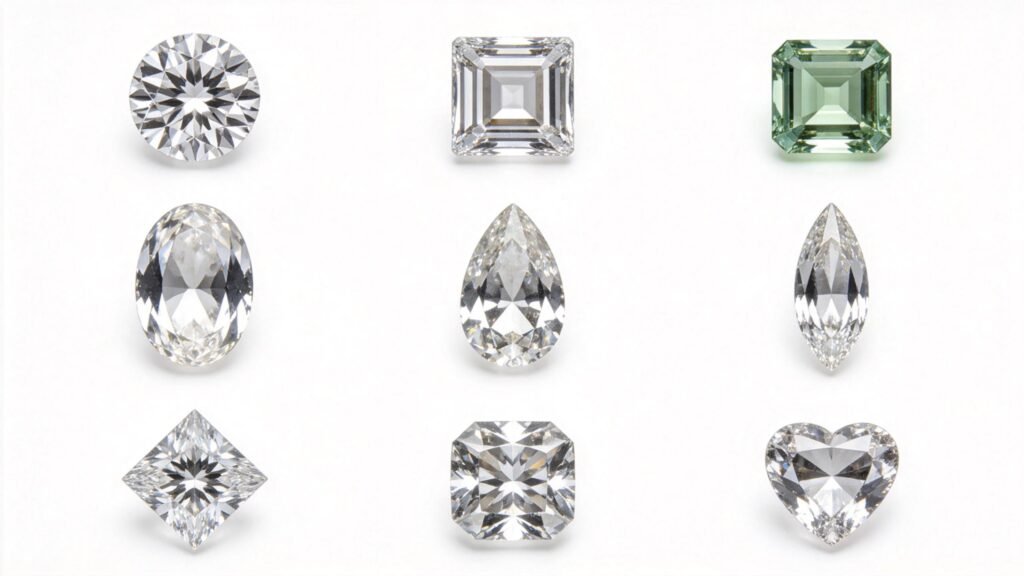
The shape is the first thing people notice. It’s personal. Some women have dreamed of a round brilliant since they were twelve. Others want something unique.
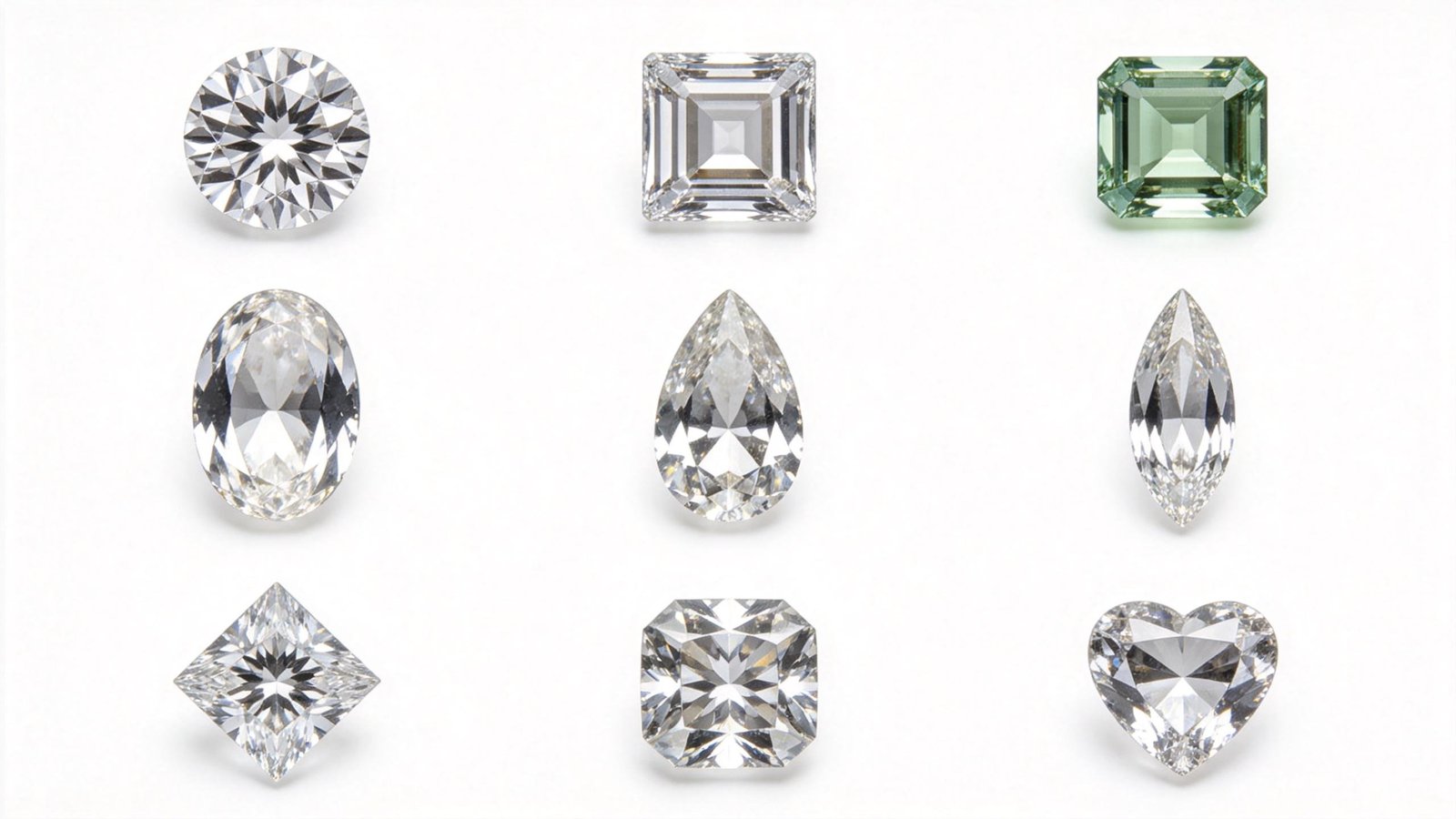
Round Brilliant.
The classic. 75% of all engagement rings. Maximum sparkle because of the precise faceting. Works in any setting, any metal, any style.
Princess Cut.
Modern, sharp, square. Second most popular. The corners are vulnerable—protect them with V-prongs or a bezel. (Our ring settings guide explains how different settings protect vulnerable corners.)
Emerald Cut.
Step-cut facets, like a hall of mirrors. Elegant, understated, vintage feel. Requires higher clarity because the open table shows inclusions more easily.
Oval.
Similar sparkle to round but elongates the finger. Can look larger than a round of the same weight. Watch for “bow-tie” effect—a dark area across the middle—in poor cuts.
Pear Shape.
Teardrop. Romantic, unique. The point needs protection. Wear with the point toward the fingertip to elongate.
Marquise.
Football-shaped. Maximum face-up size per carat. Two points to protect.
Cushion.
Square with rounded corners. Soft, romantic, vintage vibe. Popular in halo settings.
Asscher.
Like emerald cut but square. Art Deco feel. Also needs clarity.
Heart.
For the romantics. Requires excellent symmetry—lopsided hearts look obvious.
What we tell our clients.
Try them on. Seriously. A shape you love in photos might feel wrong on your hand. We have sample stones in every shape—come in and hold them against your finger.
Diamond Fluorescence: Friend or Foe?
Fluorescence is one of those topics that confuses a lot of buyers. Here’s what you need to know.
What it is.
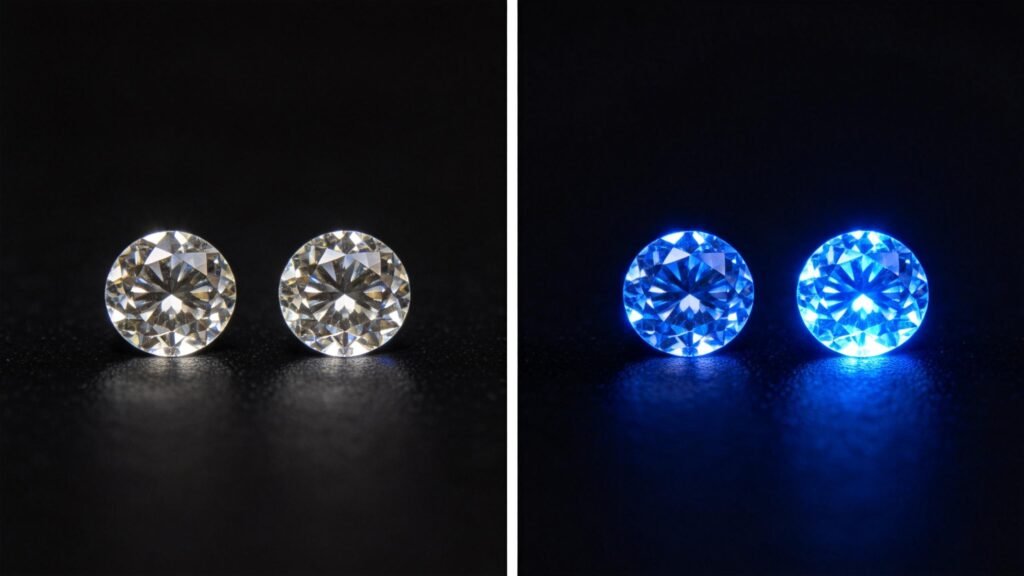
Fluorescence is the soft glow some diamonds emit when exposed to ultraviolet light (like in sunlight or under black light). It’s caused by trace elements within the diamond, usually nitrogen.
The grades.
GIA grades fluorescence as None, Faint, Medium, Strong, or Very Strong.
How it affects appearance.
· For most diamonds, fluorescence doesn’t change how they look in normal lighting. You’ll never notice it.
· In rare cases, Strong or Very Strong fluorescence can make a diamond look hazy or oily—especially in higher color grades (D-F).
· Here’s the interesting part: in lower color grades (I-M), Strong fluorescence can actually make the diamond appear whiter by counteracting yellow tones.
Market preferences.
In the US, fluorescence is widely accepted. In Asia, there’s a stronger preference for “None.” European buyers fall somewhere in between.
What we tell our clients.
Don’t automatically reject fluorescence. We’ve seen Medium Blue fluorescence diamonds that look stunning and cost significantly less than non-fluorescent equivalents. The key is looking at each stone individually. If there’s any haziness, we’ll tell you. If it looks clean and bright, it’s a great value.
Insider Tip:
If you’re considering a lower-color diamond (I or below), Medium to Strong fluorescence can be a smart way to get a whiter look for less money.
Lab Grown vs. Natural Diamonds
This is the question we get most often these days. So let’s break it down.
What lab-grown diamonds are.
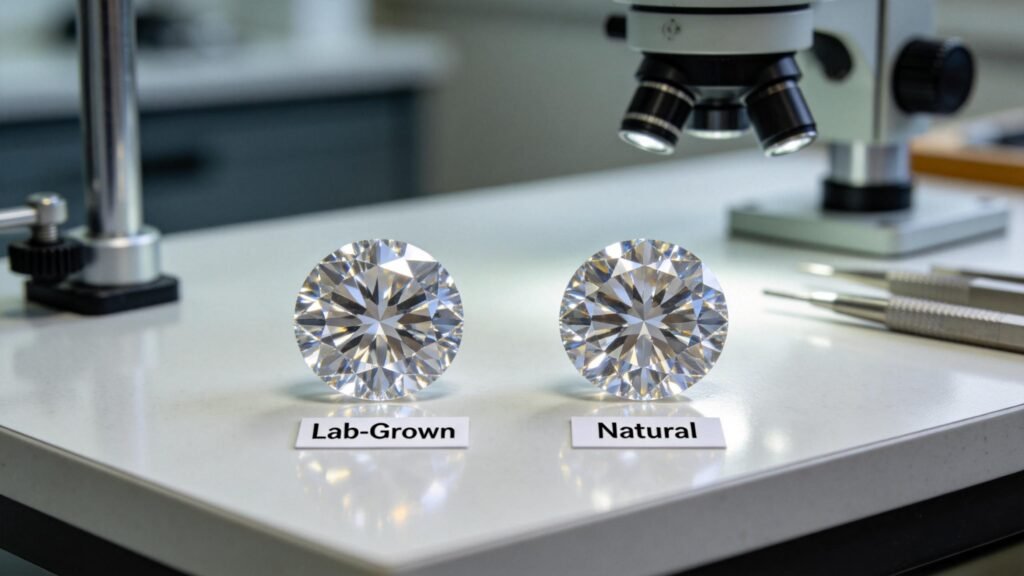
They’re real diamonds—not imitations like cubic zirconia or moissanite. They have the same chemical composition (carbon), the same crystal structure, the same hardness, and the same optical properties as natural diamonds. The only difference is origin.
How they’re made.
Two main methods:
· HPHT (High Pressure High Temperature): Mimics the natural conditions deep underground where diamonds form.
· CVD (Chemical Vapor Deposition): Creates diamonds in a vacuum chamber using carbon-rich gas.
Can you tell the difference?
Not with the naked eye. Even jewelers need specialized equipment to distinguish lab-grown from natural. Both sparkle the same, look the same, and wear the same.
Certificates.
Major labs like GIA and IGI grade lab-grown diamonds using the exact same 4C standards. The certificate will clearly state “Laboratory Grown” so there’s no confusion.
Price difference.
Lab-grown diamonds typically cost 40-60% less than natural diamonds of comparable quality. That means you can get a larger stone or higher specs for the same budget.
The trade-off.
Natural diamonds are billions of years old—they carry a sense of history and rarity. Lab-grown diamonds are more recent, more abundant, and don’t hold resale value the same way. But if resale isn’t a concern, they offer incredible value.
What we tell our clients.
Both are real diamonds. The choice comes down to what matters to you—the romance of a natural stone formed over millennia, or the budget freedom that lab-grown provides. We offer both, and we’re happy to show you options side by side so you can decide for yourself.
Ethical Sourcing: Conflict-Free Diamonds
We take sourcing seriously. Here’s what that means.
The Kimberley Process.
This is the international certification system that prevents “conflict diamonds”—rough diamonds used by rebel movements to finance wars—from entering the mainstream diamond trade. It requires that diamonds be shipped in sealed, tamper-resistant containers and accompanied by a certificate of origin.
Beyond Kimberley.
While the Kimberley Process was a major step forward, it has limitations. That’s why we go further. We personally know our suppliers. We visit their operations. We ask questions. And we only work with partners who share our commitment to ethical practices.
What we can promise.
Every diamond we sell is conflict-free. We can trace its journey from mine to finished ring. If you have questions about a specific stone’s origin, we’re happy to share what we know.
Why it matters.
A diamond should bring joy, not guilt. Knowing where it came from—and that it didn’t harm anyone in the process—makes it even more meaningful.
How to Read a GIA Certificate
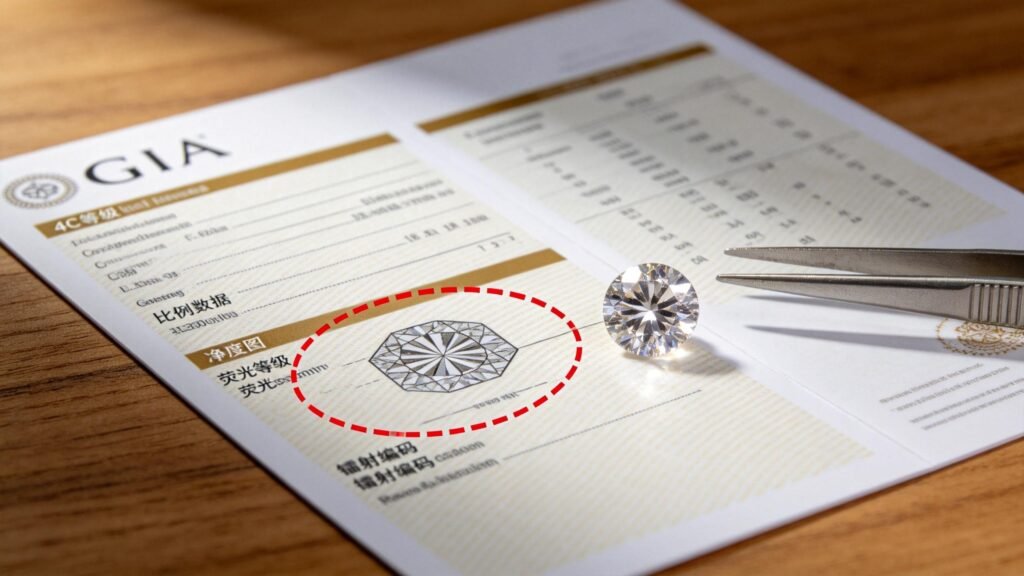
A diamond certificate (or grading report) is your proof of what you’re buying. It’s issued by an independent lab after the diamond is examined by trained gemologists.
The major labs.
· GIA: The gold standard. Most trusted, most consistent, most recognized. Prices reflect this.
· IGI: Also reliable, especially for larger diamonds. Slightly less strict than GIA, so grades might be a touch softer.
· AGS: Focuses on cut grading. Merged with GIA recently.
· HRD: European lab, respected but less common in the US.
What’s on a GIA report.
· 4C grades: Cut, color, clarity, carat.
· Plotting diagram: Shows where inclusions are located.
· Proportions: Table size, depth, crown angle, pavilion depth.
· Polish & Symmetry: Excellent, Very Good, etc.
· Fluorescence: None, Faint, Medium, Strong.
· Laser inscription: Many GIA-graded diamonds have the report number laser-inscribed on the girdle (the outer edge). You can see it with a loupe.
What we tell our clients.
Always buy certified diamonds for engagement rings. GIA is our preference. And check the number—make sure the diamond you receive matches the report. We do this for every client, but if you’re buying elsewhere, verify yourself.
Insider Tip:
Read the comments section. Sometimes it will note things like “surface graining” or “feather” that affect durability. Rare, but good to know.
How to Choose Based on Budget
Everyone’s budget is different. Here’s how we help clients allocate theirs.
Under $2,000.
Focus on cut and carat. Look for 0.50-0.70 carat, H-I color, SI1-SI2 clarity, Excellent cut. The setting will add cost, so balance accordingly.
$3,000-$5,000.
You’re in the sweet spot. 0.80-1.00 carat, G-H color, VS2-SI1 clarity, Excellent cut. This is where you get a stone that looks amazing without breaking the bank.
$5,000-$8,000.
Now we’re talking. 1.00-1.20 carat, F-G color, VS1-VS2 clarity, Excellent cut. You have room to prioritize what matters to you.
$10,000+.
1.50 carats and up. You can start looking at D-F color, VVS clarity if you want, but honestly? We’d still put the budget into cut and carat. A 1.50 carat G VS1 with Excellent cut will outperform a 1.20 D VVS every time.
What we tell our clients.
There’s no “right” way to allocate. It’s about what you value. We’ve had clients who insisted on D color and didn’t care about size. We’ve had clients who wanted maximum carat and were fine with SI clarity. Both ended up happy because they got what they wanted. If you’re ready to start designing, explore our custom engagement rings to see how your diamond comes to life in a setting built for her.
Frequently Asked Questions
Ready to Find Your Diamond?
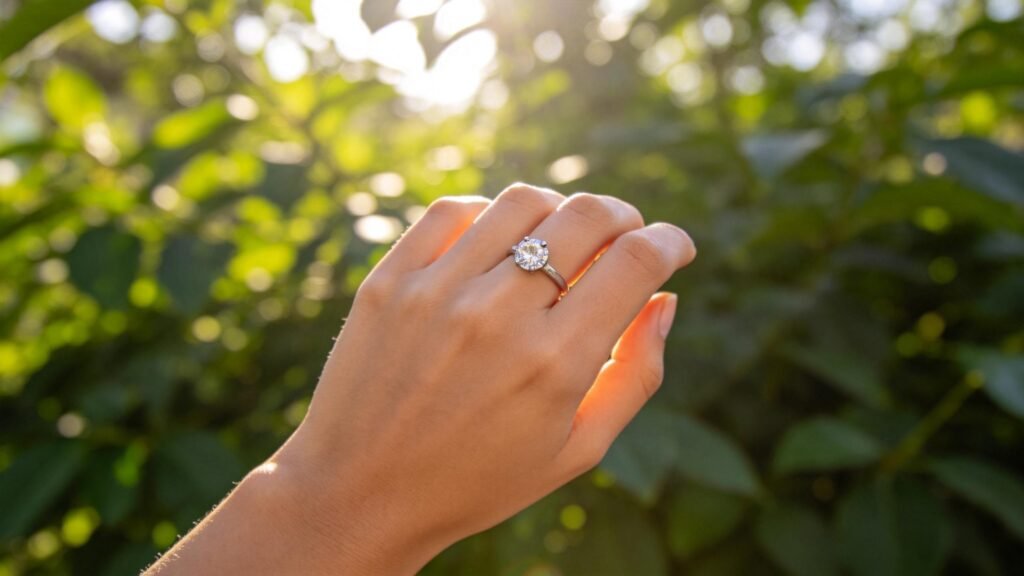
Understanding the 4Cs is the first step. But the real magic happens when you see diamonds in person—when you hold them, compare them, watch them catch the light.
At SYMARA, we have a carefully curated selection of GIA-certified diamonds. Natural and lab-grown. Round, oval, emerald, cushion—all cuts, all price points. And we’d love to show them to you.
Come in. Look through our inventory. Ask questions. Try stones on your finger. There’s no pressure—just honest advice from people who actually know diamonds.
Because at the end of the day, the right diamond isn’t about the grade. It’s about the one that makes her light up.