Ring Settings Explained: Prong, Bezel, Pave, and How to Choose
At SYMARA, we’ve worked with every kind of ring setting you can imagine. After twenty years at the bench, we’ve seen what holds up and what doesn’t. What looks timeless versus what dates itself. What works for a nurse who washes her hands fifty times a day versus someone who works at a desk.
Here’s what we’ve learned: the setting matters as much as the stone.
Think of it this way—the diamond is the star, but the setting is the stage. Get it right, and everything shines. Get it wrong, and you’ll deal with loose stones, snagged sweaters, or a ring that just doesn’t feel like her.
So let’s walk through the main players. Prong, bezel, pave, and a few others you’ll run into. We’ll tell you the good, the bad, and what we’ve learned from actually making these rings.
Prong Setting: The Classic That Never Gets Old
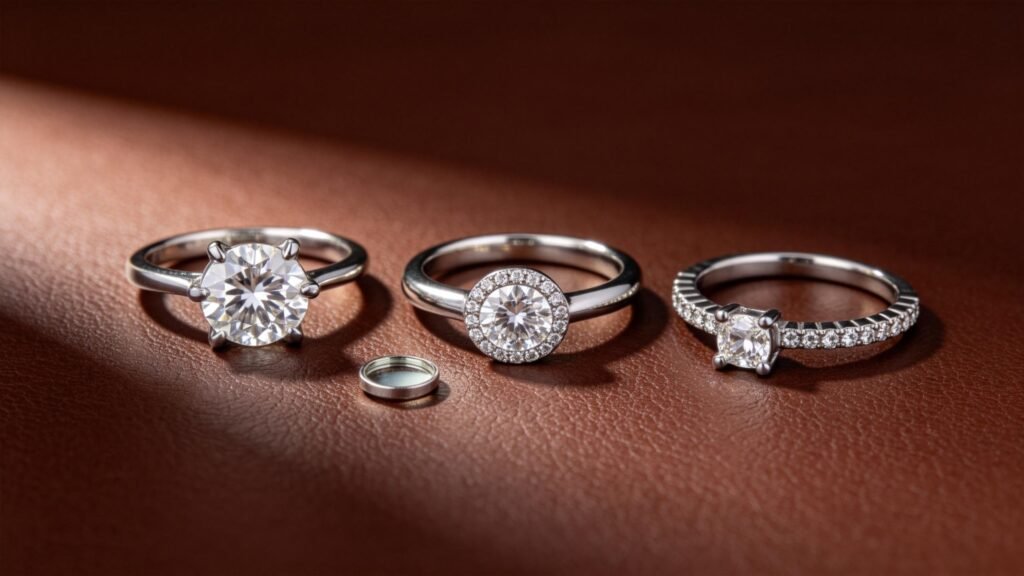
You know this one. It’s the standard. Four or six little metal claws holding the diamond in place, lifting it up so light can hit from every angle.
Here’s what we love about it. Nothing shows off a diamond like a prong setting. Because the metal stays mostly out of the way, light passes through the stone and bounces back at full strength. That fire? That sparkle she’ll stare at while driving? That’s the prong setting doing its job.
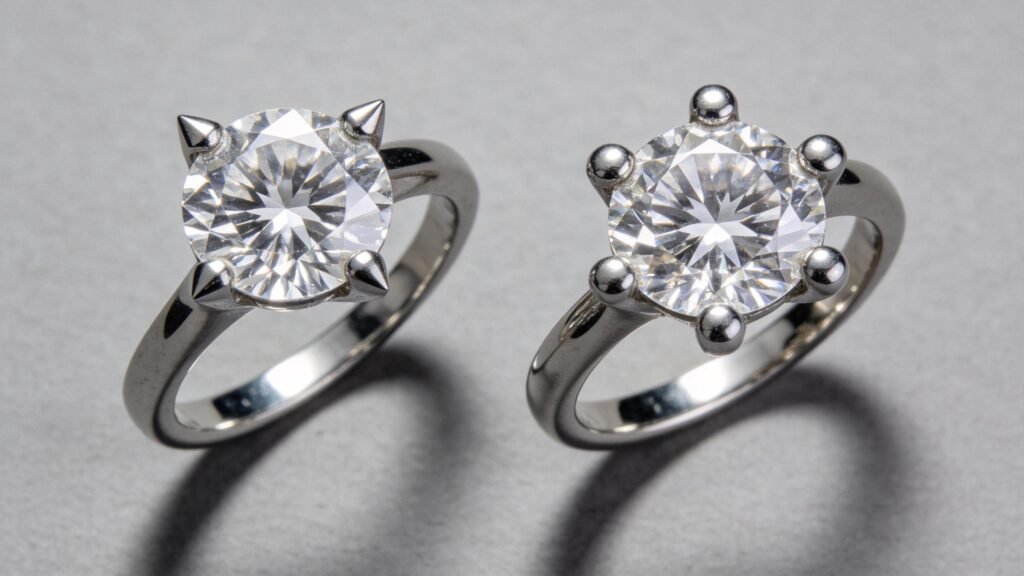
We get asked about four versus six prongs all the time. Four feels more modern, cleaner lines. Six gives you extra security and a slightly more vintage vibe. For round diamonds, six prongs also create the illusion of a rounder shape. Something about the symmetry just works.
Now the honest part. Prongs can snag. If she wears a lot of knit sweaters or works with her hands, those little claws will catch on things. We’ve had clients come back after a month saying, “I love the ring, but I’ve ruined three cardigans.” That’s real.
Also—and this matters—prongs wear down over time. Not quickly, but eventually. The tips can bend or thin out, especially if you’re rough on your jewelry. The good news? We can retip them. It’s routine maintenance. But it’s something to know going in.
Who it’s for. Someone who wants maximum sparkle. Someone who loves that classic engagement ring look. Someone who doesn’t mind checking the prongs once in a while.
Bezel Setting: The Protector
Here’s a setting that doesn’t get enough love. The bezel wraps a rim of metal completely around the diamond. The stone sits down inside a little cup, safe and sound.
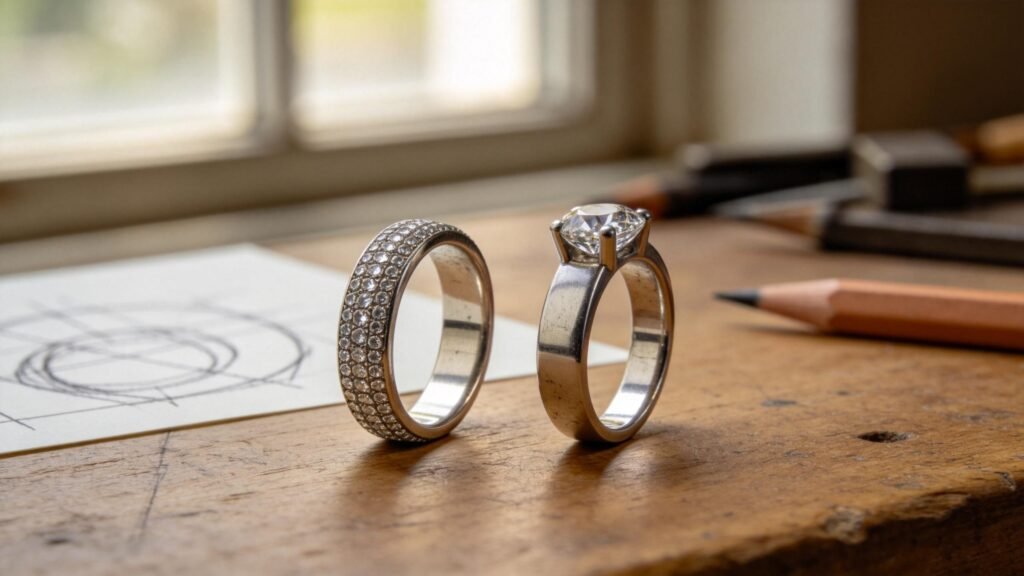
What makes it special. This thing is tough. Like, really tough. The diamond is protected on all sides. You can bang it against a counter, catch it on a door frame, wear it through a CrossFit workout—and the stone stays put.
We had a client who’s a surgeon. Washes her hands constantly, changes gloves a dozen times a day. She needed something that wouldn’t trap soap, wouldn’t snag on latex, wouldn’t budge. We built her a platinum bezel. Five years later, she still wears it every shift. Rock solid.
The trade-off. A bezel covers part of the diamond, especially the sides. That means slightly less light enters the stone. It still sparkles—don’t worry—but it’s a quieter sparkle. More subtle. Some people actually prefer that. It feels modern, architectural, understated.
You can do a full bezel or a partial bezel. Partial leaves the top and bottom open, so you get more light but still that clean, wrapped look. It’s a nice middle ground.
Who it’s for. Active lifestyles. Nurses, teachers, gardeners, moms of toddlers. Anyone who wants to wear their ring every day without thinking about it. Also people who love modern or minimalist design.
Pave Setting: All Sparkle, All the Time
Pave (pronounced pa-vay) means “paved” in French. And that’s exactly what it looks like—the band is paved with tiny diamonds, held in place by tiny little beads of metal.
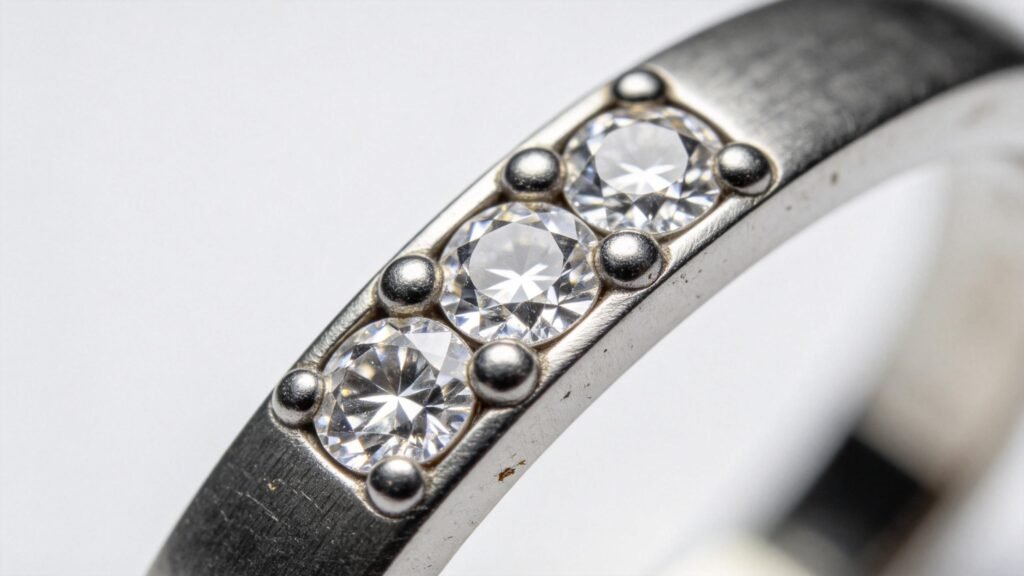
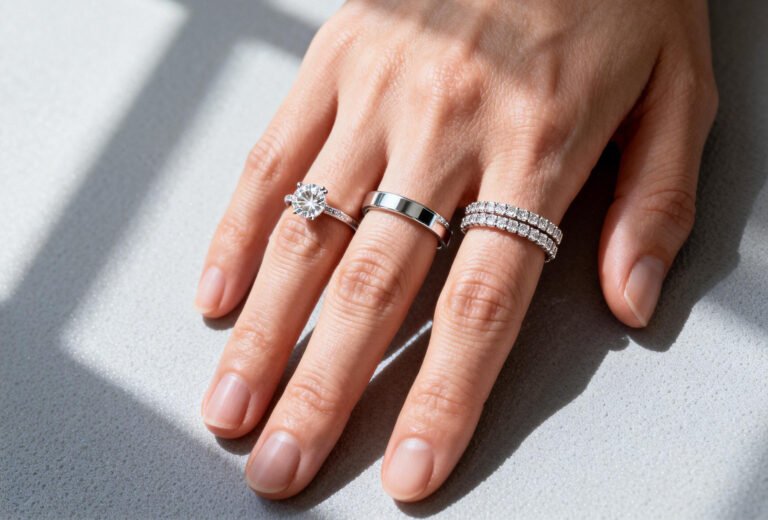
Here’s the thing about pave that nobody tells you. It’s not just one look. There’s regular pave, where the diamonds are visible but not microscopic. Then there’s micro pave, where the stones are so small and tight that the band looks almost like it’s made of diamond dust. Both are stunning, but they feel different.
Micro pave is delicate. Intricate. It catches light from every direction, so even a thin band looks substantial. Regular pave has more presence, more obvious sparkle.
What we’ve learned from making them. Pave takes time. Real time. Each tiny diamond gets placed by hand, under a microscope. The beads of metal that hold them? Also hand-done. That’s why good pave costs what it costs. You’re paying for hours of someone’s focused attention.
The honest downside. Those tiny diamonds can fall out. Not if the work is done right—but pave needs care. You can’t treat it like a workhorse ring. If she’s hard on her hands, if she’s constantly banging into things, pave might lose a stone eventually. We’ll fix it. That’s what our warranty is for. But it’s something to know. Check out our Lifetime Warranty.
Also, pave collects gunk. Hand cream, soap, dust—it all finds its way into those little crevices. A soft toothbrush and warm water once a month keeps it sparkling.
Who it’s for. Someone who loves sparkle. Someone who wants maximum impact from every angle. Someone who’s willing to give their ring a little extra attention.
Other Settings You Should Know
Channel setting. This one places diamonds in a row between two metal walls. No prongs, no little beads—just a clean groove holding the stones. You see it a lot on wedding bands, especially for anniversaries. It’s secure, it’s smooth (nothing snags), and it gives that continuous line of sparkle. Downside? Resizing can be tricky because the channel runs along the band.
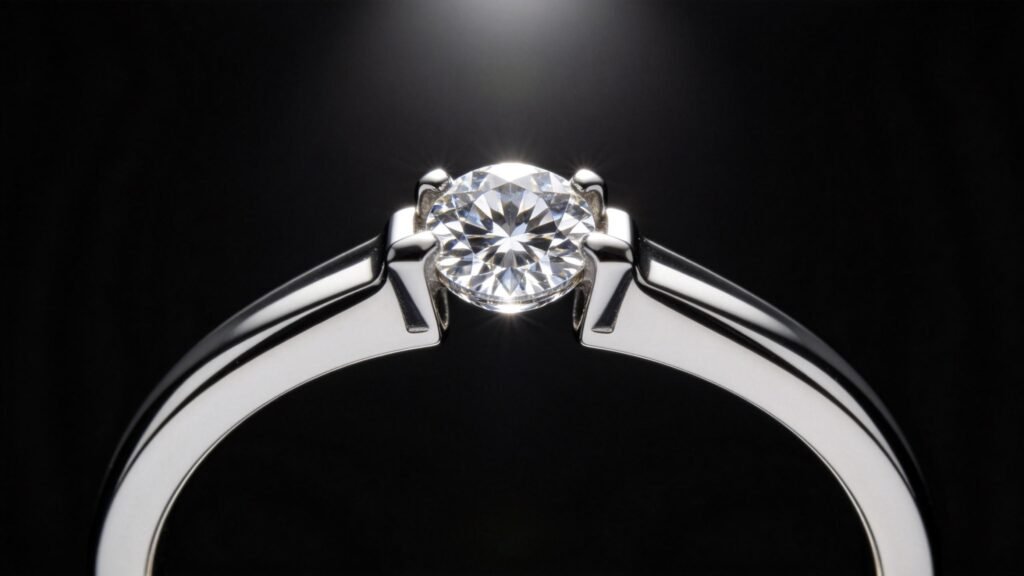
Tension setting. The diamond looks like it’s floating, held only by the pressure of the band squeezing from both sides. It’s a showstopper. People walk in asking for it all the time. But here’s the truth we tell every client: it only works with certain metals (platinum or heavy gold), and if the band ever bends, that diamond is gone. We do it. We’re careful about it. But we’re also honest—it’s not for everyone.
Illusion setting. This one’s clever. A metal rim surrounds a smaller diamond and makes it look larger from a distance. Popular in vintage and Art Deco styles. The metal reflects light and tricks the eye. It’s not trying to hide what it is—it’s just playing with perception. If budget is a concern but she loves a big look, illusion setting is worth a conversation.
Cathedral setting. Not a separate way of holding the stone, but a design element. Arches of metal rise from the shank to meet the center stone, like the arches in a cathedral. It adds height, elegance, and makes the diamond feel more elevated—literally and visually. Usually paired with prongs.
How to Match the Setting With Your Diamond Shape
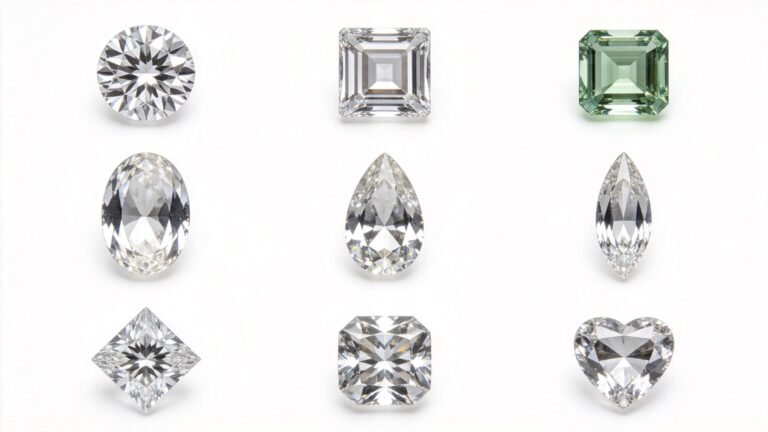
Here’s something we don’t talk about enough: not every setting works with every diamond shape. (For a deeper dive into diamond characteristics, check out our complete diamond guide.)
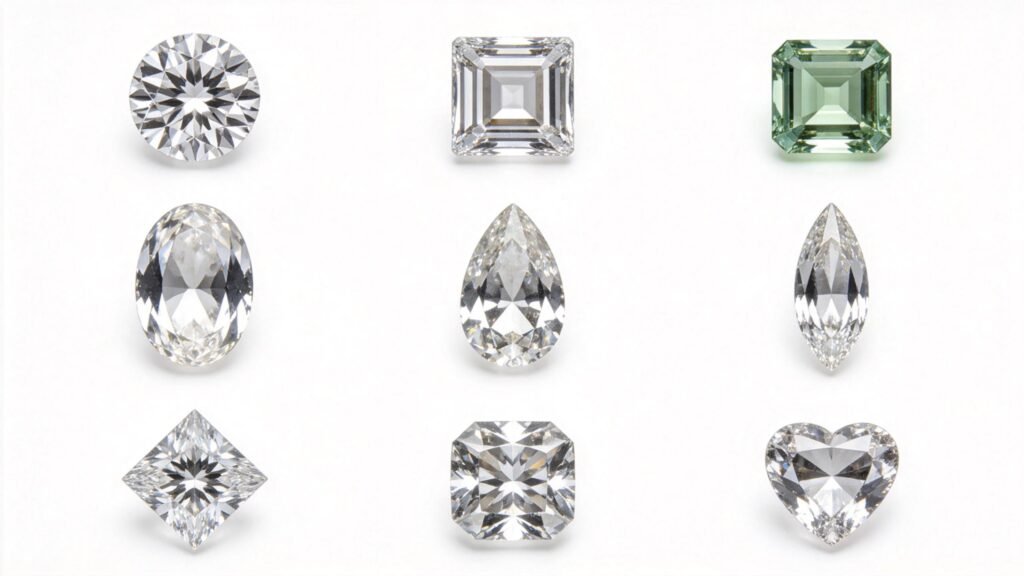
Round diamonds are the chameleons. They work in everything. Prong, bezel, pave, tension—you name it. If you’re unsure, round is safe.
Emerald cut and Asscher cut have those long, open step cuts. They’re elegant but vulnerable. The corners are fragile. We usually recommend protective corners—either a bezel or a prong that specifically guards those edges. You lose the stone if you chip a corner. Don’t risk it.
Pear and marquise have points. One point, two points—either way, they need protection. A prong right at the tip is non-negotiable. Without it, that point is one bump away from disaster.
Princess cut is square with sharp corners. Same deal. Protect the corners. A four-prong setting that grabs each corner works beautifully. V-prongs are even better.
Oval and cushion are more forgiving. Their rounded edges mean fewer weak spots. They look great in almost anything—though a bezel can make an oval feel extra modern.
The short version: If it has a corner or a point, protect it. If it’s round or soft, you have freedom.
Does the Setting Affect the Price?
Short answer: yes. Longer answer: it depends on what you’re paying for.
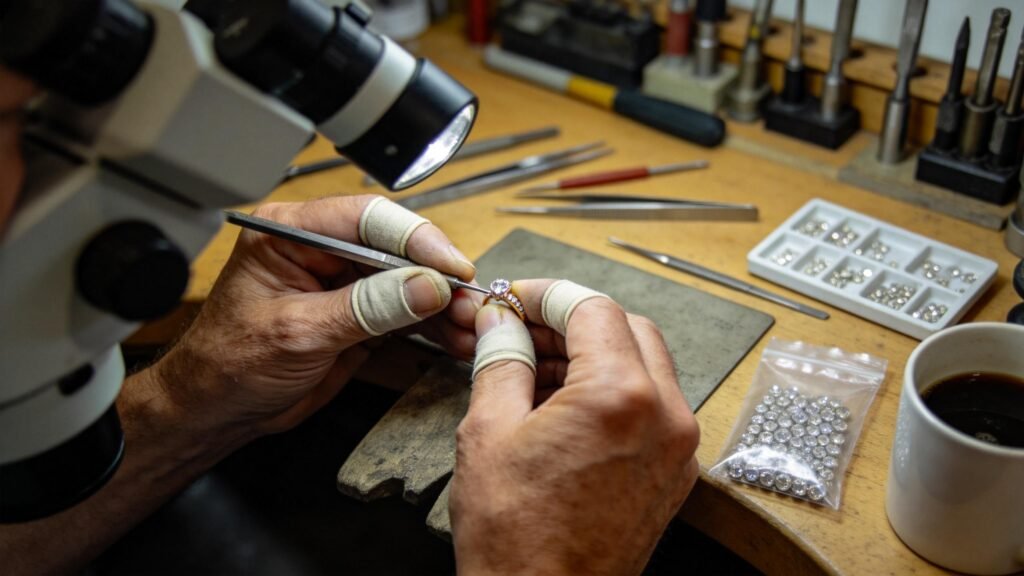
A simple four-prong setting costs less than a complex pave band. Not because the metal is different—but because the labor is. Each tiny diamond in a pave setting gets placed by hand, under a microscope. That takes hours. Hours add up.
Bezel settings often cost slightly more than prongs too. More metal, more finishing work. The edge has to be perfectly smooth, perfectly even. That’s handwork.
Tension settings? Expensive. They require precision engineering. The band has to squeeze exactly right, and that means custom work every time.
So when you look at price differences, remember: you’re not just paying for gold or platinum. You’re paying for the hours someone spent making sure every stone sits right, every edge feels smooth, every detail holds up for decades.
The metal you choose also plays a role. Different metals behave differently with various settings. Our metal guide explains which metals work best for each setting type.
Frequently Asked Questions About Ring Settings
Can you change the setting on an engagement ring later?
Yes. We do it all the time. People inherit a ring but want a different look. Or they upgrade the diamond and want a fresh setting. Just know that changing settings sometimes means the old one can’t be reused—especially if it’s pave or channel. We’ll walk you through what’s possible.
Do pave diamonds fall out easily?
Not if they’re set right. The key is the beads of metal holding each stone. If those beads are properly formed and the metal is good quality (platinum or hard gold), pave can last a lifetime. That said, pave needs more care than a simple prong. One hard knock can pop a stone. We fix them. That’s normal.
Which setting makes a diamond look bigger?
Illusion setting does, by design. Also, a thin pave band can make the center stone look larger by contrast. And a high prong setting lets light pass under the diamond, which can make it feel more present. But honestly? If you want it to look bigger, the best trick is choosing a setting that lets the diamond breathe—not one that hides it.
Is a bezel-set diamond more secure?
Absolutely. It’s the most secure setting there is. Nothing beats a full metal rim around the stone. If security is your top concern—active job, rough lifestyle, peace of mind—bezel is your answer.
How to Choose the Right Setting
How does she live? Really think about this. Does she work with her hands? Sleep in her jewelry? Hit the gym five days a week? Be honest. A pave ring on a surgeon is a bad idea. A high prong on a climber? Also bad. Match the setting to the lifestyle.
What does she already wear? Look at her other jewelry. Does she lean toward dainty and delicate? Or chunky and bold? Does she wear gold or platinum? The setting should feel like it belongs with the rest of her collection.
How much maintenance does she want? Some people love the idea of bringing their ring in once a year for a checkup. Others want to forget about it entirely. Prongs need checking. Pave needs cleaning. Bezel? Set it and forget it.
What’s the stone? Like we said above—soft stones need protection. Diamonds can handle more. Fancy shapes need corner care. Let the stone guide you.
What We Tell Every Client
There’s no wrong choice here. Really. We’ve made all of these settings, for all kinds of people. What matters is that the ring fits her—her style, her life, her way of moving through the world.
- A prong setting says classic, timeless, romantic.
- A bezel says modern, strong, understated.
- A pave says playful, glamorous, full of light.
- A channel says clean, architectural, enduring.
- A tension says bold, artistic, different.
Any of them can be the right choice. The trick is knowing which one feels like her.
And if you’re not sure? That’s what we’re here for. Sit down with us. Bring pictures of what she wears. Tell us about her day-to-day. We’ll walk you through the options and help you find the setting that makes sense.
Because at the end of the day, a ring isn’t just something you look at. It’s something you live in. And we want yours to live beautifully.
Ready to Explore Your Options?
At SYMARA, we build rings that last. Not just in terms of durability—but in terms of meaning. A setting that fits her life, made by people who actually understand how rings work.
Stop by the studio. Try on some samples. Feel the difference between a prong and a bezel on your own finger. Or if you’re not local, we can do a video consultation and walk through it together.
The right setting is out there. Let’s find it.
Explore Our Ring Collections → | Shop Wedding Bands With Custom Designs → .