How to Authenticate Vintage Jewelry: 4 Insider Checks
Let’s be honest. The doubt is what holds many people back. You see a stunning piece, but a quiet voice asks, “Is it real?” We hear this daily at SYMARA. So, let’s open our workshop door. We can’t make you an expert overnight, but we can share the four tangible checks we perform on every piece. These steps will sharpen your eye and help you shop with far more confidence.
The First Check: The Silent Language of Hallmarks
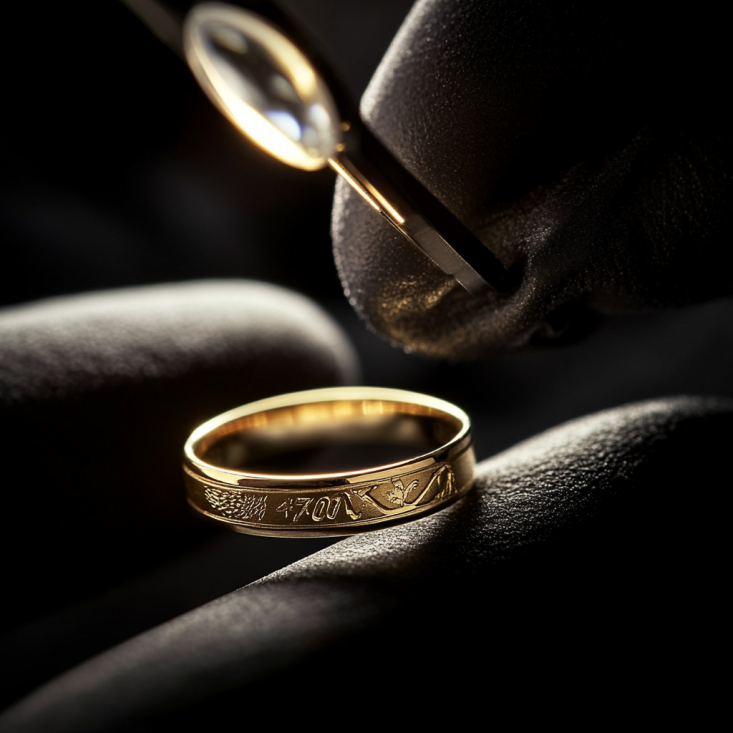
This is where our inspection always begins. We reach for a loupe and a good light, focusing on the inside of the band or the clasp. Those tiny, stamped symbols are a piece’s fingerprint.
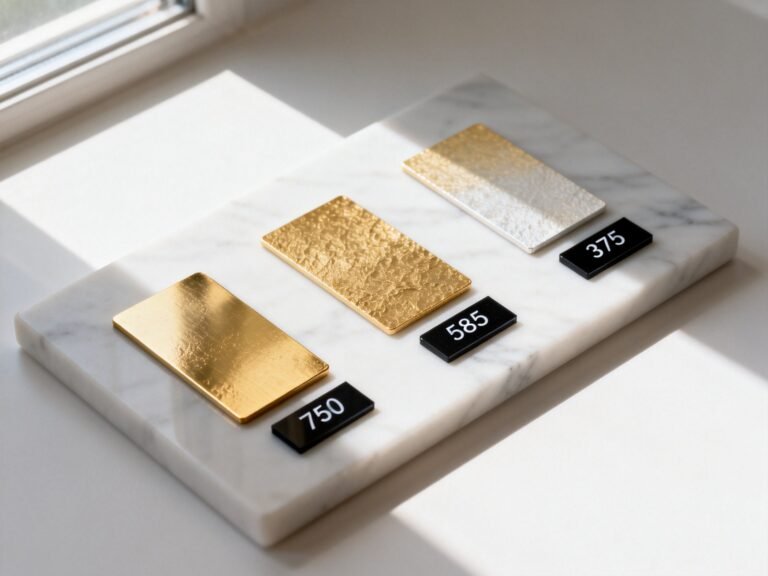
Look for marks indicating purity: ‘925’ for sterling silver, ‘750’ or ‘18K’ for gold, ‘PT’ or ‘Plat’ for platinum. An anchor? That’s a classic British mark. An eagle’s head? Likely French. These are good signs.
Here’s a crucial insight from our bench: The absence of a mark isn’t an automatic fail. Older pieces can wear smooth. But the presence of a clear, well-struck mark is a strong first yes. Be wary of marks that look shallow, fuzzy, or stamped in the wrong historical style. We once saw a “Georgian” ring with a modern laser-etched 925 mark—a clear red flag.
The Second Check: Reading a Life Story in the Wear
Time leaves honest traces. Authentic, decades-old wear has a soft, even quality. We look for a gentle rounding of edges and a consistent patina—a warm, mellow glow in gold, a rich grey in silver.
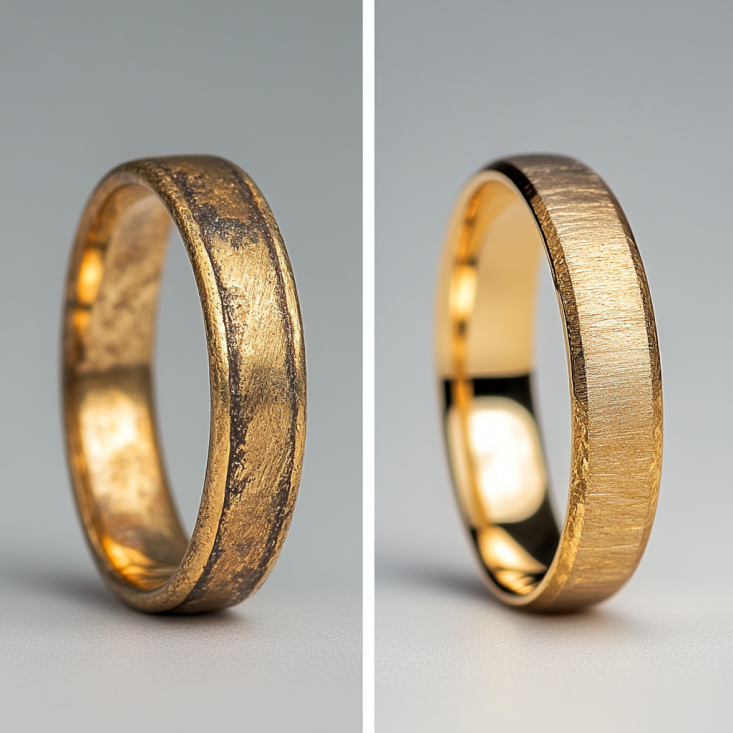
Now, compare that to artificial distressing. It often looks like a series of sharp, deliberate scratches, all going the same direction. It feels contrived.
Our pro tip? Focus on high-contact zones. Run your finger (or eye) along the inner band. Decades of skin should have polished a smooth track. Check the underside of a setting or the tips of prongs. You should see subtle, logical wear from use and cleaning, not random gouges. This honest wear is the piece’s true biography.
Heft is another clue. A solid gold piece will have a reassuring, dense weight in your palm. Certain modern alloys or plated pieces can feel surprisingly light or hollow. This isn’t proof, but it’s often the first whisper of intuition that makes us look closer.
The Third Check: The Craftsmanship Fingerprint
This is where the era speaks loudest. Each period had its signature techniques, almost like a craftsman’s accent.
For example, pre-1940s pieces were largely hand-fabricated. Look for slight asymmetries, soft solder seams, and the gentle, irregular texture of hand-filed metal. After mid-century, modern casting became common, yielding sharper, more uniform results.
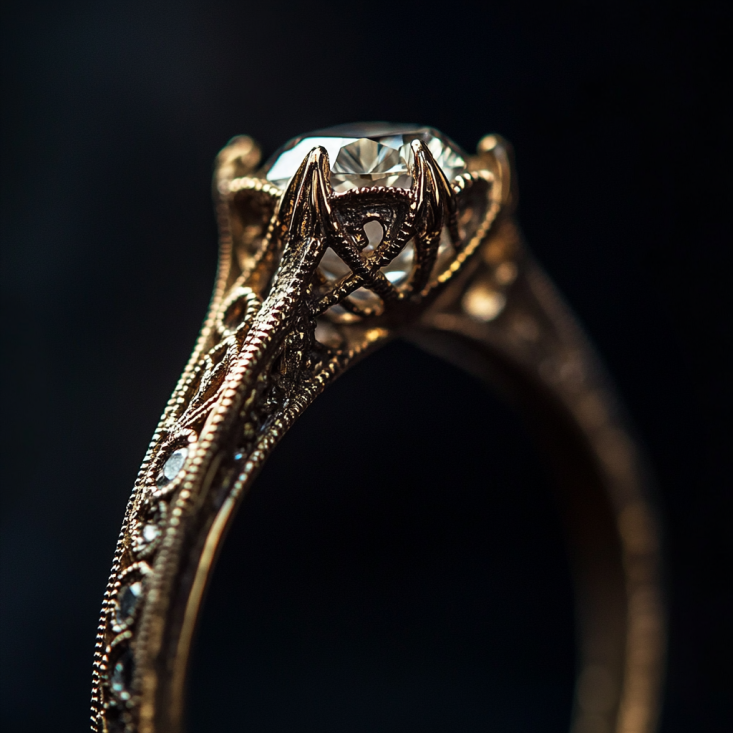
Examine the back of a piece. A closed-back or diamond-cut backing on a gem setting is a classic indicator of older, hand-intensive work. The precision of geometric calibré-cut gem patterns is a hallmark of the machine-age Art Deco style—a philosophy we explore in our dedicated guide to Art Deco jewelry’s bold geometry.
In short, the construction must match the claimed age. We recently declined a piece sold as “Victorian” because its setting used a type of mass-produced finding not invented until the 1970s. The bones betrayed its story.
The Fourth Check: The Soul of the Stone
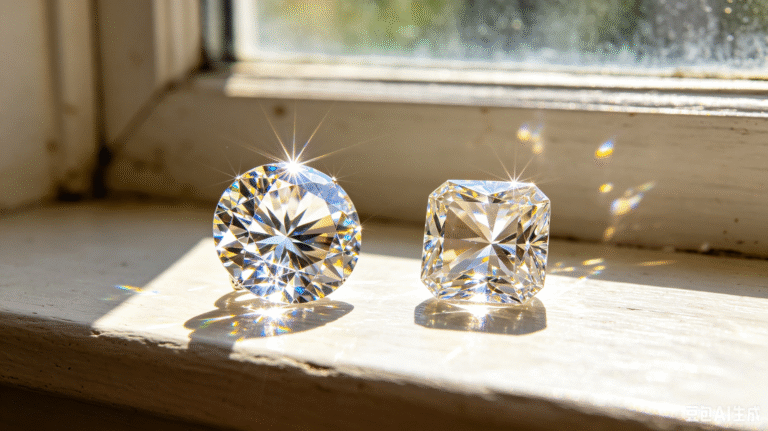
Gemstones hold clues. For diamonds, the cut is a major tell. Old European or Old Mine Cut stones, common in vintage pieces, have a different soul than modern brilliants. They possess a higher crown, a smaller table, and a chunky culet. Their fire is softer, more like candlelight than a laser show. Seeing a modern brilliant cut in a piece advertised as pre-1920s is a serious inconsistency.
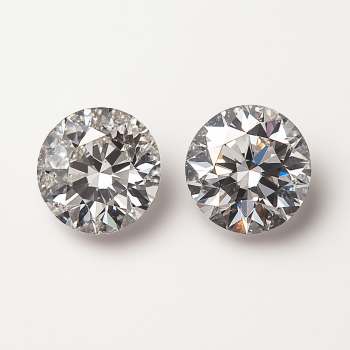
With colored stones, look for natural inclusions under magnification—tiny fingerprints of the earth. They’re often signs of authenticity. Our stance here is clear: Use this step to check for era-appropriateness, not to be a gemologist. Leave definitive gem identification to the labs. Your goal is to ask, “Does this stone’s style fit the piece’s story?”
When Your Eye Isn’t Enough: The Expert’s Domain
These four checks are your powerful toolkit. But some puzzles need advanced tools. If a piece is high-value, or if your gut still whispers doubt after these checks, it’s time for professional help.
In our final verification, we might use a high-powered microscope to examine inclusion patterns, or a specific gravity test to confirm metal density. These are the final, definitive gates a piece passes through before entering our curated vintage collection.
Your Confident Next Step
Authentication is a blend of science and seasoned instinct. These steps empower you to separate the plausible from the questionable.
True confidence comes from knowledge. With these insights, you can browse with a more discerning eye. To go deeper, you might explore our focused guides on specific eras, like the [romantic details of Edwardian jewelry] or the [complete guide to buying vintage jewelry online].
We invite you to apply this lens to our [authenticated vintage jewelry gallery], where every piece has already passed through this rigorous philosophy. For your own treasures, consider an [expert consultation]. Let’s uncover your piece’s true story, together.