Solid Gold Jewelry: What “Solid” Actually Means, and Why It’s the Only Real Heirloom
Over the years, we have had the same conversation hundreds of times.
A customer walks in. She is wearing a gold-filled locket that belonged to her grandmother. The chain has rubbed thin in the back. Near the clasp, a patch of brass is peeking through. She asks if we can fix it.
We have to tell her the truth: we cannot. Not really.
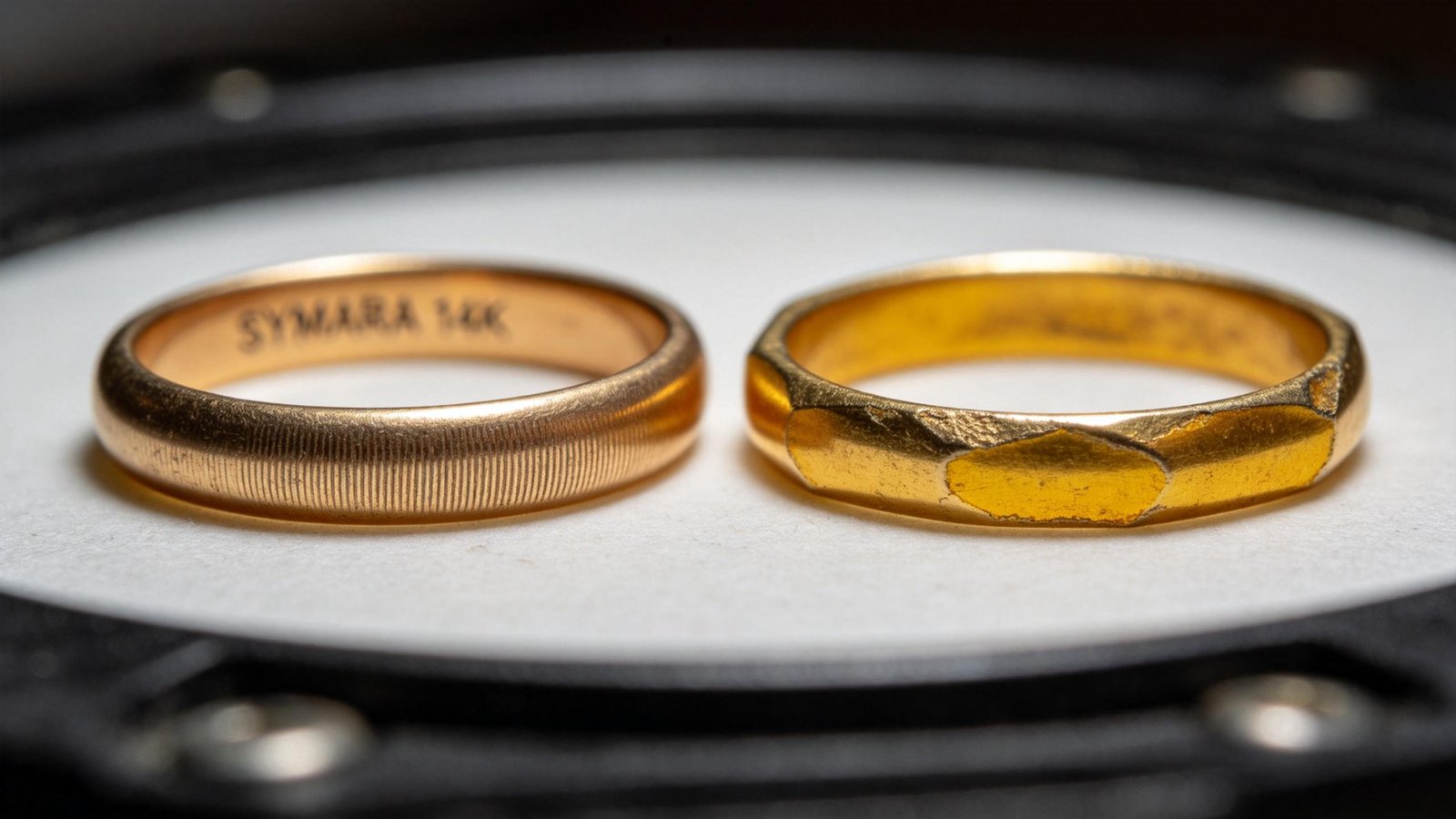
Once that outer layer of gold wears through, there is nothing left to polish. The ring, the locket, the bracelet—it is done. Not because it was not loved. Because it was not solid.
That is why we are writing this guide. Not to sell you on “premium.” To save you from buying something twice.
Solid Gold vs. Gold Filled vs. Gold Plated: Three Ways to Make a Ring
Here is the simplest way to think about it.
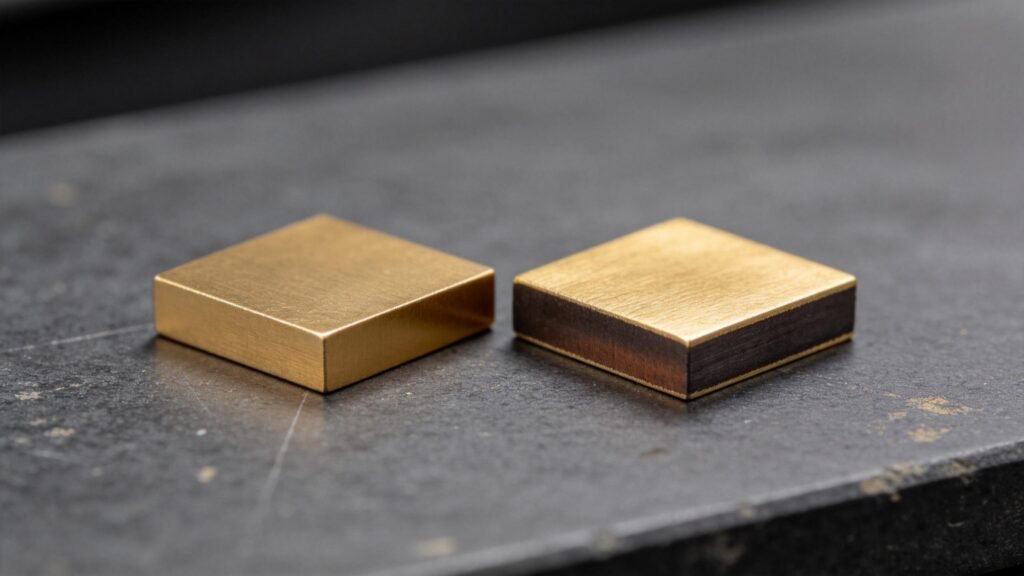
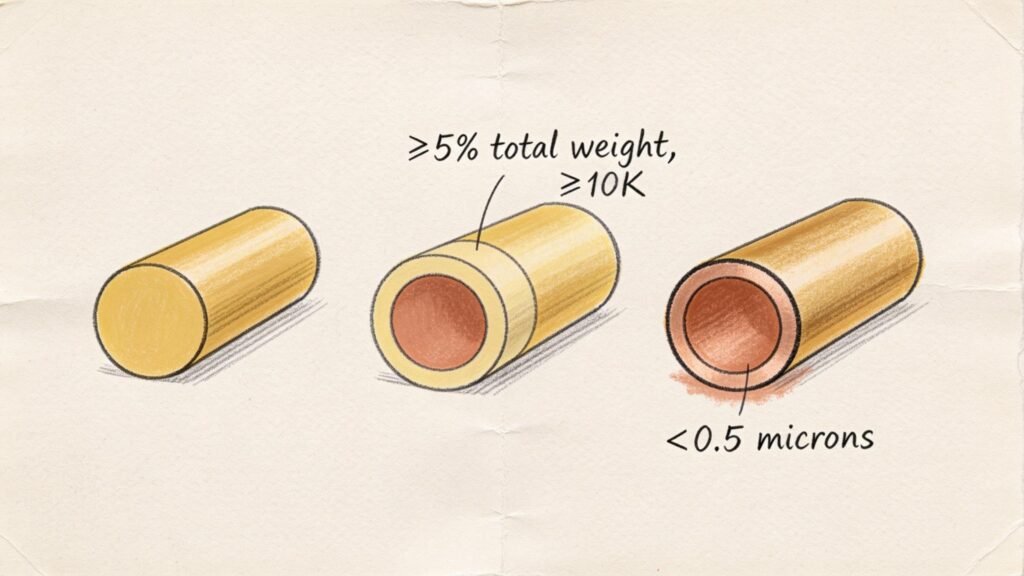
Solid gold is gold all the way through. From the outside to the very center. If you cut it in half, it is the same color inside as it is outside.
Gold filled is a sandwich. A thick layer of gold is mechanically bonded to a core of brass or copper. By U.S. federal standards, that gold layer must be at least 10 karat and make up a minimum of five percent of the piece’s total weight. It is a reliable construction—far superior to plating. But it is still a layer.
Gold plated is the thinnest of all. A microscopic coating of gold, often less than 0.5 microns, electroplated onto base metal. It looks good on day one. But by day 300, the difference becomes visible.
We do not say this to sound elitist. There is a place for all three. If you want to experiment with a trend, or you need something for one special occasion, plated and filled pieces have their purpose.
But you cannot pass down a coating. And you cannot leave a brass core to your daughter.
What 14K, 18K, and 24K Actually Tell You
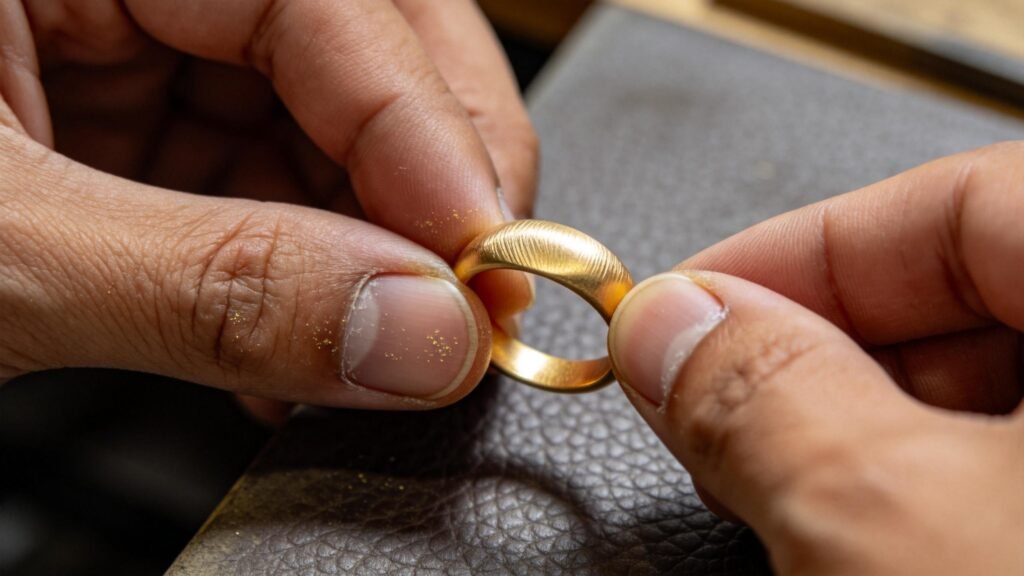
Let us talk karats.
A lot of people assume higher is always better. It is not. It depends entirely on what you are asking the metal to do.
24K gold is pure gold. 99.9 percent. It is the color of a sunrise, and it never tarnishes. But here is the catch no one tells you: it is too soft to hold its shape. A 24K ring will bend under pressure. Prongs will not stay tight. If you are setting a gemstone, you are setting it up to fall out.
That is why we rarely use it for jewelry that leaves the house.
18K gold is 75 percent pure gold, mixed with 25 percent copper, silver, and other alloys. This is the sweet spot for high-end fine jewelry. It has that deep, buttery color that says “luxury.” It is the standard for engagement rings and wedding bands at almost every major house. Shop 18K Gold Jewelry at SYMARA now.
But it is not invincible. 18K will scratch. It can bend if you are hard on your hands. That is not a flaw—it is physics.
14K gold is 58.3 percent gold, 41.7 percent alloy. And in our opinion, it is the most honest metal for everyday wear. It is significantly harder than 18K. It resists dings and dents. And to the naked eye, the color difference between 14K and 18K is almost impossible to spot unless you have swatches side by side. Shop 14K Gold Jewelry at SYMARA now.
So which one should you choose?
· If you never take your jewelry off—you sleep in it, shower in it, work with your hands—buy 14K. It will last longer.
· If you want the highest gold content and you are willing to treat it with care, buy 18K.
· If you are buying gold bars for your safe, buy 24K. But do not wear it.
The Alloy Myth: Why “Not Pure” Is Actually Better
We hear this all the time: “I only want real gold. No other metals.”
We understand the instinct. But here is the truth: all gold jewelry is an alloy. Even the stuff at Cartier. Even the stuff we make.
Pure gold, straight out of the ground, is so soft you can bend it with your fingers. If we did not add copper, silver, nickel, or zinc, your ring would warp the first time you grabbed a doorknob.
Alloying is not “watering down.” It is giving the metal a spine.
· Rose gold gets its warmth from copper. The higher the copper content, the pinker the metal. Shop Rose Gold Jewelry at SYMARA now.
· White gold is yellow gold bleached by palladium or nickel, then often plated with rhodium for that mirror-bright finish.
· Yellow gold stays classic with a mix of copper and zinc.
The alloys we choose also determine how the metal wears. At SYMARA, we spec our 18K rose gold with a lower copper ratio than the industry standard. Why? Because high-copper alloys oxidize faster. They darken. They look dull. We dial it back so your ring still looks fresh ten years in.
What We Use at SYMARA—and Why We Are Transparent About It
We do not buy from unverified sources.
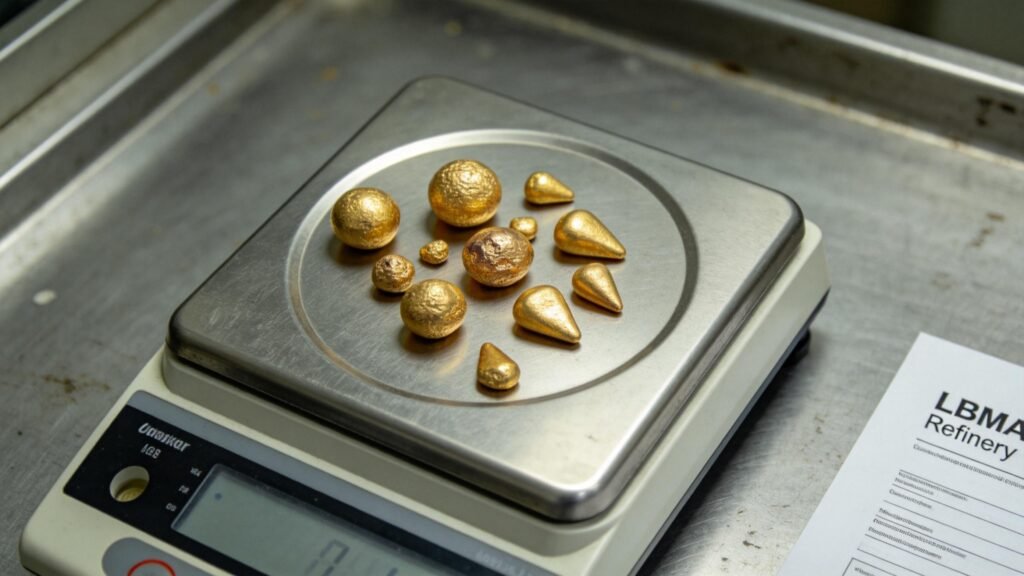
Every gram of gold that comes into our studio is 100 percent recycled. We source from refiners certified by the London Bullion Market Association. That means our material is traceable, ethical, and identical in purity to mined gold.
When we cast a ring, we start with solid grain—tiny beads of 14K or 18K alloy. We melt it at over 1,700 degrees Fahrenheit. The liquid gold is vacuum-injected into a mold, filling every millimeter of negative space.
That is what “solid” means in a foundry. Not thick. Not heavy. Homogeneous. One consistent density from the shank to the setting.
You can see it in the hallmarks we strike into every piece.
· 14K or 585
· 18K or 750
If a ring carries our stamp, that is what it is. All the way through.
The Real Cost of “Saving Money” on Plated Jewelry
Let us do some math.
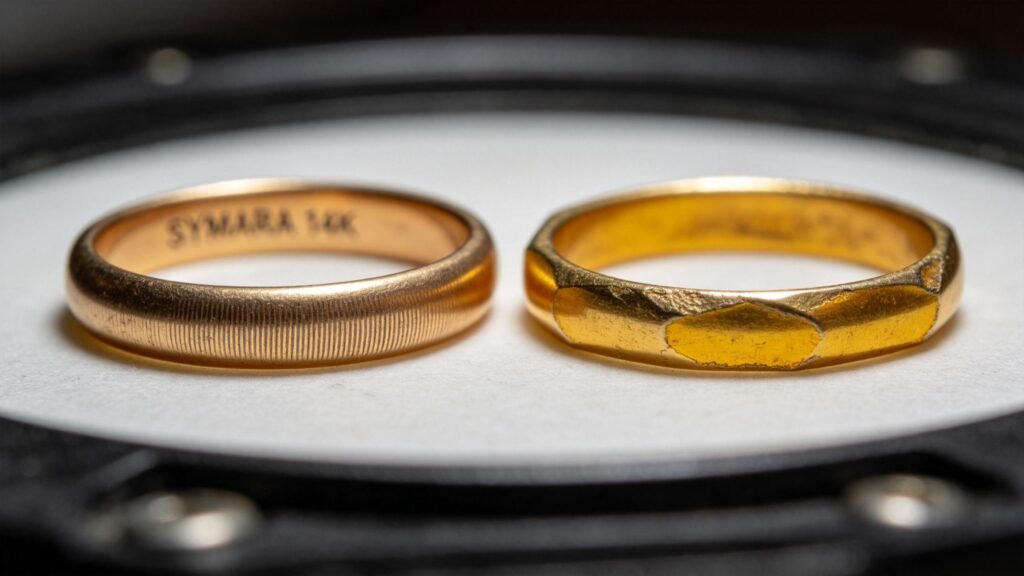
You buy a gold-filled pendant for $150. It looks great. You wear it for three years. Then the edge of the bail starts to show brass. You set it in a drawer.
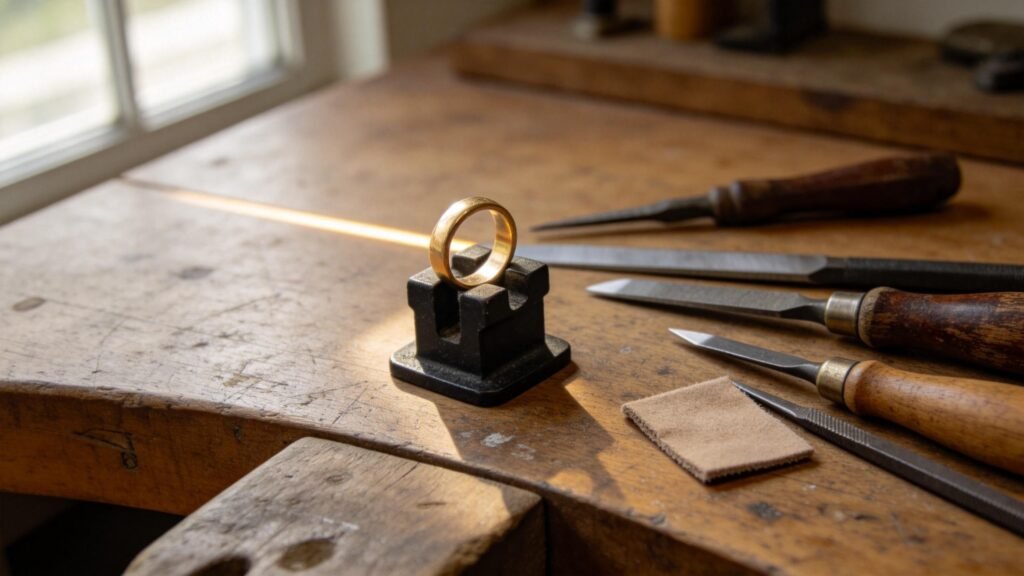
You buy a solid gold pendant for $800. You wear it for three years. By then, it has collected some fine scratches—nothing serious. You bring it to us. Four minutes on the polishing motor, and it looks brand new.
You wear it for another thirty years. Your daughter wears it for thirty after that.
The $150 pendant is now worth zero. The $800 pendant is worth $800—plus forty years of sentiment.
That is not “spending more.” That is buying once.
How to Tell If You Are Buying Real Solid Gold
There are only two ways to be sure.
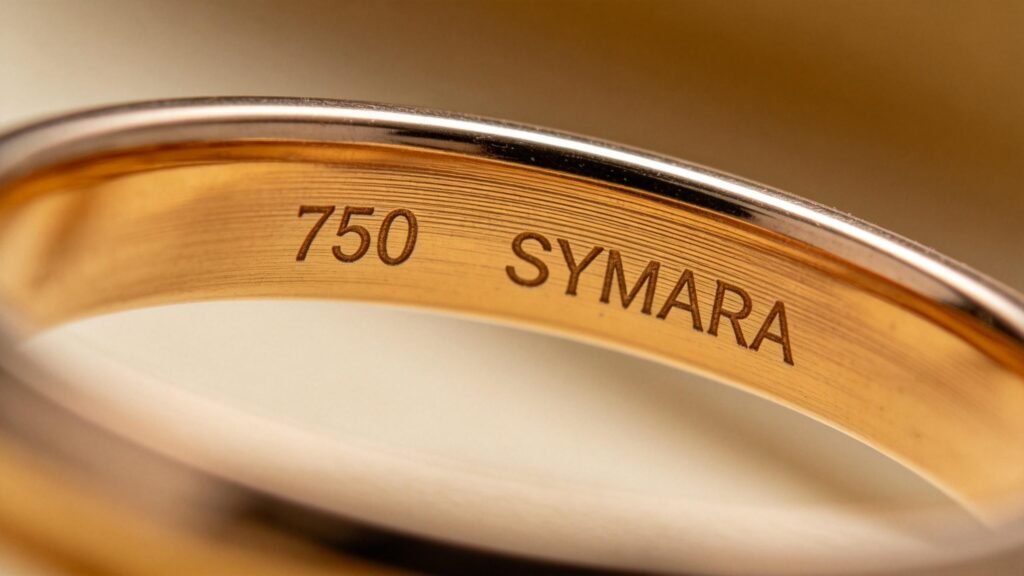
One: check the stamp.
· 10K, 14K, 18K, 24K, 585, 750, 916, 999
· If you see GP, GF, GEP, or HGE, that is plated or filled.
Two: ask the jeweler directly. “Is this solid gold throughout?” If they hesitate, walk away.
(Note: very lightweight pieces or some handmade vintage items may lack stamps due to sizing or age. When in doubt, we are happy to test it for you.)
The Bottom Line
We are not here to make you afraid of gold-filled or vermeil. They have their place. They let people enjoy the look of gold when a solid piece is not in the budget.
But if you are buying something you hope to pass down—a wedding band, a milestone pendant, a gift for a child—there is no substitute for solid gold.
It does not flake. It never exposes a core of cheap metal. And most importantly—it does not quit.
It simply grows older. And then, with a little care, it looks new again.
That is the entire purpose of an heirloom.