How to Clean Silver Jewelry: Easy Home Methods for Tarnished Sterling Silver
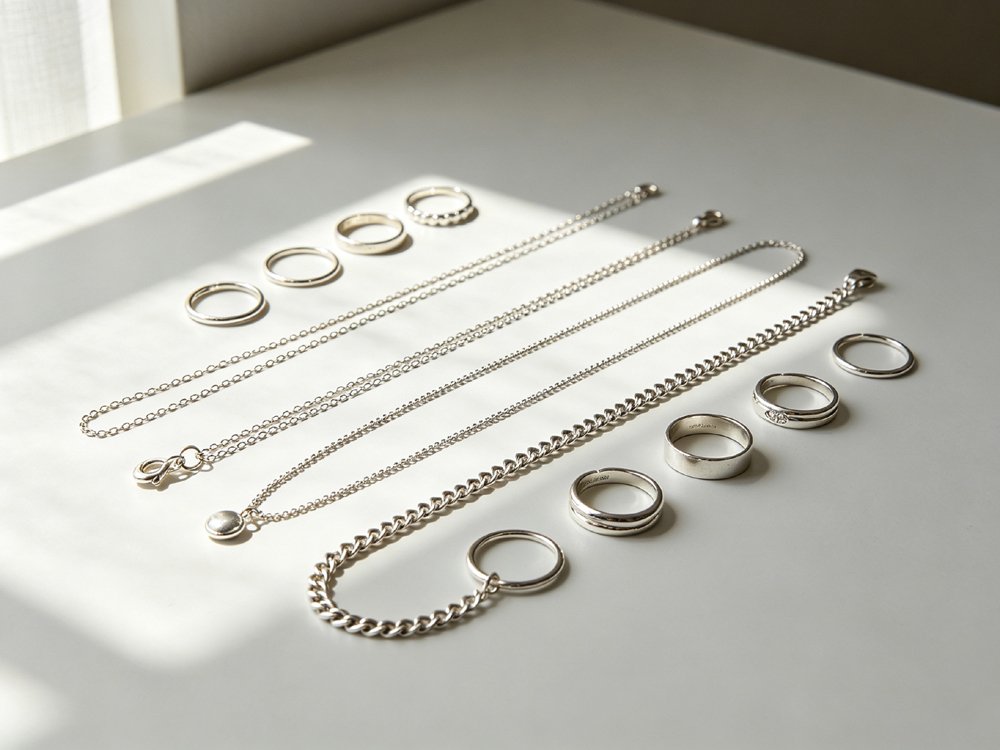
Sterling silver has a quiet way of settling into your daily rhythm. It catches light without shouting, warms against skin, and anchors almost any look you reach for. Necklaces, rings, bracelets, earrings — these pieces become staples. Then one day, you glance down and notice the gleam has gone. A yellow cast. A darkened edge. It happens. Even with the most careful wear, 925 sterling silver will eventually respond to the world around it.
At SYMARA, we hear the same question often: how do I bring it back without handing it over to harsh chemicals? Most commercial silver dips and polishes are aggressive. They strip the surface, dull delicate engravings, and can damage the gemstones set into the piece. What works better, in our experience, sits quietly in your kitchen cabinet. This guide covers the methods we trust — for light dullness, moderate discoloration, and the kind of heavy black tarnish that settles into silverware and chains alike.
- How Often Should You Clean Sterling Silver Jewelry
- Why Does 925 Sterling Silver Tarnish
- Best Way To Clean Silver Jewlery At Home
- Cleaning Silver With Baking Soda (Heavy Tarnish Removal)
- Boiling Silver Cleaning Technique (Sturdy Silver & Silverware)
- Polish Silver With White Vinegar & Baking Soda Soak (Thick Chunky Silver)
- Baking Soda Paste Spot Polish (Light Localized Tarnish)
- Gentle Soap Wash (Delicate & Stone-Set Silver)
- Foil Wrap Soak Method (Large Silver Serveware)
- Common Cleaning Mistakes That Damage Silver
- Targeted Cleaning for Different Silver Jewelry Types
- When to Use Professional Silver Jewelry Cleaning
- Effective Tarnish Prevention Tips
- Frequently Asked Questions
How Often Should You Clean Sterling Silver Jewelry
For pieces you wear regularly, a gentle cleaning twice a year usually does the job. It resets the shine and slows the oxidation cycle.
If your silver has been exposed to lotion, hairspray, chlorine, or makeup, do not wait. Clean it promptly. Letting those residues sit invites deeper, more stubborn staining that gets harder to reverse.
Why Does 925 Sterling Silver Tarnish
Real 925 sterling silver is 92.5% pure silver, blended with copper to give it enough strength for daily wear. Pure silver on its own resists tarnish — but it is far too soft to hold a ring’s shape or a chain’s links.
It is the copper that reacts. Sulfur compounds in the air, moisture, and the natural chemistry of your skin all nudge that reaction forward. Tarnish begins pale yellow, deepens to brown, and eventually turns black with prolonged exposure. Coastal air, high humidity, bleach, and beauty products accelerate the process. The important thing to remember: tarnish stays on the surface. The solid silver beneath remains untouched.
Wearing your silver in the shower, during a workout, or right after applying perfume leaves a film of chemicals that fuel ongoing oxidation. Small habits make a noticeable difference.
Best DIY Home Methods to Clean Tarnished Sterling Silver
Aluminum Foil & Baking Soda Method (Heavy Tarnish Removal)
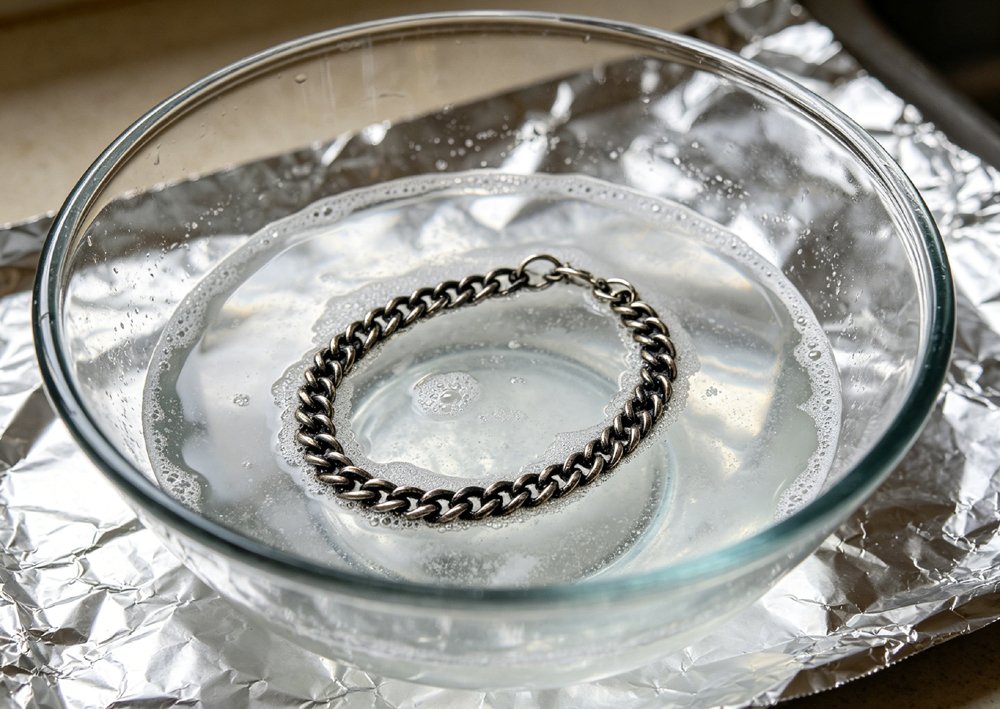
This is the one we recommend when someone asks how to clean silverware tarnish at home or revive a heavily oxidized chain. It uses a natural electrolytic reaction — no scrubbing, no abrasion. The tarnish lifts away through chemistry, not friction.
Required Supplies
- Glass or ceramic bowl
- Aluminum foil
- Baking soda
- Fine table salt
- Boiling water
- Soft microfiber cloth
Step-by-Step Process
- Line the bowl with aluminum foil, shiny side facing up.
- Place the tarnished silver pieces directly on the foil. You want full contact with the metal.
- Sprinkle baking soda and salt evenly over the items.
- Pour boiling water in until every piece is fully submerged.
- You will see a gentle fizzing — that is the reaction pulling dark tarnish off the surface.
- For light tarnish, soak 2 to 5 minutes. For heavy black oxidation, 5 to 10 minutes.
- Rinse thoroughly with cool water, pat dry, and buff lightly with a microfiber cloth to restore the shine.
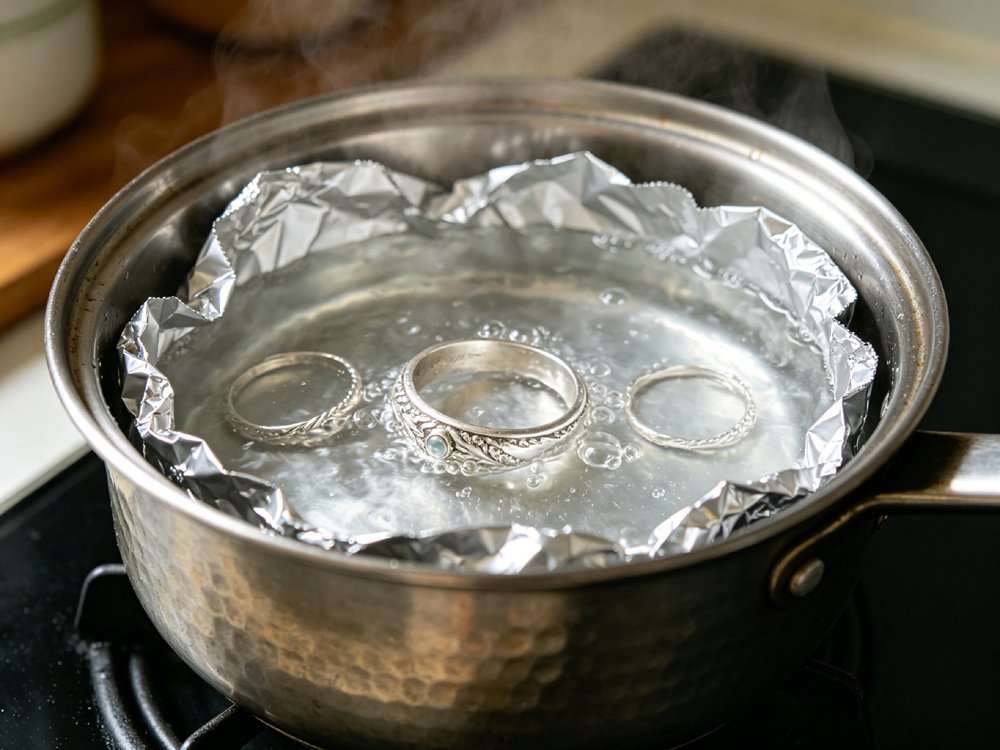
Boiling Silver Cleaning Technique (Sturdy Silver & Silverware)
This is a faster, heat-driven version of the same principle. Best for thicker pieces and flatware that can handle the temperature.
- Line a small pot completely with aluminum foil.
- Place the silver inside and cover with clean water.
- Add baking soda and salt, then stir gently.
- Bring the water to a boil and keep it at a low boil for about 4 minutes.
- Remove pieces with tongs, rinse well, dry, and polish.
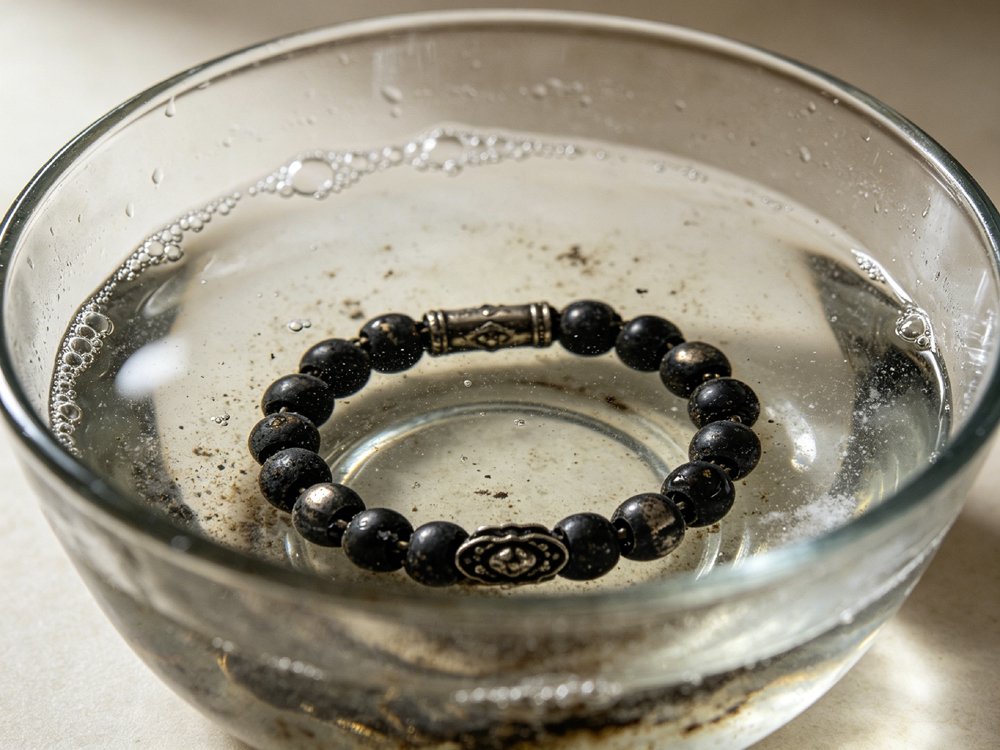
White Vinegar & Baking Soda Soak (Thick Chunky Silver)
For heavy bracelets, wide cuffs, and substantial silver pieces with built-up tarnish, the mild acidity of white vinegar breaks down layers that a quick dip cannot reach.
- Submerge the silver completely in pure white vinegar.
- Add baking soda — it will foam as it activates.
- Let heavily tarnished pieces soak for 2 to 3 hours.
- Rinse thoroughly to remove all acidic residue, air dry, and polish.
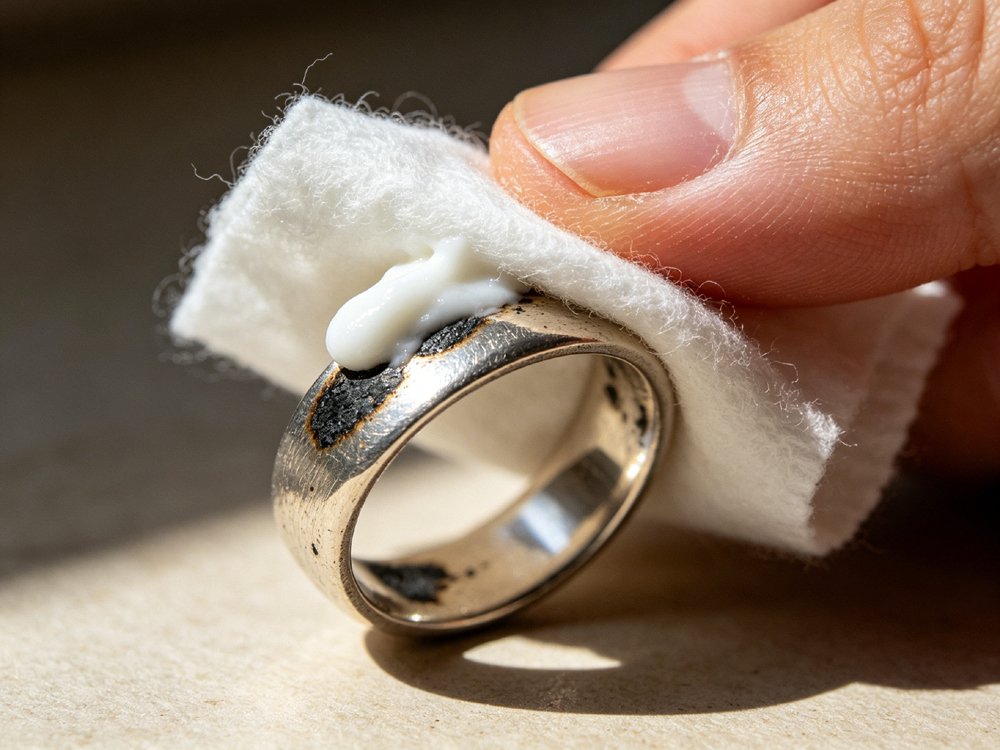
Baking Soda Paste Spot Polish (Light Localized Tarnish)
Between deep cleanings, you may notice a faint yellow spot near a clasp or along a chain link. A quick paste polish handles this without involving a full soak.
- Mix baking soda with clean water until it forms a thick paste.
- Rub the paste gently over tarnished areas using a soft cloth, working in small circles.
- Focus on clasps, chain gaps, and engraved details where residue collects.
- Rinse all residue away completely and buff dry.
For light marks, leave the paste on 30 seconds. For darker spots, up to 10 minutes. Pay extra attention to crevices — leftover powder can dull the finish over time.
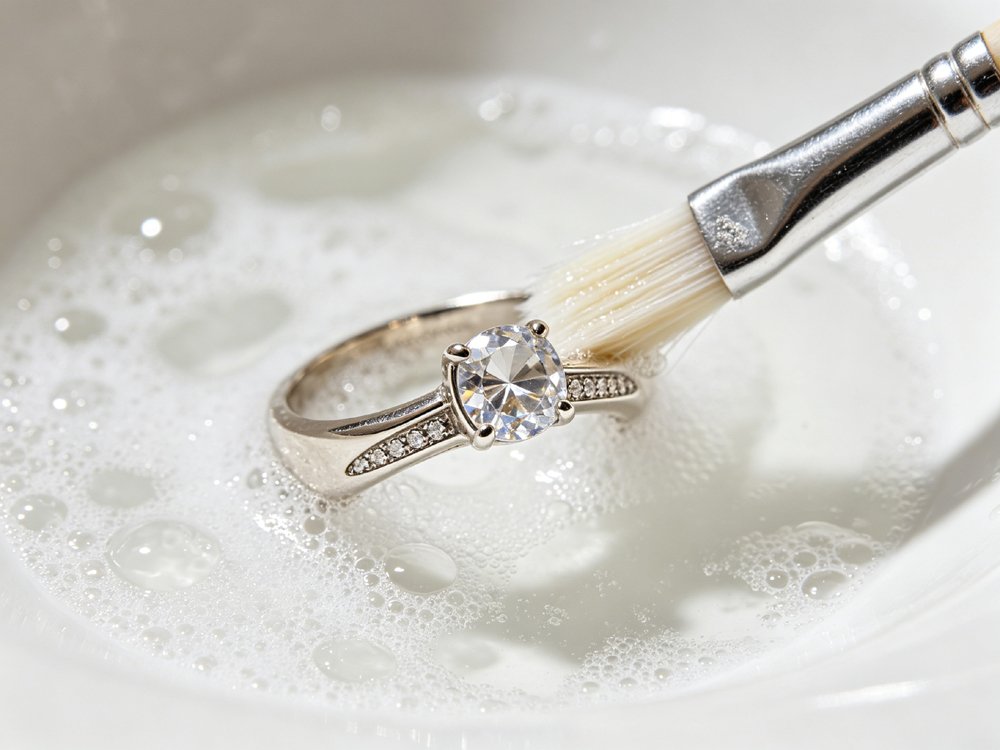
Gentle Soap Wash (Delicate & Stone-Set Silver)
When a piece has delicate settings, thin chains, or set stones — moissanite, cubic zirconia, or softer porous gems — this is the safest route. It cleans without stressing prongs or clouding facets.
- Mix lukewarm water with a small drop of fragrance-free mild dish soap.
- Soak the jewelry for 5 to 10 minutes to loosen surface oils.
- Use an ultra-soft toothbrush to gently reach small gaps.
- Rinse fully and air dry completely before storing.
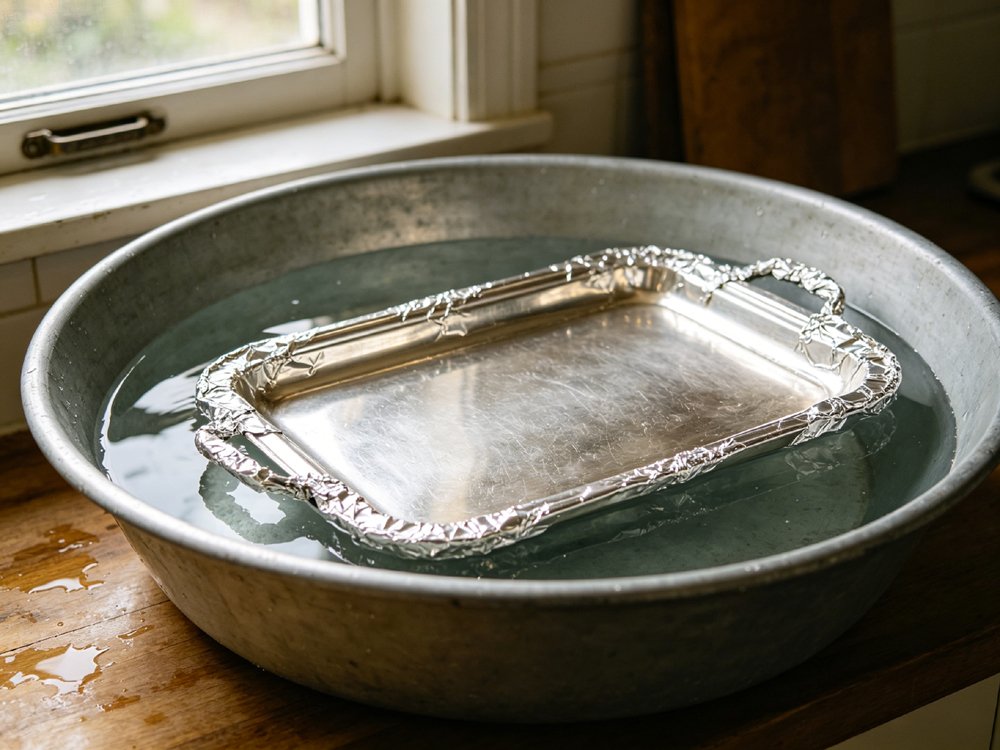
Foil Wrap Soak Method (Large Silver Serveware)
For oversized pieces that cannot fit into a standard bowl, this variation scales up the electrolytic reaction.
- Wrap each large silver item tightly in aluminum foil, shiny side pressed against the metal.
- Place the wrapped pieces into a large bucket or tub.
- Prepare a solution of 1 cup baking soda per gallon of hot water.
- Submerge everything and soak up to 30 minutes, depending on tarnish severity.
- Unwrap, rinse, dry, and hand polish.
Common Cleaning Mistakes That Damage Silver
Some well-intentioned habits do more harm than good. Here is what we suggest avoiding.
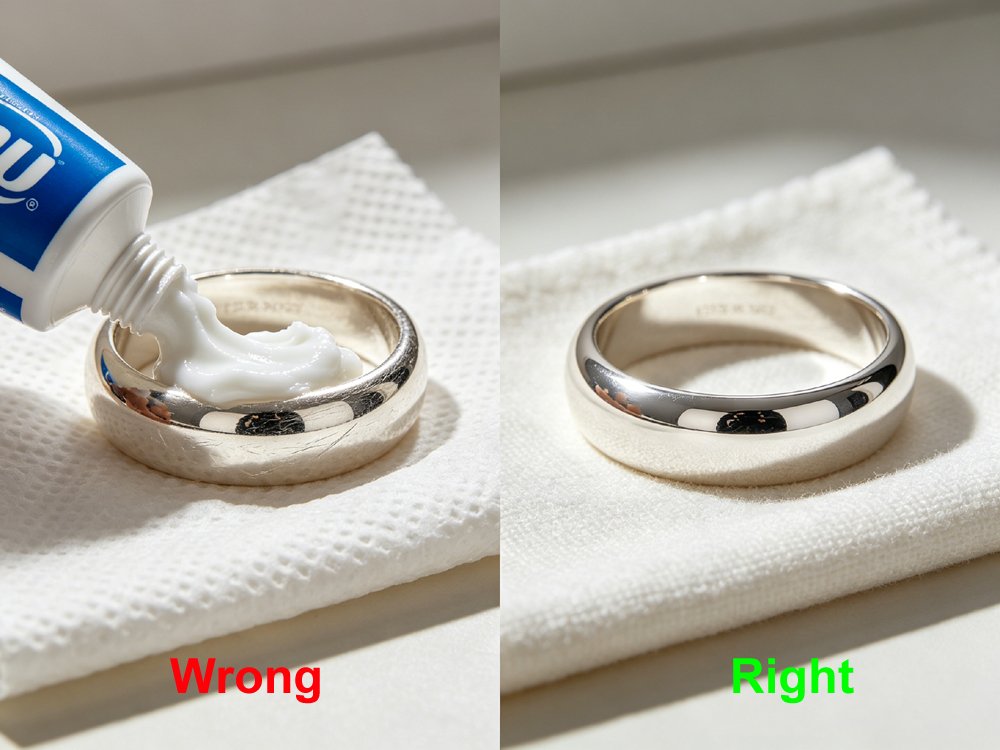
Toothpaste seems logical. It is gritty enough to polish teeth — but on silver, those coarse particles leave permanent micro-scratches that dull the finish over time.
Baking soda paste on ultra-thin or fragile silver can gradually wear down delicate metal layers. Reserve it for sturdier pieces.
Only use pure white vinegar. Other vinegar varieties carry unstable acidity that risks surface corrosion.
Bleach, ammonia, and industrial cleaners have no place near silver. They cause pitting, fading, and damage that cannot be reversed.
Paper towels and rough scrubbing pads leave fine abrasions. Over repeated cleanings, those micro-scratches accumulate visibly.
Gem-set silver should not soak for extended periods. Prolonged moisture weakens adhesive and loosens prongs over time.
Targeted Cleaning for Different Silver Jewelry Types
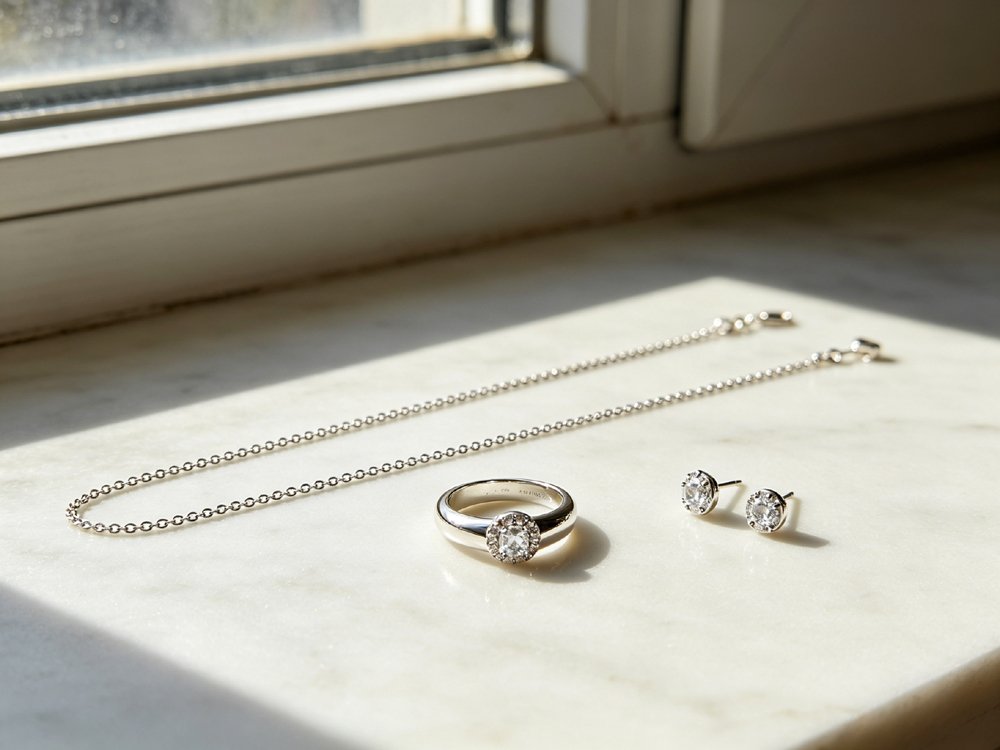
Silver Necklaces & Chains
Fine chains tarnish quickly because they sit against skin and catch cosmetic residue. A gentle soap wash is the safest routine choice. Dry every link completely afterward — water spots invite fresh tarnish.
Gemstone-Set Silver Rings
Rings set with diamonds, moissanite, or cubic zirconia need only mild soap cleaning. Avoid deep chemical soaks and heavy polishing near the setting to protect prong stability and stone clarity. Plain silver rings can safely handle medium vinegar soaks and spot paste polishing.
Delicate Silver Earrings
Thin earring posts and fine structures bend easily. Use only gentle soap cleaning and soft cloth buffing. No soaking, no paste.
When to Use Professional Silver Jewelry Cleaning
Vintage silver, designer pieces, and jewelry with heavily embedded stones benefit from occasional professional care. A jeweler can deep-clean while inspecting loose prongs, hairline cracks, and wear points invisible to the naked eye. For high-end sterling silver pieces, we recommend professional polishing and inspection every 3 to 5 years.
Between appointments, a premium anti-tarnish polishing cloth handles quick touch-ups.
Effective Tarnish Prevention Tips
A few small habits dramatically reduce how often you need to deep clean.
- Remove silver jewelry before showering, swimming, exercising, or handling household cleaners.
- Apply perfume, lotion, makeup, and hair products first. Put your silver on last.
- Wipe each piece with a microfiber cloth after wearing, to lift away oils and moisture.
- Wearing your silver regularly actually helps. Gentle skin contact creates a subtle barrier that slows oxidation.
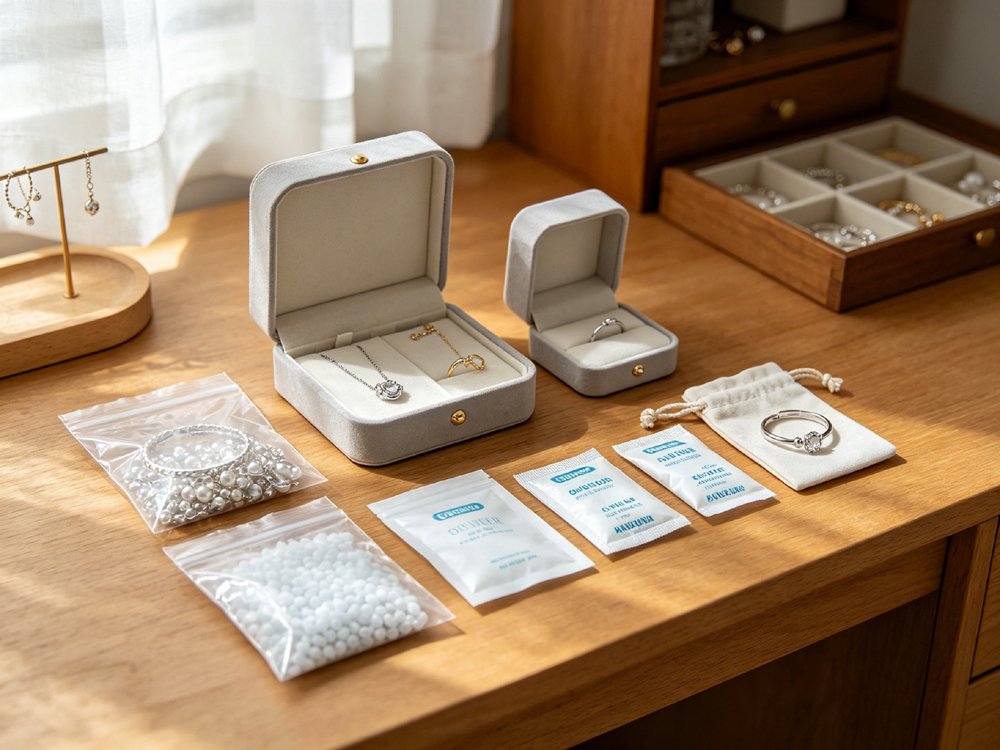
- Store silver in cool, dry, airtight anti-tarnish bags or lined jewelry boxes. Keep pieces separated to avoid friction scratches.
- In humid environments, tuck silica gel packets into your storage space to absorb ambient moisture.
Frequently Asked Questions
What is the best way to clean silver jewelry at home?
Mild soap washes suit everyday delicate care. Vinegar soaks handle moderate tarnish. The foil and baking soda electrolytic method removes heavy black oxidation without scratching.
Are DIY silver cleaners safe for 925 sterling silver?
All the methods listed here are safe for authentic 925 sterling silver when used with the right timing and a light hand.
How do you clean badly tarnished silver without scratching?
Electrolytic foil-based cleaning works through chemical reaction, not physical scrubbing. It achieves deep restoration without surface damage.
Does white vinegar damage sterling silver?
No. Properly diluted white vinegar dissolves tarnish buildup and will not harm genuine sterling silver surfaces.
Why does sterling silver turn black when worn?
Silver naturally reacts with sulfur in the air, your skin’s pH, sweat, and beauty products. Dark tarnish is a normal, reversible oxidation process.
Final Thoughts
You do not need professional cleaning services to keep sterling silver jewelry looking the way it should. A few basic household ingredients, applied with a bit of care, bring necklaces, rings, bracelets, and silverware back to life. Consistent, gentle cleaning paired with dry, airtight storage keeps tarnished sterling silver bright, reflective, and wearable for years — quietly doing what it does best.