Moissanite vs Cubic Zirconia: Best Diamond Alternative for Daily Wear
Key Differences Between Moissanite and Cubic Zirconia
Shoppers looking for budget-friendly diamond alternatives often encounter two names again and again. These two lab-created gems dominate the affordable fine jewelry space. Their real-world wearing performance and long-term quality, however, differ far more than most people expect. For anyone building a wearable everyday jewelry collection, one question tends to surface: is moissanite better than cubic zirconia for consistent, long-lasting daily wear?
This guide walks you through material composition, hardness, optical performance, diamond similarity, durability, and practical everyday usability — with a special focus on how moissanite holds up in real life.
Basic Introduction to Moissanite and Cubic Zirconia
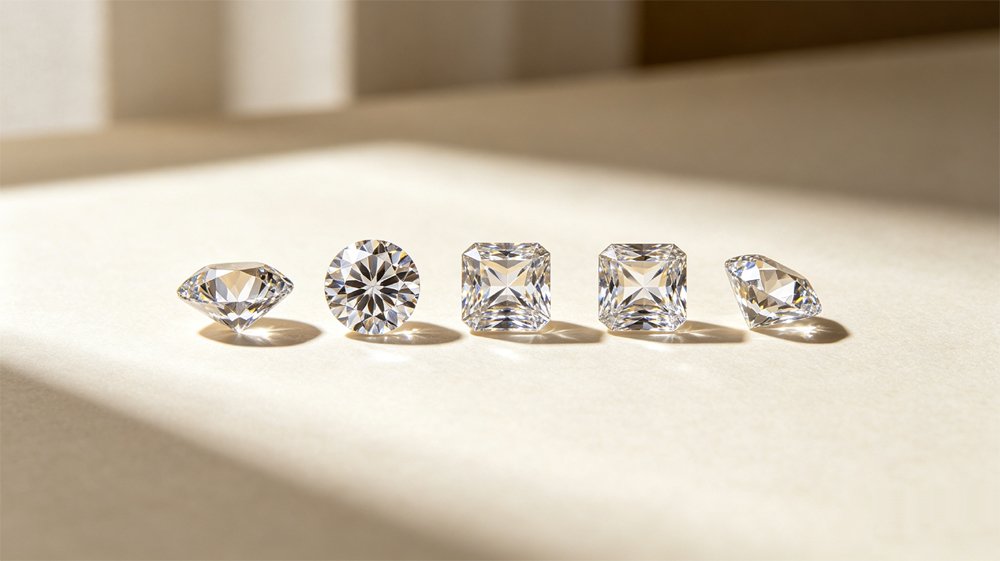
Moissanite is a premium lab-grown gem made of silicon carbide. Natural moissanite is so rare it is found almost exclusively in meteorite deposits. Every jewelry-grade stone on the market today is grown in controlled laboratory environments. High-end near-colorless moissanite carries a pure white tone equivalent to G–H grade natural diamonds. With stable chemical properties and strong optical performance, moissanite has earned its reputation as the most convincing diamond simulant available.
Cubic zirconia — often called CZ — is a fully synthetic zirconium dioxide crystal. It is created purely to mimic a diamond’s transparent, sparkling look at an ultra-low cost. You will find CZ widely used in fast fashion jewelry and occasion-only accessories. Both stones serve as mainstream diamond alternatives, but their core material structures lead to two completely different wearing experiences.
Hardness & Scratch Resistance (Daily Wear Core Standard)
Hardness is what determines whether a gemstone can handle everyday life.
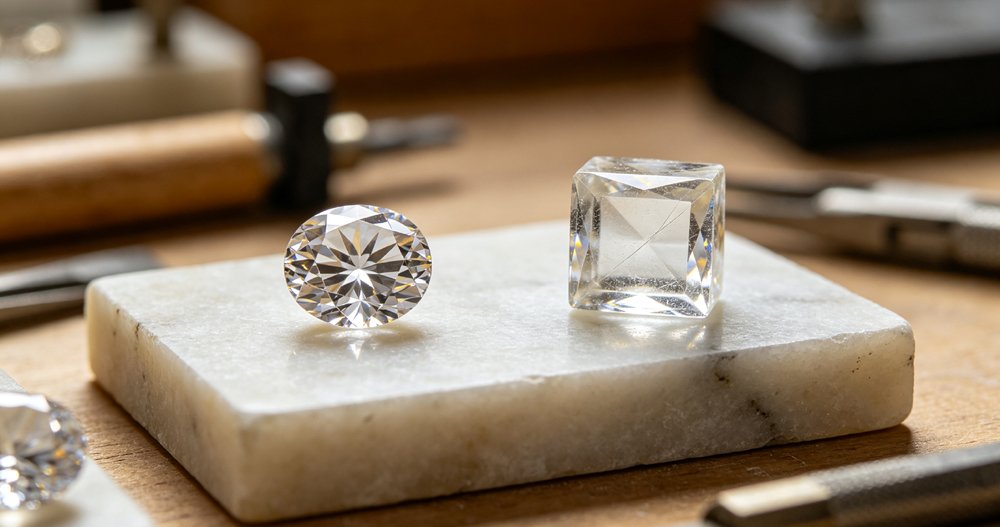
Moissanite scores 9.25 on the Mohs hardness scale, second only to natural diamond. It resists daily friction, minor bumps, and surface abrasion from hand washing, clothing contact, and routine activities. This level of hardness keeps facet edges sharp and surfaces clean for years.
Professional Knoop indentation tests put moissanite at 3000, while cubic zirconia reaches only 1370. In practical terms, moissanite is 219% harder than CZ.
Cubic zirconia ranks 8.0 to 8.5 on the Mohs scale. That sounds respectable on paper. In reality, its softer texture picks up tiny scratches through ordinary wear. Those micro-abrasions gradually rob the stone of clarity, leaving it cloudy and dull. As moissanite brand Charles & Colvard has confirmed, CZ wears out far faster in side-by-side daily use.
For anyone who wants a stone they can wear every day, year after year, moissanite delivers meaningfully better scratch resistance and surface condition.
Visual Sparkle, Fire and Diamond Similarity
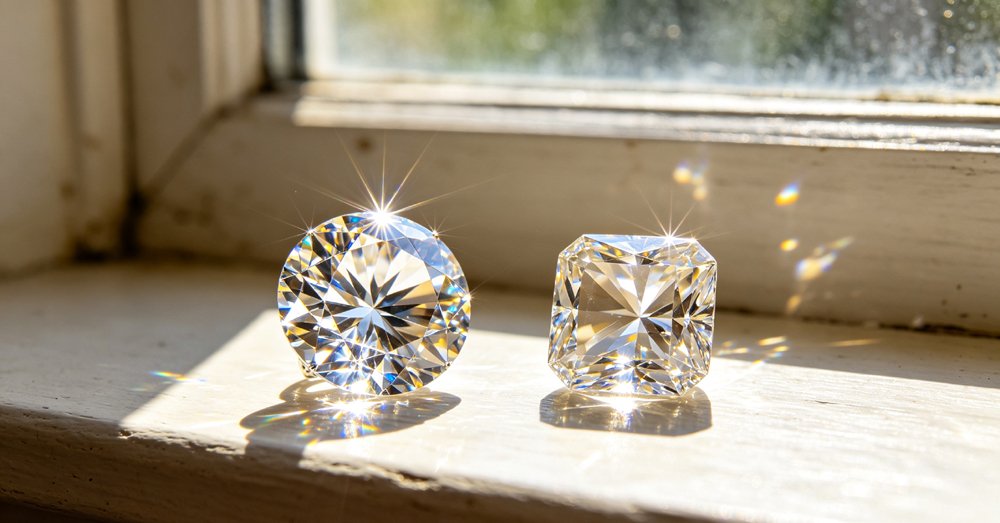
Most buyers judge a stone first by how closely it mimics a real diamond.
A high-quality, brand-new cubic zirconia can be surprisingly convincing. It offers clean clarity and balanced luster. It shares the same single refraction as natural diamonds, producing gentle, steady sparkle without exaggerated rainbow flash. To the naked eye, a fresh CZ stone can be difficult to distinguish from a diamond.
That impression fades with time. CZ has a refractive index of just 2.15. Under natural light and in dim indoor settings, the stone reads as flat and muted.
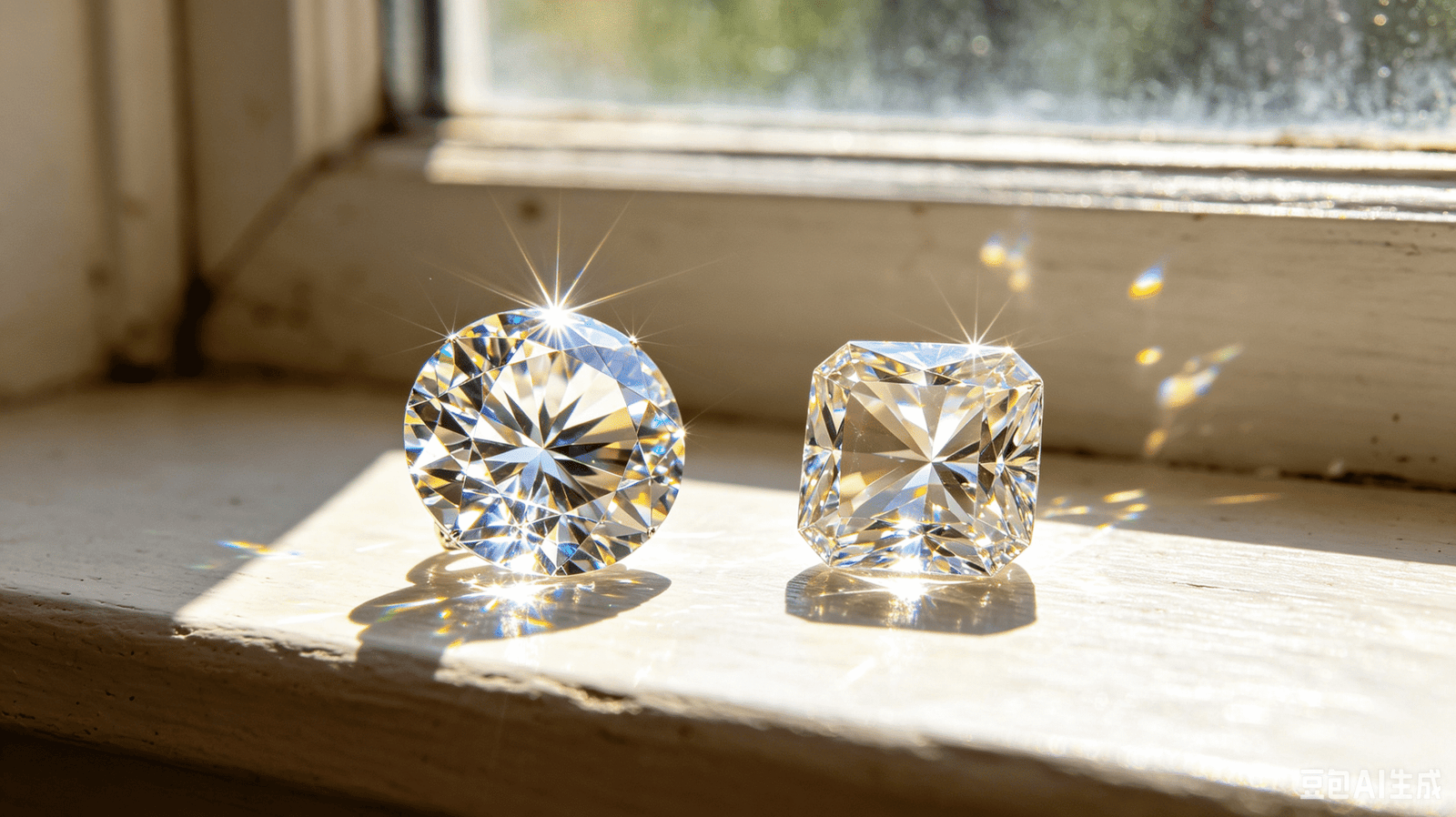
Moissanite tells a different story. Its refractive index sits at 2.69 — higher than a diamond’s 2.42. In measured comparisons, moissanite delivers roughly 25% higher brilliance, 58% stronger fire dispersion, and 50% greater luster than cubic zirconia. The sparkle is vivid and layered, with a rainbow quality that shifts under different lighting.
Moissanite does have double refraction. Under professional magnification, you can spot faint double lines along facet edges. In daily viewing, this detail is invisible and does not compromise the stone’s diamond-like appearance.
The real visual gap reveals itself over time. CZ gradually loses its luster and turns hazy. Moissanite holds its original bright sparkle, indefinitely.
Lifespan & Long-Term Wearing Stability
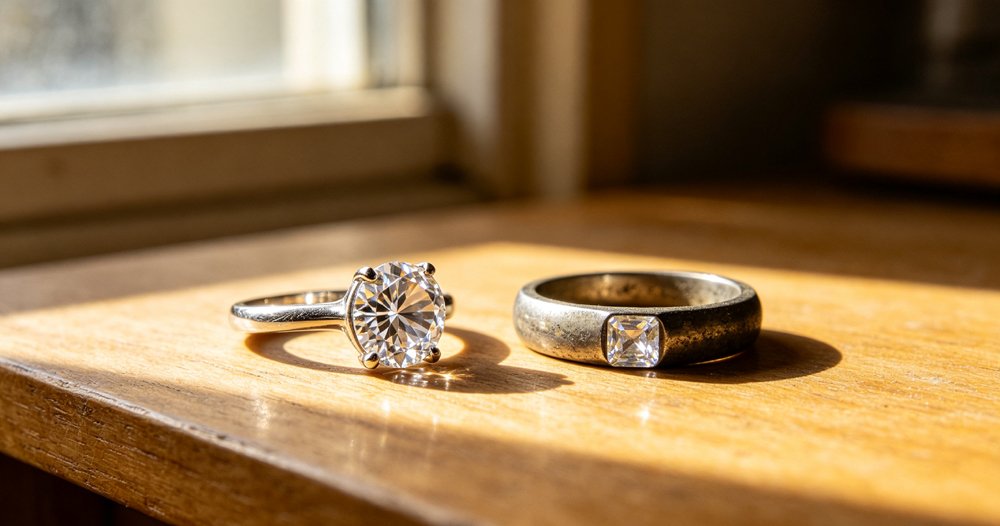
Some diamond simulants age quickly. Their physical and chemical properties simply do not hold up.
Moissanite is chemically inert. It does not react to skin oil, skincare products, perfume, dust, or everyday environmental exposure. A simple rinse with warm water and mild soap restores full sparkle. More importantly, moissanite strongly resists the clouding phenomenon common on CZ stones. With basic care, moissanite stays clear and bright for decades — the kind of longevity that justifies the word “heirloom.”
Cubic zirconia has a porous surface structure. It absorbs daily dirt, body grease, and cosmetic residue. After two to three years of regular wear, CZ almost inevitably turns opaque and hazy. This clouding cannot be reversed through cleaning or polishing. The stone simply needs to be replaced. Long-term exposure to soap and cosmetics only speeds up the process.
Weight & Wearing Comfort
Weight creates another immediate difference — one you can feel the moment you pick up a piece.
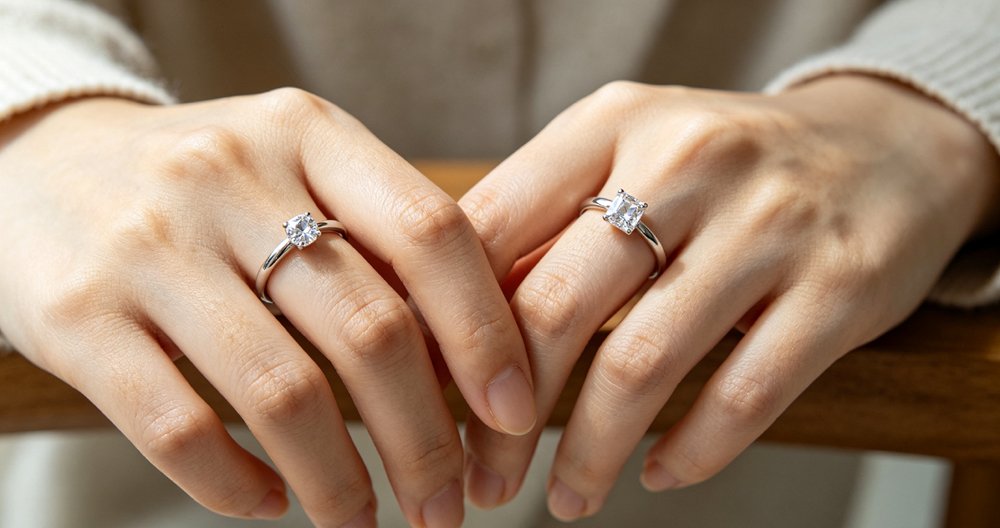
Cubic zirconia is dense. Roughly 65% heavier than a natural diamond of the same carat weight, it carries an unnatural heft. That weight can make CZ jewelry feel noticeably different from fine diamond pieces.
Moissanite is slightly lighter than natural diamond. On the hand, it feels natural and balanced — the kind of weight you would expect from premium jewelry.
Toughness, Chip Resistance & Heat Stability
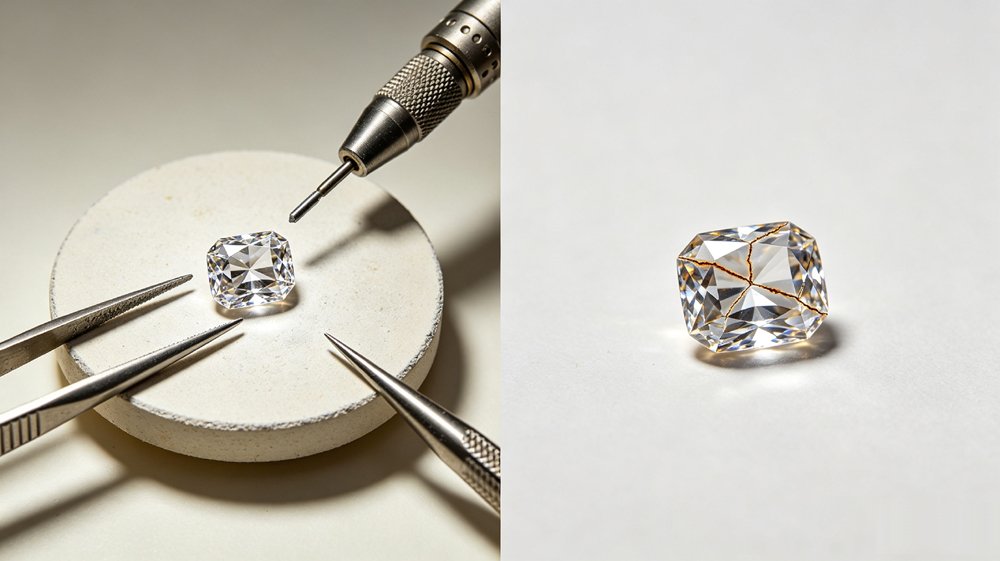
Hardness matters, but so do toughness and heat stability. These properties determine how a stone survives accidents and professional servicing.
Moissanite scores 7.6 in professional PSI toughness testing. Cubic zirconia comes in at 2.4. That means moissanite is more than 300% more resistant to chipping and breaking during daily wear and minor collisions.
Moissanite also handles heat well. It can safely withstand professional jewelry repair, ring sizing, and stone resetting without risk of damage.
Cubic zirconia reacts poorly to high temperatures. Heat from jewelry welding or routine repair can easily cause cracking or permanent clouding. Many professional jewelers simply refuse to work on CZ pieces to avoid irreversible damage.
How to Tell Moissanite from Cubic Zirconia
A few simple observations can help you distinguish between the two.
- Sparkle character: Moissanite gives off rich, colorful fire. CZ shows a softer, more muted single luster.
- Optical structure: Moissanite is double refractive. CZ has single refraction, identical to diamond.
- Wear pattern: Moissanite remains scratch-resistant for years. CZ tends to cloud and dull over time.
- Hand feel: CZ feels noticeably heavy and solid. Moissanite carries a more natural, lightweight texture.
- Magnified details: Moissanite may reveal subtle tubular inclusions. CZ typically appears perfectly clean with neat facets.
Professional jewelers confirm identification through refractive index testing and thermal conductivity analysis.
Suitable Wearing Scenarios for Each Stone
Moissanite: Best for Daily Staple Jewelry
- Everyday rings, wedding bands, and engagement rings
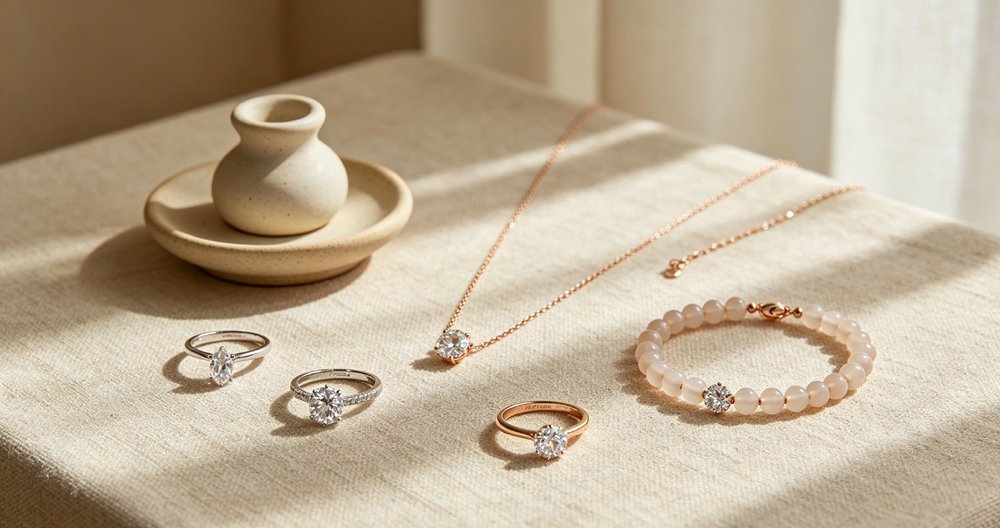
- Necklaces and bracelets intended for long-term wear
- Anyone who wants permanent sparkle and heirloom-grade durability
- Sensitive skin users who need hypoallergenic, inert gemstones
- Buyers seeking a high-quality, lasting diamond alternative
Cubic Zirconia: Best for Occasional Fashion Wear
- Vacation accessories, party jewelry, and event-only ornaments
- Temporary trend pieces and seasonal styling
- Ultra-budget casual jewelry
- People who enjoy frequently rotating new styles
Price Comparison
Moissanite sits at a higher price point than cubic zirconia. That premium reflects its superior optical performance, extreme durability, stable material structure, and the advanced laboratory processes behind its production. Even so, moissanite remains a cost-effective, high-grade alternative to natural diamonds.
Cubic zirconia is among the most affordable diamond simulants available. Its low cost makes it practical for disposable fashion jewelry and short-term style needs.
Authenticity & Premium Quality of SYMARA Moissanite Jewelry
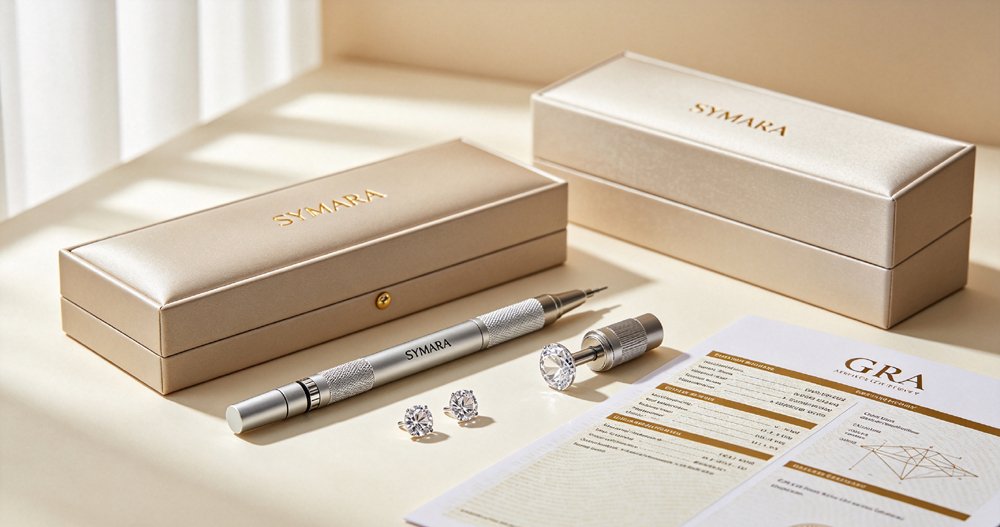
At SYMARA, we take a different approach. Our moissanite jewelry uses only high-quality near-colorless stones. Every SYMARA moissanite passes professional diamond tester pen inspection — delivering thermal performance indistinguishable from a natural diamond.
Each piece arrives with an official GRA certification. The certificate records the stone’s grade, cutting standards, clarity, and optical parameters. This documentation draws a clear line between our fine jewelry and uncertified stones or ordinary cubic zirconia. It is how we back up the wearing experience we promise.
Final Verdict
If you value daily wear resistance, authentic diamond-like texture, stable luster, and long service life, moissanite outperforms cubic zirconia in every practical dimension.
Cubic zirconia offers a beautiful appearance at an accessible price for occasional wear. It cannot, however, match the fine jewelry grade and long-term performance of genuine moissanite.
For anyone shopping for timeless, wearable, heritage-level diamond alternative jewelry, moissanite is the clear choice.
FAQ
Does moissanite or cubic zirconia tarnish?
Neither gemstone produces oxidation or tarnish. However, cubic zirconia gradually turns dull and cloudy with long-term daily wear. Moissanite maintains permanent clarity and brilliant sparkle.
Can ordinary people distinguish moissanite from diamonds?
In daily life, no. Moissanite cannot be separated from natural diamonds by the naked eye. Only a professional jeweler using magnification can spot the subtle optical differences.
How long can cubic zirconia be worn daily?
Most cubic zirconia stones lose clarity and turn foggy within two to three years of daily wear. Quality moissanite can last a lifetime with simple routine care.
Is moissanite the same as cubic zirconia?
Not at all. Moissanite is a durable silicon carbide gem known for lasting strength and high-level sparkle. Cubic zirconia is a low-cost synthetic zirconium dioxide intended for temporary fashion use. The two differ completely in composition, hardness, heat resistance, and optical performance.