Amethyst Rings: Handcrafted Designs for Every Style
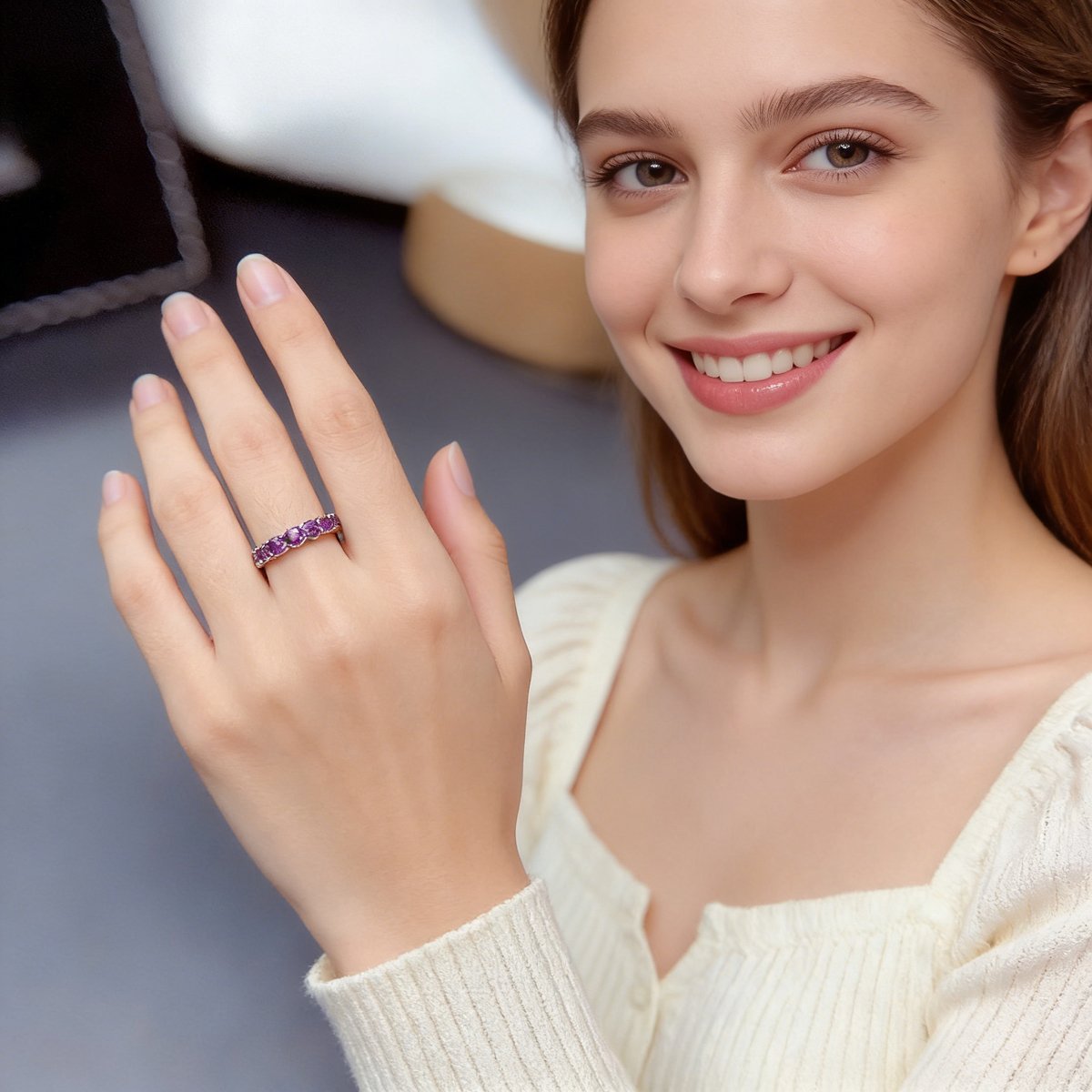
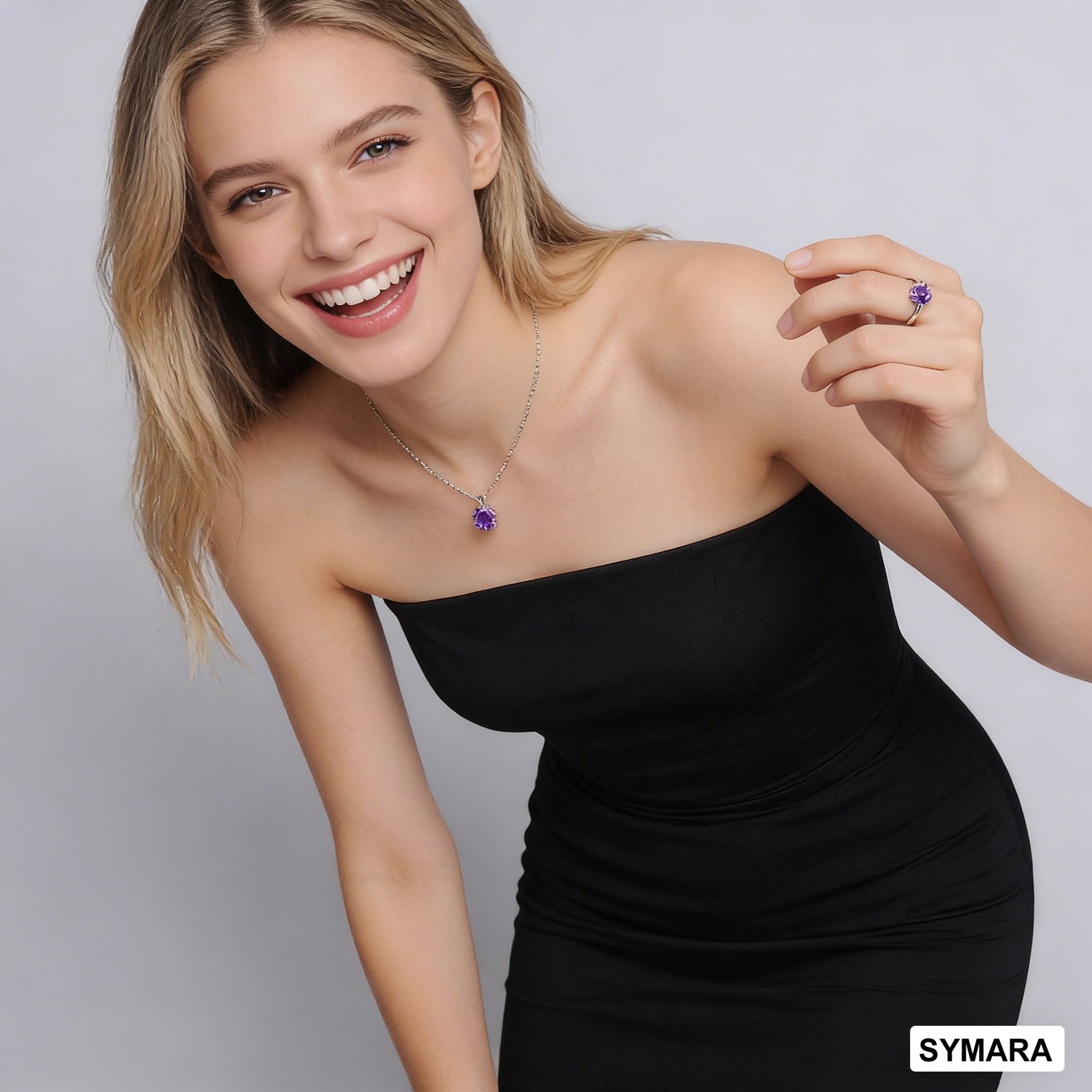
In our workshop, we handle stones with a sense of geological respect. An amethyst ring isn’t just purple jewelry—it’s a wearable piece of deep time. The stone formed under steady pressure, in total darkness, over millions of years. Our job is to honor that natural history while cutting and setting it so the color doesn’t just sit there—it lives, right here on your hand. This page is really about that shift: how we turn a raw, ancient crystal into something personal: a touchstone of clarity you can wear every day.
The Stone’s Voice: Beyond February’s Birthstone
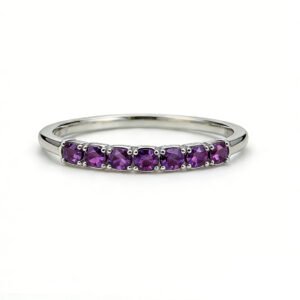
Yes, it is February’s birthstone ring. But in our hands, an amethyst transcends the calendar. Its value lies not in a month, but in a mood—a specific, velvety depth of violet that can range from the palest lilac mist to a royal purple so saturated it seems to drink the light. We are drawn to this spectrum. When selecting stones for our amethyst rings, we look for a particular soulfulness: a rich, even color distribution and that signature soft, almost sleepy luster, rather than a brittle, glassy shine. It’s a color that feels contemplative, a visual pause.
A Lapidary’s Priorities: Color, Cut, and Character
Forget the diamond’s 4Cs for a moment. With colored gemstones like amethyst, the rules shift. Here is what guides our selection at the bench.
· The Hierarchy of Hue: Seeking Saturation
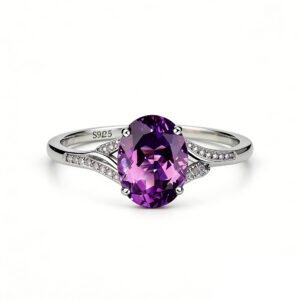
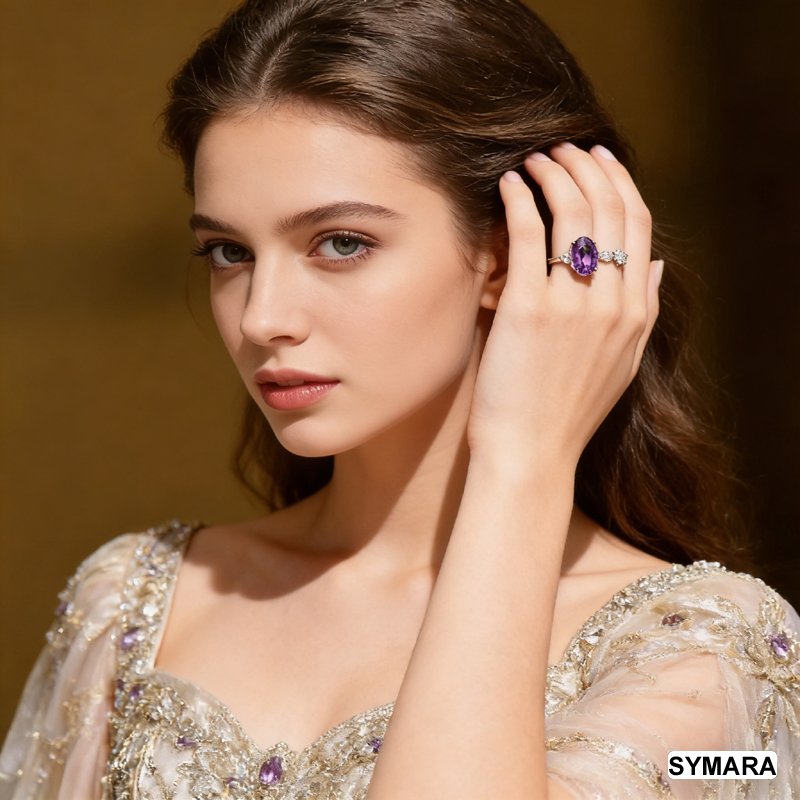
The most common question is, “Is darker better?” Not exactly. We seek saturation—the intensity and purity of the purple, free from brown or gray modifiers. A medium-tone, highly saturated stone will often appear more vibrant and alive than a darker, muddy one. The coveted “Siberian” amethyst boasts a blue-red vibrancy under light, while a “Rose de France” stone offers a delicate, feminine lavender. Both have their place; both must be vivid within their range. Seek out stones with this depth in our Deep Purple Amethyst Collection.
· The Cut as Color’s Conductor
This is where most mass-market amethyst rings fail. A poor cut steals a stone’s soul. Cut too shallow, the color washes out, creating a lifeless “window.” Cut too deep, it turns black in the center. Our lapidaries cut for color return. For an emerald cut amethyst, this means precise step angles to build a deep, swimming pool of color. For an oval or cushion cut, it’s about symmetry and facet alignment to balance light performance with that velvety, crystalline texture. The cut doesn’t make it sparkle; it makes the color sing. Discover the precision of our Emerald Cut Amethyst Rings.
· The Cabochon: When Light Sits Within the Stone
Not every amethyst is destined for facets. Some stones ask to be left as a cabochon—a smooth, polished dome. This cut is about the essence of the gem itself. Without facets to break it up, the color becomes a deep, uniform pool. You won’t get the sharp sparkle of a faceted piece; instead, the light settles within the stone, creating a soft, internal glow that seems to come from within.
This style has an ancient, talismanic quality. In the hand, it feels solid and grounding. We find clients are drawn to a cabochon not for brilliance, but for its tactile serenity and that mesmerizing, almost liquid depth of color. It’s a deliberate choice for those who value subtlety and presence over sheer refraction.
The Setting: Composing a Frame for a Color Universe
A setting should be a thoughtful response to the stone’s character, not a generic cage. For amethyst rings, the metal and design either fight the color or elevate it.
· The Solitaire’s Clarity: A Single Stroke of Color
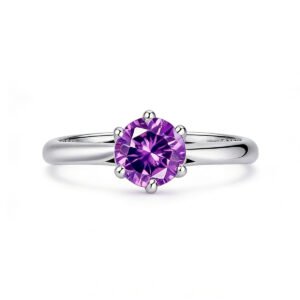
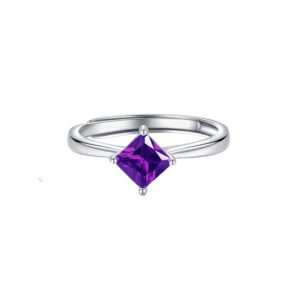
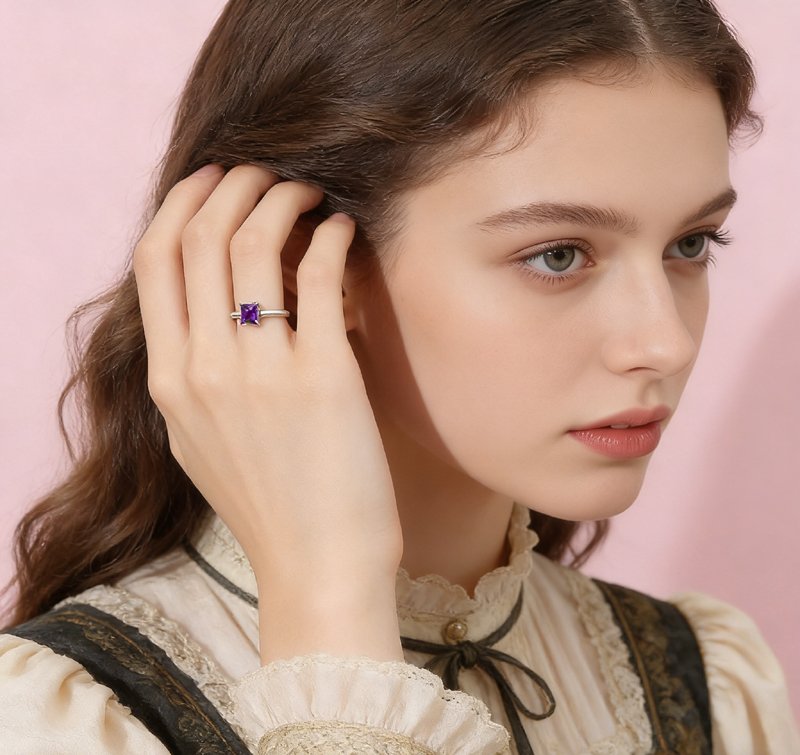
A well-executed solitaire setting is an exercise in focus. A simple four or six-prong head in white metal (platinum or white gold) makes the purple appear cooler, more gemological, and crisp. Set in yellow or rose gold, the same stone warms significantly, taking on a vinous, almost medieval richness. The metal chooses the stone’s context.
· Accent & Architecture: When Diamonds Play a Supporting Role
We use diamonds sparingly with amethyst, and always with intent. A micropavé halo or shoulder accents don’t compete; they act as a luminous white border, pushing the central purple into greater relief and depth. It’s a painterly technique—using white to define and intensify the adjacent color.
· The Artisan’s Touch: Texture, Weight, and Thoughtful Pairings
This is where the work gets personal. In our studio, we often say the band tells half the story. A hand-hammered shank—whether in sterling silver or gold—isn’t just for looks. That subtle, textured finish catches the light differently and gives the piece a tactile, grounded feel that balances the polish of a stone, especially a smooth cabochon. It makes the ring feel alive in your hand.
We also play with two-tone settings not as a trend, but as a tool. Using two metals can actually pull out different undertones in the amethyst, making the color more complex.
And on pairings—we love combining amethyst with citrine or clear quartz in one piece. It’s more than aesthetics. It creates a quiet narrative: the calming depth of purple alongside the warmth of citrine or the clarity of quartz. It’s a small, wearable story about balance, something we find our clients are deeply drawn to.
An Honest Pact: Wearing and Preserving Your Amethyst
We believe in transparent relationships, even with gemstones. Amethyst has its personality, and respecting it ensures a long, beautiful life together.
· The Sunlight Conversation: All gemologists know it: prolonged, direct exposure to intense UV light can cause fading in amethyst. This is a fact of its chemistry, not a flaw. Our guidance is practical: wear your ring daily with joy. Just don’t leave it on a sunny windowsill for weeks. Store it in its pouch when not in use. This is simple, respectful care.
· The Reality of Hardness: At a 7 on the Mohs scale, amethyst is suitable for daily wear but demands mindfulness. It can be scratched by dust (which contains quartz, hardness 7.5) or harder gems. We recommend removing it during heavy manual work. For the most active lifestyles, a protective bezel setting is a wise investment in peace of mind.
· Cleaning as Care: Warm water, mild soap, a soft brush. Rinse thoroughly. That’s it. Avoid steam and ultrasonic cleaners, as the vibrations can sometimes stress inclusions in the stone.